, to see if you have full access to this publication.
Monograph No access
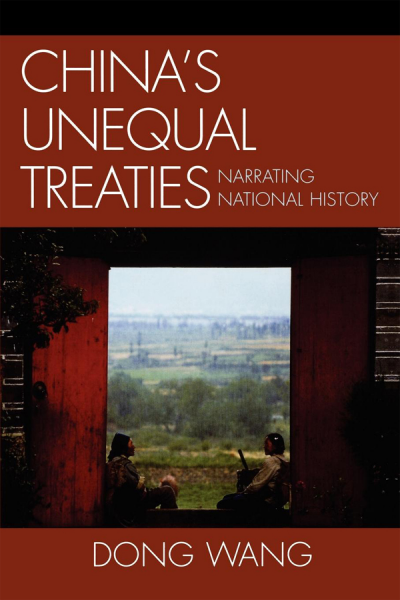
China's Unequal Treaties
Narrating National History
Authors:
Publisher:
2005
Summary
This study, based on primary sources, deals with the linguistic development and polemical uses of the expression Unequal Treaties, which refers to the treaties China signed between 1842 and 1946. Although this expression has occupied a central position in both Chinese collective memory and Chinese and English historiographies, this is the first book to offer an in-depth examination of China's encounters with the outside world as manifested in the rhetoric surrounding the Unequal Treaties. Author Dong Wang argues that competing forces within China have narrated and renarrated the history of the treaties in an effort to consolidate national unity, international independence, and political legitimacy and authority. In the twentieth century, she shows, China's experience with these treaties helped to determine their use of international law. Of great relevance for students of contemporary China and Chinese history, as well as Chinese international law and politics, this book illuminates how various Chinese political actors have defined and redefined the past using the framework of the Unequal Treaties.
Search publication
Bibliographic data
Edition
1/2005
Copyright Year
2005
ISBN-Print
978-0-7391-1208-3
ISBN-Online
978-0-7391-5297-3
Publisher
Lexington, Lanham
Language
English
Pages
179
Product Type
Monograph
Table of contents
ChapterPages
Table of Contents No access
Acknowledgments No access
Introduction No access Pages 1 - 8
Chapter 1: Tracing the Contours of the Unequal Treaties in Imperial China, 1840-1911 No access Pages 9 - 34
Chapter 2: Implementing and Contesting International Law: The Unequal Treaties and the Foreign Ministry of the Beijing Government, 1912-1928 No access Pages 35 - 62
Chapter 3: Disseminating the Rhetoric of Bupingdeng Tiaoyue, 1923-1927 No access Pages 63 - 86
Chapter 4: Redeeming a Century of National Ignominy: Nationalism and Party Rivalry over the Unequal Treaties, 1928-1947 No access Pages 87 - 112
Chapter 5: Universalizing International Law and the Chinese Study of the Unequal Treaties: The Paradox of Equality and Inequality No access Pages 113 - 134
Conclusion: Defining and Redefining the Past No access Pages 135 - 140