, to see if you have full access to this publication.
Edited Book No access
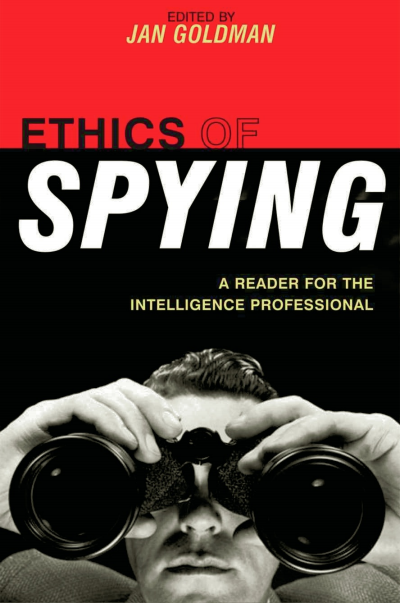
Ethics of Spying
A Reader for the Intelligence Professional
Editors:
Publisher:
2005
Summary
Intelligence professionals are employees of the government working in a business that some would consider unethical_the business of spying. This book looks at the dilemmas that exist when one is asked to perform a civil service that is in conflict with what that individual believes to be 'ethical.' This is the first book to offer the best essays, articles, and speeches on ethics and intelligence that demonstrate the complex moral dilemmas in intelligence collection, analysis, and operations that confront government employees. Some are recently declassified and never before published, and all are written by authors whose backgrounds are as varied as their insights, including Robert M. Gates, former Director of the Central Intelligence Agency; John P. Langan, the Joseph Cardinal Bernardin Professor of Catholic Social Thought at the Kennedy Institute of Ethics, Georgetown University; and Loch K. Johnson, Regents Professor of Political Science at the University of Georgia and recipient of the Owens Award for contributions to the understanding of U.S. intelligence activities. To the intelligence professional, this is a valuable collection of literature for building an ethical code that is not dependent on any specific agency, department, or country. Managers, supervisors, and employees of all levels should read this book. Creating the foundation for the study of ethics and intelligence by filling in the gap between warfare and philosophy, Ethics of Spying makes the statement that the intelligence professional has ethics.
Search publication
Bibliographic data
Edition
1/2005
Copyright Year
2005
ISBN-Print
978-0-8108-5640-0
ISBN-Online
978-0-8108-8220-1
Publisher
Rowman & Littlefield, Lanham
Language
English
Pages
414
Product Type
Edited Book
Table of contents
ChapterPages
Contents No access
Foreword No access
Preface No access
Acknowledgments No access
1 Ethics and Intelligence No access
2 Intelligence Ethics No access
3 Ethics and Morality in U.S. Secret Intelligence No access
4 The Need for Improvement: Integrity, Ethics, and the CIA No access
5 Bungee Jumping off the Moral Highground: Ethics of Espionage in the Modern Age No access
6 Moral Damage and the Justification of Intelligence Collection from Human Sources No access
7 Intelligence Collection and Analysis: Dilemmas and Decisions No access
8 An Ethical Defense of Torture in Interrogation No access
9 Interrogation Ethics in the Context of Intelligence Collection No access
10 Guarding against Politicization: A Message to Analysts No access
11 Memorandum: One Person Can Make a Difference No access
12 The Ethics of War, Spying, and Compulsory Training No access
13 Legitimacy of Covert Action: Sorting out the Moral Responsibilities No access
14 Covert Intervention as a Moral Problem No access
15 ‘‘Repugnant Philosophy’’: Ethics, Espionage, and Covert Action No access
16 Managing Covert Political Action: Guideposts from Just War Theory No access
17 Ethics of Covert Operations No access
18 Military and Civilian Perspectives on the Ethics of Intelligence: Report on a Workshop at the Department of Philosophy No access
19 Sociology: Ethics of Covert Methods No access
20 Comment on ‘‘The Ethics of Covert Methods’’ No access
21 Science: Anthropologists as Spies No access
22 Business: Ethical Issues in Competitive Intelligence Practice No access
23 Business: The Challenge of Completely Ethical Competitive Intelligence and the ‘‘CHIP’’ Model No access
Appendix A: Principles, Creeds, Codes, and Values No access Pages 379 - 393
Appendix B: Case Studies No access Pages 394 - 408