, to see if you have full access to this publication.
Monograph No access
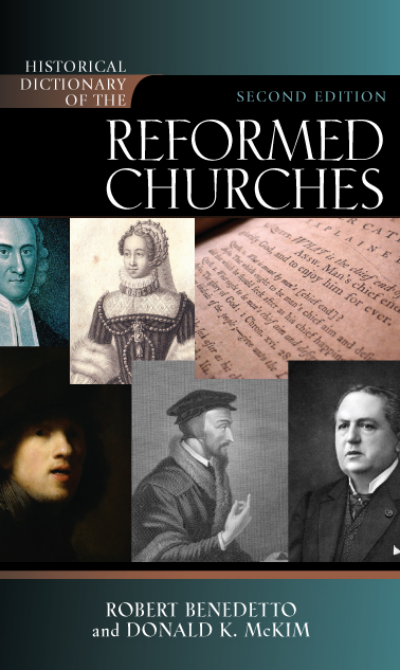
Historical Dictionary of the Reformed Churches
Authors:
|
Publisher:
2009
Summary
As its name implies, the Reformed tradition grew out of the 16th century Protestant Reformation. The Reformed churches consider themselves to be the Catholic Church reformed. The movement originated in the reform efforts of Huldrych Zwingli (1484-1531) of Zurich and John Calvin (1509-1564) of Geneva. Although the Reformed movement was dependent upon many Protestant leaders, it was Calvin's tireless work as a writer, preacher, teacher, and social and ecclesiastical reformer that provided a substantial body of literature and an ethos from which the Reformed tradition grew. Today, the Reformed churches are a multicultural, multiethnic, and multinational phenomenon. The second edition of the Historical Dictionary of the Reformed Churches contains information on the major personalities, events, facts, movements, and beliefs of the Reformed churches. This is done through a list of acronyms and abbreviations, a chronology, an introductory essay, appendixes, a bibliography, and over 800 cross-referenced dictionary entries on leaders, personalities, events, facts, movements, and beliefs of the Reformed churches.
Search publication
Bibliographic data
Edition
2/2009
Copyright Year
2009
ISBN-Print
978-0-8108-5807-7
ISBN-Online
978-0-8108-7023-9
Publisher
Rowman & Littlefield, Lanham
Language
English
Pages
736
Product Type
Monograph
Table of contents
ChapterPages
Contents No access
Editor’s Foreword No access
Preface to the Second Edition No access
Acknowledgments No access
Acronyms and Abbreviations No access
Chronology No access
Introduction No access
The Dictionary No access Pages 1 - 540
Appendix 1 No access Pages 541 - 542
Appendix 2 No access Pages 543 - 545
Appendix 3 No access Pages 546 - 561
Appendix 4 No access Pages 562 - 563
Appendix 5 No access Pages 564 - 568
Bibliography No access Pages 569 - 734
About the Authors No access Pages 735 - 736
Similar publications
from the topics "Religion und Theologie allgemein"