, to see if you have full access to this publication.
Edited Book No access
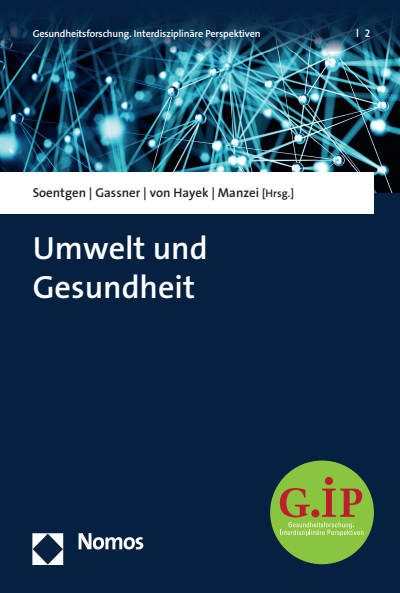
Umwelt und Gesundheit
- Editors:
- | | |
- Series:
- Gesundheitsforschung. Interdisziplinäre Perspektiven, Volume 2
- Publisher:
- 2020
Search publication
Bibliographic data
- Edition
- 1/2020
- Copyright Year
- 2020
- ISBN-Print
- 978-3-8487-5511-0
- ISBN-Online
- 978-3-8452-9695-1
- Publisher
- Nomos, Baden-Baden
- Series
- Gesundheitsforschung. Interdisziplinäre Perspektiven
- Volume
- 2
- Language
- German
- Pages
- 384
- Product Type
- Edited Book
Table of contents
ChapterPages
- Titelei/Inhaltsverzeichnis No access Pages 1 - 20
- Authors: |
- 0. Einleitung No accessAuthors: |
- Authors: |
- 1.1 Was ist Umwelt? Probleme eines vermeintlich selbstverständlichen Begriffs No accessAuthors: |
- Authors: |
- 2.1 Die politische Dimension der Umweltproblematik No accessAuthors: |
- 2.2 Neuere Ansätze der Umweltmedizin No accessAuthors: |
- 3. Erfolge und Perspektiven No accessAuthors: |
- Literatur No accessAuthors: |
- Authors:
- 0. Einleitung No accessAuthors:
- 1. Die Lehre vom Mängelwesen und ihre Kritik No accessAuthors:
- 2. Künstliche Umwelten No accessAuthors:
- 3. Die Bedeutung des Feuers No accessAuthors:
- 4. Moderne Feuer No accessAuthors:
- 5. Die ungewollten Nebenprodukte des Feuers und ihre Gesundheitsrelevanz No accessAuthors:
- 6. Kohlendioxid No accessAuthors:
- 7. Nach dem Feuer No accessAuthors:
- Literatur No accessAuthors:
- Authors:
- 0. Einleitung No accessAuthors:
- Authors:
- 1.1 Interaktion von Gehirn und Körper No accessAuthors:
- 1.2 Interaktion von Gehirn, Körper und Umwelt No accessAuthors:
- 1.3 Interaktion von Personen No accessAuthors:
- Authors:
- 2.1 Sind psychische Krankheiten Gehirnkrankheiten? No accessAuthors:
- 2.2 Psychisches Kranksein als zirkuläres Geschehen No accessAuthors:
- 3. Resümee No accessAuthors:
- Literatur No accessAuthors:
- Authors:
- 0. Der anthropozäne Wandel der Welt No accessAuthors:
- Authors:
- 1.1 Der Abschied von der Risikogesellschaft No accessAuthors:
- 1.2 Was kommt nach der Nachhaltigkeit? No accessAuthors:
- 1.3 Das „Verfassungsrecht der Erde“? No accessAuthors:
- 1.4 Ökologischer Liberalismus No accessAuthors:
- Authors:
- 2.1 Rechtssubjektivität No accessAuthors:
- 2.2 Anerkennung No accessAuthors:
- Authors:
- 2.3.1 Rechte No accessAuthors:
- 2.3.2 Vertretung No accessAuthors:
- 2.4 Abwägungsregeln No accessAuthors:
- 3. Fazit No accessAuthors:
- Literatur No accessAuthors:
- Authors: | | |
- 0. Einleitung No accessAuthors: | | |
- Authors: | | |
- 1.1 Gesundheit No accessAuthors: | | |
- Authors: | | |
- 1.2.1 Historischer Kontext der Konstruktion von Zweigeschlechtlichkeit No accessAuthors: | | |
- 1.2.2 Geschlecht als eine Kategorie sozialer Ungleichheit No accessAuthors: | | |
- Authors: | | |
- 1.3.1 Biologisch-ökologische Umwelt No accessAuthors: | | |
- 1.3.2 Soziokulturelle Umwelt No accessAuthors: | | |
- Authors: | | |
- 2.1 Frauen- versus Männergesundheit: Gemeinsamkeiten und Unterschiede No accessAuthors: | | |
- 2.2 Intersektionalität als Paradigma der Public Health-Forschung No accessAuthors: | | |
- 2.3 Geschlechtersensible Gesundheitsförderung und medizinische Praxis No accessAuthors: | | |
- Authors: | | |
- 3.1 Umweltgerechtigkeit No accessAuthors: | | |
- 3.2 Umweltbelastungen im Kontext sozialer Ungleichheit – Risiken für marginalisierte Bevölkerungsgruppen No accessAuthors: | | |
- 3.3 Gesundheitsrelevante Einflüsse der Wohnumwelt unter besonderer Berücksichtigung von Geschlecht und Sozialstatus No accessAuthors: | | |
- 4. Potenziale zur Kompensation und Reduzierung sozialer Ungleichheit im Kontext von Gesundheit, Umwelt und Geschlecht No accessAuthors: | | |
- Literatur No accessAuthors: | | |
- Authors:
- 0. Einleitung No accessAuthors:
- Authors:
- 1.1 Salutogenese – die Aktivierung von Ressourcen No accessAuthors:
- 1.2 Pathogenese – die Fixierung auf das Negative No accessAuthors:
- Authors:
- 2.1 Ökosystemleistungen No accessAuthors:
- 2.2 OneHealth, Planetary Health No accessAuthors:
- Authors:
- 3.1 Therapeutische Landschaften No accessAuthors:
- 3.2 Landschaftspräferenzen No accessAuthors:
- 3.3 Biophilie – Biophobie No accessAuthors:
- 3.4 Landschaft als Ressource für Psyche, Physis und soziales Miteinander No accessAuthors:
- 4. Zusammenfassung und Ausblick No accessAuthors:
- Literatur No accessAuthors:
- Authors:
- 0. Einleitung No accessAuthors:
- Authors:
- Authors:
- 1.1.1 Planerisches Ermessen No accessAuthors:
- 1.1.2 Plantypen No accessAuthors:
- 1.1.3 Kernvorgaben No accessAuthors:
- 1.1.4 Grenz- und Zielwerte für Stickoxide und Feinstaub No accessAuthors:
- Authors:
- 1.1.5.1 Begriff No accessAuthors:
- 1.1.5.2 Ort der Probenahme No accessAuthors:
- 1.1.6 Umsetzungszeit No accessAuthors:
- 1.1.7 Mindestinhalt No accessAuthors:
- 1.1.8 Strikte Ergebnisverpflichtung und Verhältnismäßigkeitsprüfung No accessAuthors:
- Authors:
- 1.2.1 Umsetzungsnormen No accessAuthors:
- 1.2.2 Plantypen No accessAuthors:
- 1.2.3 Aufstellungspflicht No accessAuthors:
- 1.2.4 Zuständigkeit No accessAuthors:
- Authors:
- 1.2.5.1 Öffentlichkeitsbeteiligung No accessAuthors:
- 1.2.5.2 Behördenbeteiligung No accessAuthors:
- 1.2.6 Durchsetzung No accessAuthors:
- Authors:
- 2.1 Der Dieselskandal zweiter Ordnung No accessAuthors:
- 2.2 Grundrechtseingriff No accessAuthors:
- 2.3 Rechtsgrundlage No accessAuthors:
- Authors:
- 2.4.1 Legitime Zwecke No accessAuthors:
- Authors:
- 2.4.2.1 Grenzwerte No accessAuthors:
- 2.4.2.2 Verkehrsverlagerung No accessAuthors:
- 2.4.2.3 Zweckwegfall No accessAuthors:
- 2.4.3 Erforderlichkeit No accessAuthors:
- Authors:
- 2.4.4.1 Rechtsgüterabwägung No accessAuthors:
- 2.4.4.2 Differenzierung nach Art des Verkehrsverbots No accessAuthors:
- 2.4.4.3 Differenzierung nach Personen(gruppen) No accessAuthors:
- 2.4.4.4 Differenzierung nach Schadstoffklassen No accessAuthors:
- 2.4.4.5 Differenzierung nach Verursachungsbeitrag No accessAuthors:
- 2.4.4.6 Legislative Feinsteuerung No accessAuthors:
- 3. Entschädigung No accessAuthors:
- Authors:
- 4.1 Luftreinhaltung No accessAuthors:
- 4.2 Mobilität No accessAuthors:
- 4.3 Messstationen No accessAuthors:
- Authors:
- 5.1 Unionale Ebene No accessAuthors:
- 5.2 Nationale Ebene No accessAuthors:
- 6. Aporien No accessAuthors:
- Literatur No accessAuthors:
- Urteile, Richtlinien u. a. No accessAuthors:
- Authors: |
- 0. Einleitung No accessAuthors: |
- Authors: |
- Authors: |
- 1.1.1 Luftverschmutzung No accessAuthors: |
- 1.1.2 Klimawandel No accessAuthors: |
- 1.1.3 NCDs No accessAuthors: |
- Authors: |
- 1.2.1 Direkter Einfluss der Luftverschmutzung auf NCDs No accessAuthors: |
- 1.2.2 Indirekter Einfluss via Klimawandel No accessAuthors: |
- Authors: |
- 2.1 Hintergrund No accessAuthors: |
- 2.2 (Menschen-) Recht auf saubere Luft als Wegbereiter global konzertierter Luftreinehaltepolitiken No accessAuthors: |
- Authors: |
- Authors: |
- 2.3.1.1 Klassifikation der Instrumente No accessAuthors: |
- 2.3.1.2 Bewertung und Empfehlungen zur Ausgestaltung der Instrumente No accessAuthors: |
- 2.3.2 Integrativer Rahmen – Mainstreaming und Verteilungspolitik No accessAuthors: |
- 3. Zusammenfassung und Schlussfolgerungen No accessAuthors: |
- Literatur No accessAuthors: |
- Authors: |
- 0. Einleitung No accessAuthors: |
- 1. Datengrundlage und Vorgehensweise No accessAuthors: |
- 2. Zusammenhänge zwischen Luftmassen bzw. Wetterlagen und Schlaganfällen No accessAuthors: |
- 3. Zusammenfassung und Ausblick No accessAuthors: |
- Literatur No accessAuthors: |
- Authors:
- 0. Einführung No accessAuthors:
- 1. Daten und Methoden No accessAuthors:
- Authors:
- 2.1 Einflussgrößen No accessAuthors:
- 2.2 Projektionen der Vektorverbreitung No accessAuthors:
- 2.3 Potentielle Transmissionsstabilität im 21. Jahrhundert No accessAuthors:
- 3. Diskussion und Schlussfolgerungen No accessAuthors:
- Literatur No accessAuthors:
- Authors: |
- 0. Einführung No accessAuthors: |
- 1. Daten und Methoden No accessAuthors: |
- Authors: |
- 2.1 Charakterisierung der Ozonkonzentrationen in der Region Augsburg No accessAuthors: |
- 2.2 Einfluss von Wetterlagen und Luftmasseneigenschaften auf das tägliche Ozonmaximum No accessAuthors: |
- 2.3 Beziehungen zwischen Ozonkonzentrationen und Herzinfarktfällen in der Region Augsburg No accessAuthors: |
- 3. Diskussion und Schlussfolgerungen No accessAuthors: |
- Danksagung No accessAuthors: |
- Literatur No accessAuthors: |
- Authors: |
- 0. Luftschadstoff Stickstoffdioxid No accessAuthors: |
- 1. Richtwerte und Grenzwerte für Luftschadstoffe No accessAuthors: |
- 2. Überwachung der Luftqualität in Deutschland No accessAuthors: |
- 3. Immissionsentwicklung von PM10-Feinstaub und NO2 in Deutschland No accessAuthors: |
- Authors: |
- 4.1 Stickstoffdioxid in Luftreinhaltung und Gesundheitsschutz No accessAuthors: |
- 4.2 Biologische Wirkungsweisen No accessAuthors: |
- 4.3 Methodik von Studien zur Untersuchung von Luftschadstoffeffekten No accessAuthors: |
- Authors: |
- 4.4.1 Mortalität No accessAuthors: |
- 4.4.2 Morbidität No accessAuthors: |
- 5. Ist der aktuelle Grenzwert für Stickstoffdioxid wissenschaftlich plausibel? No accessAuthors: |
- Literatur No accessAuthors: |
- Authors: |
- 0. Einleitung No accessAuthors: |
- 1. Datengrundlage und Vorgehen No accessAuthors: |
- 2. Regionale Gewitter- und Asthmastatistik No accessAuthors: |
- 3. Wetterlagenklassifikationen No accessAuthors: |
- 4. Statistische Zusammenhangsanalyse No accessAuthors: |
- 5. Zusammenfassung und Ausblick No accessAuthors: |
- Danksagung No accessAuthors: |
- Finanzierung No accessAuthors: |
- Literatur No accessAuthors: |
- Autor*innen- und Herausgeber*innenverzeichnis No access Pages 367 - 380
- G.IP – Gesundheitsforschung. Interdisziplinäre Perspektiven No access Pages 381 - 381
- ZIG – Zentrum für Interdisziplinäre Gesundheitsforschung No access Pages 381 - 381
- WZU – Wissenschaftszentrum Umwelt No access Pages 382 - 384