, to see if you have full access to this publication.
Edited Book No access
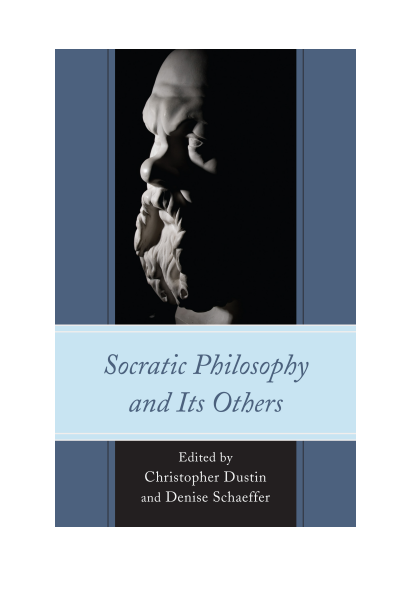
Socratic Philosophy and Its Others
Editors:
|
Publisher:
2013
Summary
The overall aim of the volume is to explore the relation of Socratic philosophizing, as Plato represents it, to those activities to which it is typically opposed. The essays address a range of figures who appear in the dialogues as distinct “others” against whom Socrates is contrasted—most obviously, the figure of the sophist, but also the tragic hero, the rhetorician, the tyrant, and the poet. Each of the individual essays shows, in a different way, that the harder one tries to disentangle Socrates’ own activity from that of its apparent opposite, the more entangled they become. Yet, it is only by taking this entanglement seriously, and exploring it fully, that the distinctive character of Socratic philosophy emerges. As a whole, the collection sheds new light on the artful ways in which Plato not only represents philosophy in relation to what it is not, but also makes it “strange” to itself. It shows how concerns that seem to be raised about the activity of philosophical questioning (from the point of view of the political community, for example) can be seen, upon closer examination, to emerge from within that very enterprise. Each of the essays then goes on to consider how Socratic philosophizing can be defined, and its virtues defended, against an attack that comes as much from within as from without. The volume includes chapters by distinguished contributors such as Catherine Zuckert, Ronna Burger, Michael Davis, Jacob Howland, and others, the majority of which were written especially for this volume. Together, they address an important theme in Plato’s dialogues that is touched upon in the literature but has never been the subject of a book-length study that traces its development across a wide range of dialogues.
One virtue of the collection is that it brings together a number of prominent scholars from both political science and philosophy whose work intersects in important and revealing ways. A related virtue is that it treats more familiar dialogues (Republic, Sophist, Apology, Phaedrus) alongside some works that are less well known (Theages, Major Hippias, Minor Hippias, Charmides, and Lovers). While the volume is specialized in its topic and approach, the overarching question—about the potentially troubling implications of Socratic philosophy, and the Platonic response—should be of interest to a broad range of scholars in philosophy, political science, and classics.
Keywords
Search publication
Bibliographic data
Edition
1/2013
Copyright Year
2013
ISBN-Print
978-0-7391-8140-9
ISBN-Online
978-0-7391-8141-6
Publisher
Lexington, Lanham
Language
English
Pages
302
Product Type
Edited Book
Table of contents
ChapterPages
Contents No access
Acknowledgments No access
Introduction No access Pages 1 - 12
Chapter One: Why Socrates and Thrasymachus Become Friends No access
Chapter Two: The Daimonic Soul No access
Chapter Three: Philosophy and Sophistry in Plato’s Euthydemus No access
Chapter Four: Socrates Talking to Himself? On the Greater Hippias No access
Chapter Five: The Sophist Hippias and the Problem of Polytropia No access
Chapter Six: On Wolves and Dogs No access
Chapter Seven: Philosophers as Painters No access
Chapter Eight: Plato’s Apology as Tragedy No access
Chapter Nine: Sophist and Philosopher in Plato’s Sophist No access
Chapter Ten: Socrates’ Odyssean Return No access
Chapter Eleven: Philosophy, Rhetoric, and the Question of Harmony in Plato’s Phaedrus No access
Chapter Twelve: Philosophy and the Perfect Tense No access