, to see if you have full access to this publication.
Monograph No access
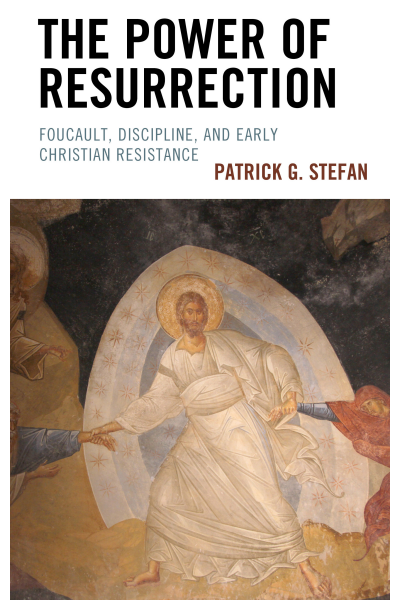
The Power of Resurrection
Foucault, Discipline, and Early Christian Resistance
Authors:
Publisher:
2019
Summary
How did the early Christian movement grow so quickly, and did the idea of resurrection have anything to do with its growth? Patrick G. Stefan offers an answer to both of these questions by searching at the intersection of the investigation of Christian origins and Continental philosophy. He documents the rise of the disciplined subject with the emergence of Christianity and argues that the early success of the Christian movement was due, in part, to the activation and deployment of what Michel Foucault calls disciplinary mechanisms of power. This activation took place through the instantiation of the idea of resurrection in early Christian material and textual existence. The activation of these mechanisms created a sub-class of disciplined individuals with the ability to envision life outside of the sovereign power of Caesar.
By building on Foucault’s methodology of examining how material conditions shape and create individual subjects, this book takes as its point of departure Foucault’s unexplored observation that “[Christianity] proposed and spread new power relations throughout the ancient world.” From this departure point, Stefan seeks to demonstrate that these new power relations were connected to an idea (resurrection) and formed the early history of disciplinary power.
Keywords
Search publication
Bibliographic data
Edition
1/2019
Copyright Year
2019
ISBN-Print
978-1-9787-0462-6
ISBN-Online
978-1-9787-0463-3
Publisher
Lexington, Lanham
Language
English
Pages
280
Product Type
Monograph
Table of contents
ChapterPages
Contents No access
List of Figures and Tables No access
Acknowledgments No access
Abbreviations No access
Chapter 1 No access Pages 1 - 18
Chapter 2 No access Pages 19 - 50
Chapter 3 No access Pages 51 - 84
Chapter 4 No access Pages 85 - 122
Chapter 5 No access Pages 123 - 160
Chapter 6 No access Pages 161 - 194
Chapter 7 No access Pages 195 - 224
Chapter 8 No access Pages 225 - 232
Epilogue No access Pages 233 - 234
Bibliography No access Pages 235 - 256
Index 1: Subjects No access Pages 257 - 266
Index 2: References No access Pages 267 - 268
Index 3: Ancient Sources No access Pages 269 - 278
About the Author No access Pages 279 - 280
Similar publications
from the topics "Religion und Theologie allgemein"