, to see if you have full access to this publication.
Monograph No access
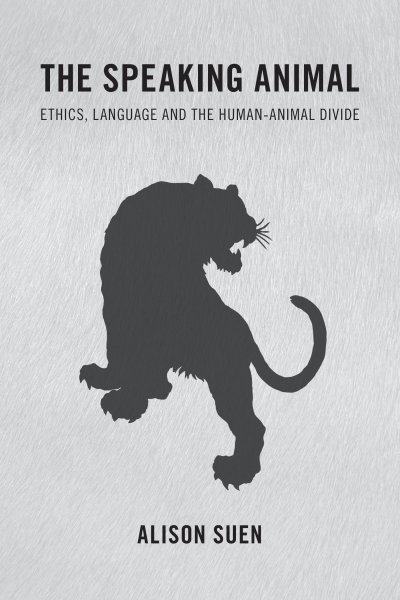
The Speaking Animal
Ethics, Language and the Human-Animal Divide
Authors:
Publisher:
2015
Summary
Animals regularly populate philosophical texts as a foil to illustrate what it means to be human. How should we understand this human-animal divide? Not only does it inform us of who we are, it also tells us how we should relate to the larger non-human world. The Speaking Animal interrogates the human-animal divide by looking at our linguistic differences – how the speaking human subject is constructed through its opposition to the dumb animal. Alison Suen begins with an analysis of the role of language in animal ethics, with an eye toward the voice/voiceless opposition that is at work in animal advocacy. After offering a critical analysis of the ethical and political significance of speaking for animals, the booktakes on a more constructive turn, going against the usual interpretation of language as a capacity that allows us to reason. Instead, it argues that our language capacity is also a relational capacity. Language is that which enables us to develop kinship with others – including animal others.
Keywords
Search publication
Bibliographic data
Edition
1/2015
Copyright Year
2015
ISBN-Print
978-1-78348-512-3
ISBN-Online
978-1-78348-513-0
Publisher
Rowman & Littlefield, Lanham
Language
English
Pages
138
Product Type
Monograph
Table of contents
ChapterPages
Contents No access
Acknowledgements No access
Introduction No access Pages 1 - 6
What Is Wrong with Animal Rights? No access
Having a Right and Having a Say No access
The Problem of Speaking for the Animal No access
Silencing Silence No access
Speaking for the Animal Other and Human Exceptionalism No access
Animal Solution: Animals Speaking for Themselves No access
The Primacy of the Animal’s Voice No access
Can We Get Away with Not Speaking for Animals? No access
Reconceptualizing Language No access
Notes No access
Freud and Animal Fathers No access
Prohibitions and Animal Rights Discourse No access
Freud and da Vinci’s Animal No access
Da Vinci and the “Kissing Vulture” No access
A Freudian Care Ethics No access
Notes No access
Human-Animal Linguistic Divide No access
“As-Structure” in Propositional Statements No access
Relationality and Logos No access
Being-With and Language No access
Animal’s Captivation No access
Animal’s Poverty in Relationality No access
Language Acquisition and Sociality No access
Transposability and Speaking for Animals No access
Notes No access
Some Animals Are More Equal than Others No access
Animal Identity in the Animal Protection Movement No access
Animal Identity, Animal Standpoint No access
Wittgenstein’s Critique of Essentialism No access
A Familial Account of the Human-Animal Relationship No access
The Violence of Literal and Metaphoric Confinements No access
Silencing the Animot? No access
Translation and the Purity of Animal Voice No access
Notes No access
Racism and Speciesism: The Analogy Debate No access
Reinscribing White Privilege Through Animal Advocacy No access
Animalization as Dehumanization No access
Case Study: The Cove No access
Beastliness as a Given of the Beast No access
The Language Divide in The Cove No access
Revisiting the Cruelty-Beastliness Link No access
Animal Violence and National Identity No access
Marginalizing Others in the Name of Cultural Diversity No access