, to see if you have full access to this publication.
Monograph No access
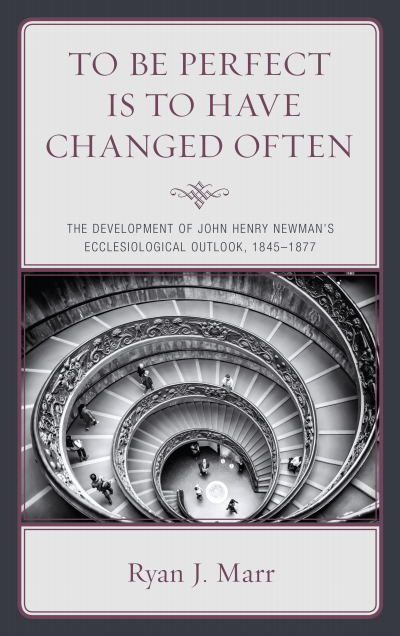
To Be Perfect Is to Have Changed Often
The Development of John Henry Newman's Ecclesiological Outlook, 1845–1877
Authors:
Publisher:
2018
Summary
This study approaches John Henry Newman’s writings on the church from a fresh perspective by examining the development of Newman’s ecclesiological outlook over time. It demonstrates that it can be misleading to refer to Newman’s “Catholic ecclesiology” (singular), because such an approach gives the impression that Newman maintained a stable ecclesiological perspective during his Roman Catholic period. In reality, Newman’s outlook on the church underwent significant developments over the last four decades of his life. As a result of various events in his life, including the Rambler affair and his experience of the First Vatican Council, Newman slowly developed an ecclesiological outlook that counterbalanced the authority of the pope and bishops with a robust account of the role of theologians and the lay faithful in the reception and transmission of church doctrine. Whether consciously or not, Newman left his ecclesiological writings open for further development on the part of theologians who would follow after him.
Keywords
Search publication
Bibliographic data
Edition
1/2018
Copyright Year
2018
ISBN-Print
978-1-9787-0057-4
ISBN-Online
978-1-9787-0058-1
Publisher
Lexington, Lanham
Language
English
Pages
196
Product Type
Monograph
Table of contents
ChapterPages
Contents No access
Acknowledgments No access
Abbreviations No access
Introduction: Problems, Strategies, and Objectives No access
CHAPTER ONE: An Imbalanced Ecclesiology: Newman’s Moderate Ultramontanism No access Pages 1 - 14
CHAPTER TWO: The Rambler Affair: Newman’s Developing Theology of the Laity No access Pages 15 - 48
CHAPTER THREE: Resisting the Neo-Ultramontanes: Newman and Vatican I No access Pages 49 - 96
CHAPTER FOUR: The Grammar of Assent: Defending the Faith of the Simple and Unlearned No access Pages 97 - 128
CHAPTER FIVE: A Balanced Ecclesiology: Newman’s Theology of the Threefold Office No access Pages 129 - 150