, to see if you have full access to this publication.
Edited Book No access
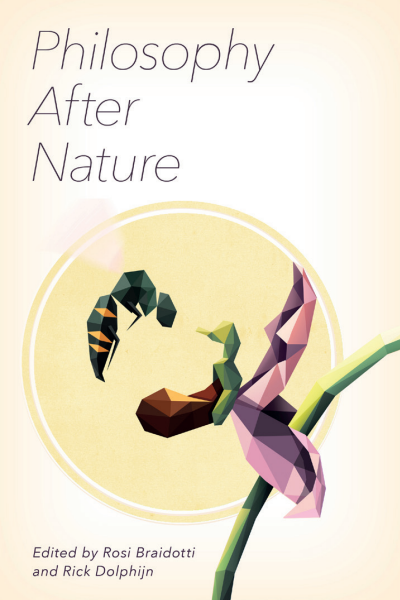
Philosophy After Nature
Editors:
|
Publisher:
2017
Summary
The significant changes that have dominated the social and the scientific world over the last thirty years have brought about upheavals and critical re-appraisals that have proved quite positive in fostering 21st century thought. This interdisciplinary collection of state-of-the-art essays offers innovative and thought-provoking insights concerning contemporary philosophical and cultural reflection on the nature-culture interaction. Starting from the assumption that the binary opposition between the two terms has been replaced by a continuum of the two, the volume explores both the terms of this new interaction, and its implications.
Technology occupies a central place in the shift towards a nature-cultural continuum, but it is not the only factor. The consequences of economic globalization, notably the global spread of digital mediation, also account for this change of perspective. Last but not least the climate change issue and a renewed urgency around the state of the environmental crisis also contribute to bring the ’natural’ much closer to home. Digital mediation has by now become a standard way to live and interact. The electronic frontier has altered dramatically the practice of education and research, especially in the Humanities and social sciences, with direct consequences for the institutional practice and the methodology of these disciplinary fields. This book aims to explore the implications of these complex shifts for the practice of critical thinking.
Keywords
Search publication
Bibliographic data
Edition
1/2017
Copyright Year
2017
ISBN-Print
978-1-78660-385-2
ISBN-Online
978-1-78660-387-6
Publisher
Rowman & Littlefield, Lanham
Language
English
Pages
230
Product Type
Edited Book
Table of contents
ChapterPages
Contents No access
Chapter One Introduction: After Nature No access Pages 1 - 10
Chapter Two Information and Thinking No access
Chapter Three ‘Die Natur ist nur einmal da’ [Nature Is There Only Once] No access
Chapter Four Generic Mediality: On the Role of Ciphers and Vicarious Symbols in an Extended Sense of Code-based ‘Alphabeticity' No access
Chapter Five The Resonance of Disparates: Spinoza, Damasio, Deleuze and the Ecology of Form No access
Chapter Six Media Entangled Phenomenology No access
Chapter Seven On Reason and Spectral Machines: Robert Brandom and Bounded Posthumanism No access
Chapter Eight Circuits of Desire: Cybernetics and the Post-natural According to Lyotard and Stiegler No access
Chapter Nine History as an Ecological Niche: Beyond Benjamin’s Nature No access
Chapter Ten Nature, Technology and Conscious Evolution: A Post-human Constructive Philosophy No access
Chapter Eleven Being without Life: On the Trace of Organic Chauvinism with Derrida and DeLanda No access
Chapter Twelve Returning to Text: Deconstructive Paradigms and Posthumanism No access
Chapter Thirteen Primary and Secondary Nature: The Role of Indeterminacy in Spinoza and Bartleby No access