, to see if you have full access to this publication.
Monograph No access
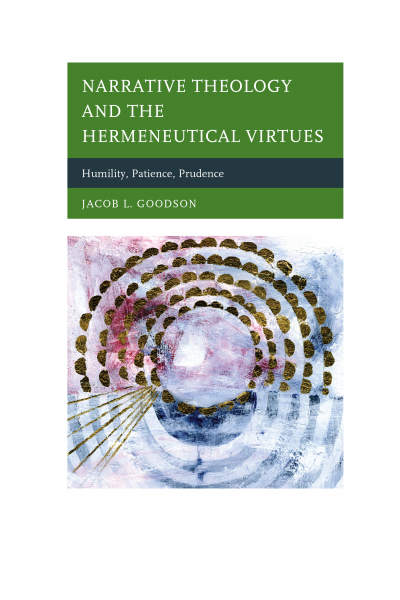
Narrative Theology and the Hermeneutical Virtues
Humility, Patience, Prudence
Authors:
Publisher:
2015
Summary
Dr. Jacob L. Goodson will be doing a book signing for Narrative Theology and the Hermeneutical Virtues: Humility, Patience, Prudence at Eighth Day Books in Wichita, KS, on Saturday March 21, 2015, at 4:00pm.
In Narrative Theology and the Hermeneutical Virtues: Humility, Patience, Prudence, Jacob L. Goodson offers a philosophical analysis of the arguments and tendencies of Hans Frei’s and Stanley Hauerwas’ narrative theologies. Narrative theology names a way of doing theology and thinking theologically that is part of a greater movement called “the return to Scripture.” The return to Scripture movement makes a case for Scripture as the proper object of study within Christian theology, philosophy of religion, and religious ethics. While thinkers within this movement agree that Scripture is the proper object of study within philosophy and religious studies, there is major disagreement over what the word “narrative” describes in narrative theology.
The Yale theologian, Hans Frei, argues that because Scripture is the proper object of study within Christian theology and the philosophy of religion, Scripture must be the exclusive object of study. To think theologically means paying as close attention as possible to the details of the biblical narratives in their “literal sense.” Different from Frei’s contentions, the Christian ethicist at Duke University, Stanley Hauerwas claims: if Scripture is the proper object of study within Christian theology, then the category of narrative teaches us that we ought to give our scholarly attention to the interpretations and performances of Scripture. Hauerwas emphasizes the continuity between the biblical narratives and the traditions of the church. This disagreement is best described as a hermeneutical one: Frei thinks that the primary place where interpretation happens is in the text; Hauerwas thinks that the primary place where interpretation occurs is in the community of interpreters.
In order to move beyond the dichotomy found between Frei’s and Hauerwas’ work, but to remain within the return to Scripture movement, Goodson constructs three hermeneutical virtues: humility, patience, and prudence. These virtues help professors and scholars within Christian theology, philosophy of religion, and religious ethics maintain objectivity in their fields of study.
Keywords
Search publication
Bibliographic data
Edition
1/2015
Copyright Year
2015
ISBN-Print
978-0-7391-9013-5
ISBN-Online
978-1-4985-0515-4
Publisher
Lexington, Lanham
Language
English
Pages
207
Product Type
Monograph
Table of contents
ChapterPages
Contents No access
Preface No access
Acknowledgments No access
Abbreviations No access
Introduction No access Pages 1 - 30
1 What Is Narrative Theology? No access
2 What Is Modern Philosophy’s Impact on Hermeneutics? No access
3 Against Spinoza No access
4 Against Locke No access
5 Can Narrative Theology Meet the Demands of Novelty? No access
6 Who Do Scientists of Interpretation Serve? No access
7 What Kind of Readers Should Scientists of Interpreters Be? No access
Conclusion No access Pages 167 - 192
Bibliography No access Pages 193 - 200
Subject Index No access Pages 201 - 204
Name Index No access Pages 205 - 206
About the Author No access Pages 207 - 207
Similar publications
from the topics "Religion und Theologie allgemein"