, to see if you have full access to this publication.
Monograph No access
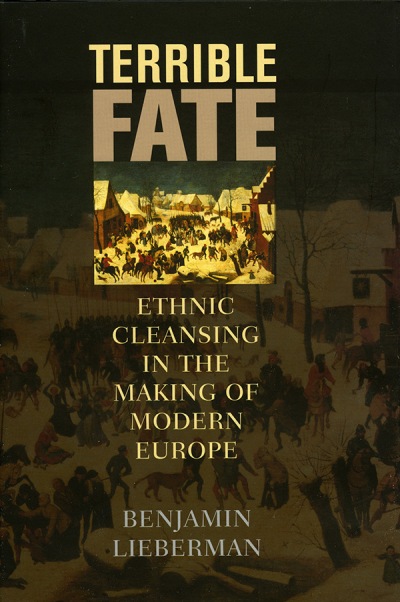
Terrible Fate
Ethnic Cleansing in the Making of Modern Europe
Authors:
Publisher:
2013
Summary
In the modern Greek city of Thessaloniki, the ruins of a vast Jewish cemetery lie buried under the city’s university. Nearby is the site of the childhood home of one of the founders of the modern Turkish state. These are tantalizing reminders of what was once the bustling cosmopolitan city of Salonica, home not just to Greeks but to thousands of Sephardic Jews, Turks, Bulgarians, and Armenians living and working peacefully alongside one another.
Thessaloniki is just one example among many of what used to be. Over the past two centuries, ethnic cleansing has remade the map of Central and Eastern Europe and the Middle East, transforming vast empires that embraced many ethnic groups into nearly homogenous nations. Towns and cities from Germany to Turkey still show traces of the vanished and nearly forgotten ethnic and religious communities that once called these places home.
In Terrible Fate, Benjamin Lieberman describes the violent transformations that occurred in Salonica and hundreds of other towns and cities as the Ottoman, Russian, Austro-Hungarian, and German empires collapsed, to be reborn as the modern nation-states we know today. His book is the first comprehensive history of this process that has involved the murder and forced migration of tens of millions of people. Drawing upon eyewitness accounts, contemporary journalism, and diplomatic records, Lieberman’s story sweeps across the continent, taking the reader from ethnic cleansing’s earliest beginnings in Bulgaria, Greece, and Russia in the nineteenth century, through the rise of nationalism, both world wars, the Armenian genocide, the Holocaust, and the rise and fall of the Soviet empire, up to the breakup of Yugoslavia in the 1990s. Along the way he examines the decisive roles of political leaders—not only monarchs and dictators but also those who were democratically elected—as well as ordinary people who often required very little encouragement to rob and brutalize their neighbors, or who were simply caught up in the tide of history.
Search publication
Bibliographic data
Edition
1/2013
Copyright Year
2013
ISBN-Print
978-1-56663-646-9
ISBN-Online
978-1-4422-3038-5
Publisher
Rowman & Littlefield, Lanham
Language
English
Pages
400
Product Type
Monograph
Table of contents
ChapterPages
Contents No access
Preface No access
Chapter 01. Bag and Baggage: Ethnic Cleansing Begins No access Pages 3 - 52
Chapter 02. Farewell to Salonica No access Pages 53 - 79
Chapter 03. “How Much Worse It Is Than Massacre!” No access Pages 80 - 117
Chapter 04. Ethnic Cleansing Between the World Wars No access Pages 118 - 158
Chapter 05. “There Was No One Left for Me” No access Pages 159 - 218
Chapter 06. “The Land of the Poles That Is Lost to the Germans” No access Pages 219 - 249
Chapter 07. After the Ottomans No access Pages 250 - 281
Chapter 08. “A Kind of Second Reality” No access Pages 282 - 328
Chapter 09. A Continent Cleansed No access Pages 329 - 340