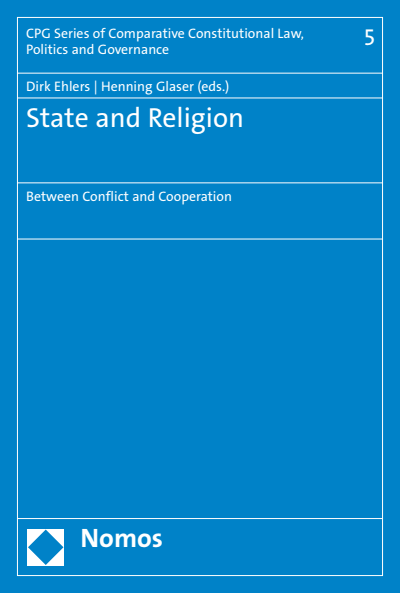
State and Religion
Between Conflict and Cooperation- Herausgeber:innen:
- |
- Verlag:
- 2020
Zusammenfassung
Für die normative Ordnung politischer Gemeinschaften bildet das Verhältnis zum Religiösen seit den zivilisatorischen Anfängen eine der wiederkehrenden Grundfragen, die der Band in 21 Kapiteln behandelt. Vom Standpunkt der Philosophie, Theologie, Politik- und insbesondere Rechtswissenschaft befassen sich führende Autoren sowohl mit Grundfragen als auch einzelnen Staaten, einschließlich Deutschland, Italien, Kroatien, Polen, Schweiz, Spanien, Mexiko, den Vereinigten Staaten, China, Indien, Japan, Singapur und Taiwan. Eine der zentralen Fragen betrifft dabei die Rolle der Religion unter den Bedingungen säkularer Staatlichkeit. Mit Beiträgen vonRodrigo Vitorino Souza Alves (Federal University of Uberlandia), Slavica Banić (Novi Informator), Wojciech Brzozowski (University of Warsaw), Otto Depenheuer (University of Cologne), Dirk Ehlers (University of Münster), Robert Esser (University of Passau), Alessandro Ferrari (University of Usurbia), Silvio Ferrari (University of Milan), Karsten Fischer (Ludwig Maximilian University of Munich), Andreas Follesdal (University of Oslo), Henning Glaser (Thammasat University), María Concepción Medina González (National Autonomous University of Mexico), Cheng-Tian Kuo (National Chengchi University), Bart Labuschagne (Leiden University), Andre Laliberte (University of Ottowa), René Pahud de Mortanges (University of Fribourg), Ronojoy Sen (National University of Singapore), Li-ann Thio (National University of Singapore), Javier Martínez-Torrón (Complutense University of Madrid), Johannes Zachhuber (University of Oxford) und Yijiang Zhong (University of Tokyo).
Publikation durchsuchen
Bibliographische Angaben
- Auflage
- 1/2020
- Copyrightjahr
- 2020
- ISBN-Print
- 978-3-8487-8000-6
- ISBN-Online
- 978-3-7489-2392-3
- Verlag
- Nomos, Baden-Baden
- Reihe
- CPG Series of Comparative Constitutional Law, Politics and Governance
- Band
- 5
- Sprache
- Englisch
- Seiten
- 597
- Produkttyp
- Sammelband
Inhaltsverzeichnis
- Titelei/Inhaltsverzeichnis Kein Zugriff Seiten 1 - 4
- Preface Kein Zugriff Seiten 5 - 10
- Autor:innen:
- A. Introduction Kein ZugriffAutor:innen:
- Autor:innen:
- I. The Complex World of Faith and Religion Kein ZugriffAutor:innen:
- II. Religion and the Political Kein ZugriffAutor:innen:
- Autor:innen:
- I. On the Relevance of the Religious Factor Kein ZugriffAutor:innen:
- II. Political Theology as an Epistemic Concept and its Discontents Kein ZugriffAutor:innen:
- Autor:innen:
- 1. The Conceptual Frame: A Theory of Normative Order Kein ZugriffAutor:innen:
- Autor:innen:
- a) The Universalists Kein ZugriffAutor:innen:
- b) The Politicals Kein ZugriffAutor:innen:
- c) Civic religion versus constitutional faith Kein ZugriffAutor:innen:
- Autor:innen:
- I. Typological Approximation Kein ZugriffAutor:innen:
- II. Dealing with the ‘Böckenförde Dilemma’: ‘Special relations’ in European Constitutionalism Kein ZugriffAutor:innen:
- III. Confucian/East Asian Constitutionalism: Politicals, Non- and Anti-Universalists Kein ZugriffAutor:innen:
- IV. Constitutional Change and Contestation Kein ZugriffAutor:innen:
- Bibiography Kein ZugriffAutor:innen:
- Autor:innen:
- A. Introduction Kein ZugriffAutor:innen:
- B. The young Hegel: In Search of a Contemporary Civil Religion for the Modern State Kein ZugriffAutor:innen:
- C. State and Religion in Hegels Grundlinien der Philosophie des Rechts (1821) Kein ZugriffAutor:innen:
- D. Religion and State in the later Hegel: The Encyclopaedia of 1830 Kein ZugriffAutor:innen:
- E. Conclusion: A Hegelian Perspective on Religion, Law and State Today Kein ZugriffAutor:innen:
- Autor:innen:
- A. “Caritas in veritate” from a Constitutional Perspective Kein ZugriffAutor:innen:
- B. Statehood as a Condition for Fundamental Rights Kein ZugriffAutor:innen:
- Autor:innen:
- I. The Road to the Secular State Kein ZugriffAutor:innen:
- II. Peace instead of Truth Kein ZugriffAutor:innen:
- Autor:innen:
- I. Claim of Universality and Bindingness Kein ZugriffAutor:innen:
- Autor:innen:
- 3. The Impositions of Modern Age: Life in Distinction Kein ZugriffAutor:innen:
- Autor:innen:
- I. Truth as a Fundamental Right Kein ZugriffAutor:innen:
- II. Risk of Dictatorship of Relativism Kein ZugriffAutor:innen:
- III. No Freedom against the Truth Kein ZugriffAutor:innen:
- Autor:innen:
- I. The modern state as guarantor of fundamental rights Kein ZugriffAutor:innen:
- II. Religious freedom and the risk of the truth Kein ZugriffAutor:innen:
- III. The person’s right and the plurality of truths Kein ZugriffAutor:innen:
- Bibliography Kein ZugriffAutor:innen:
- Autor:innen:
- A. Introduction Kein ZugriffAutor:innen:
- B. The Liberal Logic of the Secularization Process Kein ZugriffAutor:innen:
- C. Demands of Liberal Constitutionalism Kein ZugriffAutor:innen:
- D. The Political Ethics of World Religions Kein ZugriffAutor:innen:
- Autor:innen:
- A. Introduction Kein ZugriffAutor:innen:
- B. Public Religion in a Secularised World Kein ZugriffAutor:innen:
- C. Religion as a Source of Identity Kein ZugriffAutor:innen:
- Autor:innen:
- I. John Keble: Disestablishment as National Apostasy Kein ZugriffAutor:innen:
- II. Nikolai Grundtvig and the Cause of National Religion Kein ZugriffAutor:innen:
- III. German Unification and the Quest for Protestant Identity Kein ZugriffAutor:innen:
- IV. Summary Kein ZugriffAutor:innen:
- E. Religion and Collective Identity Today: Where do we stand? Kein ZugriffAutor:innen:
- F. Religion and Collective Identity: A Theological Critique Kein ZugriffAutor:innen:
- Autor:innen:
- A. Introduction Kein ZugriffAutor:innen:
- B. Law and Religion Kein ZugriffAutor:innen:
- Autor:innen:
- I. Amendment to Article 40 of the Constitution Kein ZugriffAutor:innen:
- Autor:innen:
- 1. An Approach to the Three Argued Reasons for Rejecting the Amendment to Article 24 of the Constitution Kein ZugriffAutor:innen:
- 2. Analysis of Article 24 of the Constitution Kein ZugriffAutor:innen:
- D. Public Policies for Managing Religious Diversity Kein ZugriffAutor:innen:
- E. Conclusion Kein ZugriffAutor:innen:
- Bibliography Kein ZugriffAutor:innen:
- Autor:innen:
- A. Introduction Kein ZugriffAutor:innen:
- B. Early Period and Middle Ages: State Church under a more Religious or more Secular Impact Kein ZugriffAutor:innen:
- C. From the Reformation to the End of the First World War: Approaches to Ensure Religious Freedom and Religious Equality Kein ZugriffAutor:innen:
- Autor:innen:
- Autor:innen:
- 1. Weimar Constitution Kein ZugriffAutor:innen:
- 2. Basic Law Kein ZugriffAutor:innen:
- 3. Essential Characteristics of the German Religious Law Kein ZugriffAutor:innen:
- II. European Convention for the Protection of Human Rights and Fundamental Freedoms Kein ZugriffAutor:innen:
- Autor:innen:
- 1. Secularization Kein ZugriffAutor:innen:
- 2. Pluralism Kein ZugriffAutor:innen:
- E. Conclusion Kein ZugriffAutor:innen:
- Autor:innen:
- Autor:innen:
- I. Arguments in Favour of Criminalization of Religious Defamation Kein ZugriffAutor:innen:
- II. Arguments Against Criminalization of Religious Defamation Kein ZugriffAutor:innen:
- Autor:innen:
- I. The Legal Interest Protected by Sec. 166 StGB Kein ZugriffAutor:innen:
- II. The Object of the Offence Kein ZugriffAutor:innen:
- III. “Defamation” Within the Meaning of Sec. 166 StGB Kein ZugriffAutor:innen:
- IV. Public Kein ZugriffAutor:innen:
- V. Limited Scope of Application of Sec. 166 StGB due to Freedom of Art Kein ZugriffAutor:innen:
- VI. Ability to Disturb Public Peace Kein ZugriffAutor:innen:
- VII. Examples Constituted by Jurisdiction or Examples of Different Courts’ Decisions Kein ZugriffAutor:innen:
- C. Sec. 166 StGB as Subject in the World of Politics Kein ZugriffAutor:innen:
- D. Sec. 166 StGB as Subject of Academic Writing Kein ZugriffAutor:innen:
- E. Current Discussion in Germany in the Light of the Terrorist Attacks in Paris in January 2015 Kein ZugriffAutor:innen:
- F. Final Views Kein ZugriffAutor:innen:
- Autor:innen:
- A. Introduction Kein ZugriffAutor:innen:
- Autor:innen:
- I. Notion Kein ZugriffAutor:innen:
- II. Types of Conditions Kein ZugriffAutor:innen:
- III. Basic Options Kein ZugriffAutor:innen:
- Autor:innen:
- I. General Policy Kein ZugriffAutor:innen:
- Autor:innen:
- Autor:innen:
- a) Fundamental Rights Kein ZugriffAutor:innen:
- b) Further Constitutional Elements of the Incorporation Regime Kein ZugriffAutor:innen:
- III. Further Elements of the Legal System of Incorporation Kein ZugriffAutor:innen:
- Autor:innen:
- 1. An Element of Great Importance: The Recognition under Public Law Kein ZugriffAutor:innen:
- V. The Jurisprudence Kein ZugriffAutor:innen:
- D. Conclusion Kein ZugriffAutor:innen:
- Autor:innen:
- A. Introduction Kein ZugriffAutor:innen:
- B. Sociological Frameworks Kein ZugriffAutor:innen:
- Autor:innen:
- I. The Union of Islamic Communities and Organizations in Italy Kein ZugriffAutor:innen:
- II. The Islamic Cultural Center of Italy Kein ZugriffAutor:innen:
- III. The Islamic Religious Community in Italy Kein ZugriffAutor:innen:
- D. Muslims Before the State: In Search for a Law Kein ZugriffAutor:innen:
- E. Looking for (a Policy of) Religious Freedom Kein ZugriffAutor:innen:
- F. Towards an Italian “Muslim Church”? Kein ZugriffAutor:innen:
- Autor:innen:
- A. Introduction Kein ZugriffAutor:innen:
- B. The European Context Kein ZugriffAutor:innen:
- C. The Italian Case or Catholicism as the Civil Religion of Italy Kein ZugriffAutor:innen:
- D. The Crucifix as Symbol of the Italian Civil Religion Kein ZugriffAutor:innen:
- E. Italy v. France: Two Models of Civil Religion Kein ZugriffAutor:innen:
- F. What Future for the Italian Civil Religion? Kein ZugriffAutor:innen:
- Autor:innen:
- A. Introduction Kein ZugriffAutor:innen:
- B. Lautsi Kein ZugriffAutor:innen:
- C. The Margin of Appreciation Kein ZugriffAutor:innen:
- D. The Legitimacy of the Social Objective Pursued Kein ZugriffAutor:innen:
- E. How Important is the Restricted/Derogated Right Kein ZugriffAutor:innen:
- F. How InvasiveWill the Proposed Interference be Kein ZugriffAutor:innen:
- Autor:innen:
- I. Are Crucifixes Necessary? Kein ZugriffAutor:innen:
- II. Did the State Consider Less Rights-Infringing Alternatives? Kein ZugriffAutor:innen:
- III. Will all Alternatives Violate Some Citizens’ Human Rights? Kein ZugriffAutor:innen:
- H. Whether the Reasons Offered by the National Authorities are Relevant and Sufficient Kein ZugriffAutor:innen:
- I. Concluding Assessment Kein ZugriffAutor:innen:
- Bibliography Kein ZugriffAutor:innen:
- Autor:innen:
- Autor:innen:
- I. Historical Overview from the 19th Century to 1945 Kein ZugriffAutor:innen:
- II. Position of the Religious Communities in the Socialist Time (1945-1990) Kein ZugriffAutor:innen:
- III. Revitalization of Religion after 1990 Kein ZugriffAutor:innen:
- IV. The Croatian Constitutional Framework Regarding Religion Kein ZugriffAutor:innen:
- V. The Legal Framework for the Religious Communities from 1990 to 2002 Kein ZugriffAutor:innen:
- VI. The Legal Status of the Catholic Church in Croatia – the Concordats between the Holy See and Croatia and Their Impact on the Croatian Legal Order Kein ZugriffAutor:innen:
- VII. Relationship between the State and the Catholic Church Kein ZugriffAutor:innen:
- VIII. The Legal Framework for Religious Communities from 2002 Kein ZugriffAutor:innen:
- IX. The Relationship of the State and Other Religious Communities Kein ZugriffAutor:innen:
- X. The Case-Law of the Constitutional Court with Regard to the Religious Communities Kein ZugriffAutor:innen:
- XI. Croatian Society Between the State and Religion Kein ZugriffAutor:innen:
- B. Conclusion Kein ZugriffAutor:innen:
- Autor:innen:
- A. Some Historical Remarks Kein ZugriffAutor:innen:
- Autor:innen:
- I. The new Approach of the 1978 Constitution on Church-State Relations Kein ZugriffAutor:innen:
- II. Constitutional Provisions Relevant to Religion Kein ZugriffAutor:innen:
- Autor:innen:
- 1. Religious freedom Kein ZugriffAutor:innen:
- 2. Equality Kein ZugriffAutor:innen:
- 3. Neutrality Kein ZugriffAutor:innen:
- 4. Cooperation Kein ZugriffAutor:innen:
- 5. Case Law of the Constitutional Court Kein ZugriffAutor:innen:
- Autor:innen:
- I. The Organic Law on Religious Freedom Kein ZugriffAutor:innen:
- Autor:innen:
- 1. The Registry of Religious Entities Kein ZugriffAutor:innen:
- 2. The Advisory Commission on Religious Freedom Kein ZugriffAutor:innen:
- Autor:innen:
- 1. The Concordat with the Catholic Church Kein ZugriffAutor:innen:
- 2. Cooperation Agreements with Other Religious Communities Kein ZugriffAutor:innen:
- IV. Current Challenges Kein ZugriffAutor:innen:
- Autor:innen:
- I. Influence of Religion in Politics Kein ZugriffAutor:innen:
- II. Political Influence in Religion Kein ZugriffAutor:innen:
- III. Interaction between Religion and State Kein ZugriffAutor:innen:
- Autor:innen:
- I. Religion and Art Kein ZugriffAutor:innen:
- II. Religion and Media Kein ZugriffAutor:innen:
- Autor:innen:
- A. Why Neutrality? Kein ZugriffAutor:innen:
- B. Careless Legislator Kein ZugriffAutor:innen:
- C. Reluctant Judiciary Kein ZugriffAutor:innen:
- D. Over-indulgent Legal Scholars Kein ZugriffAutor:innen:
- E. Conclusion Kein ZugriffAutor:innen:
- Autor:innen:
- A. Introduction Kein ZugriffAutor:innen:
- B. Types of Secularism Kein ZugriffAutor:innen:
- C. Theories of Indian Secularism Kein ZugriffAutor:innen:
- D. What the Founders Thought Kein ZugriffAutor:innen:
- E. The Hindutva Ruling Kein ZugriffAutor:innen:
- F. The Politics of Hinduism Kein ZugriffAutor:innen:
- Autor:innen:
- A. Introduction Kein ZugriffAutor:innen:
- B. Setting the Context: Religion and the Singapore Constitutional Order Kein ZugriffAutor:innen:
- C. Secularism with a Soul – The Singapore Model Kein ZugriffAutor:innen:
- D. Constitutional and Legal Framework Kein ZugriffAutor:innen:
- E. The Accommodation of Muslim Minorities and Promoting Pacific Co-existence Through Autonomy Schemes Kein ZugriffAutor:innen:
- F. Cooperation of Religion and State Kein ZugriffAutor:innen:
- G. Limitations on Religious Freedom in the Interests of Public Order/Security Kein ZugriffAutor:innen:
- H. Pre-Emptive Approaches towards Regulating Religion: The Maintenance of Religious Harmony Act (Cap 167A) Kein ZugriffAutor:innen:
- I. Conclusion: Managing Religion Through Legal and Non-legal Approaches Kein ZugriffAutor:innen:
- Autor:innen:
- A. Introduction Kein ZugriffAutor:innen:
- B. The Relationship between the Modern State and Religions in China Kein ZugriffAutor:innen:
- C. Religious Ecology and its Impact on Politics Kein ZugriffAutor:innen:
- Autor:innen:
- I. The Dream of Great Unity Kein ZugriffAutor:innen:
- II. Challenging the Mandate of Heaven Kein ZugriffAutor:innen:
- III. A Variety of Chinese Political Theologies Kein ZugriffAutor:innen:
- E. Conclusion Kein ZugriffAutor:innen:
- Autor:innen:
- A. Introduction Kein ZugriffAutor:innen:
- B. Three Stages of State-Religion Relations in Taiwan Kein ZugriffAutor:innen:
- C. Democratic Prophets: The Presbyterian Church in Taiwan Kein ZugriffAutor:innen:
- D. Democratic Priests: Foguangshan (FGS) Kein ZugriffAutor:innen:
- E. Conclusion Kein ZugriffAutor:innen:
- Autor:innen:
- A. Introduction Kein ZugriffAutor:innen:
- B. The Yasukuni Shrine, Past and Present Kein ZugriffAutor:innen:
- C. Religious Freedom, Historical Memory, and Ultimate Values Kein ZugriffAutor:innen:
- D. Religious Freedom, Religion, and Political Community Kein ZugriffAutor:innen:
- E. Conclusion Kein ZugriffAutor:innen:
- Autor:innen:
- A. Introduction Kein ZugriffAutor:innen:
- Autor:innen:
- I. The International Covenant on Civil and Political Rights Kein ZugriffAutor:innen:
- II. Minority Rights Declaration Kein ZugriffAutor:innen:
- III. Recommendations of the United Nations Forum on Minority Issues Kein ZugriffAutor:innen:
- C. The Concept of Religious Minority Kein ZugriffAutor:innen:
- D. Religious Groups and the Minority Rights Regime Kein ZugriffAutor:innen:
- Autor:innen:
- I. Protecting the Existence of Religious Minorities Kein ZugriffAutor:innen:
- II. Protecting the Identity of Religious Minorities Kein ZugriffAutor:innen:
- F. Conclusion Kein ZugriffAutor:innen:
- List of Contributors Kein Zugriff Seiten 593 - 597