, um zu prüfen, ob Sie einen Vollzugriff auf diese Publikation haben.
Monographie Kein Zugriff
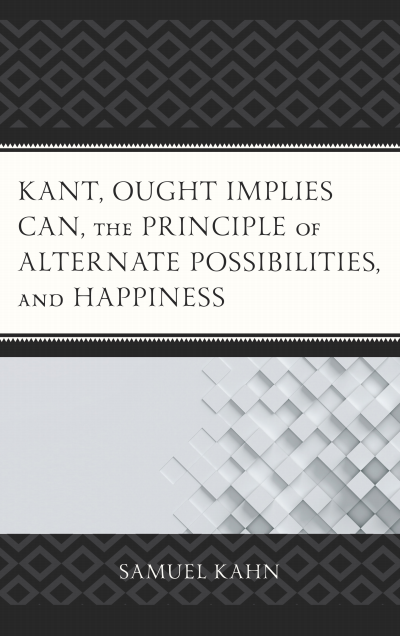
Kant, Ought Implies Can, the Principle of Alternate Possibilities, and Happiness
Autor:innen:
Verlag:
2018
Zusammenfassung
Throughout his corpus, Kant repeatedly and resolutely denies that there is a duty to promote one’s own happiness, and most present-day Kantians seem to agree with him. In Kant, Ought Implies Can, the Principle of Alternate Possibilities, and Happiness, Samuel Kahn argues that this denial rests on two main ideas: (1) a conception of duty that makes the principle of ought implies can (OIC) and the principle of alternate possibilities (PAP) analytic, and (2) the claim that humans necessarily promote their own happiness. This book defends OIC and PAP but nonetheless attacks the second idea, and it supplements this attack with two additional arguments—an interpersonal one and an intrapersonal one—for the claim that a modern day Kantian ethics should affirm a duty to promote one’s own happiness.
Schlagworte
Publikation durchsuchen
Bibliographische Angaben
Auflage
1/2018
Copyrightjahr
2018
ISBN-Print
978-1-4985-1961-8
ISBN-Online
978-1-4985-1962-5
Verlag
Lexington, Lanham
Sprache
Englisch
Seiten
272
Produkttyp
Monographie
Inhaltsverzeichnis
KapitelSeiten
Contents Kein Zugriff
Introduction Kein Zugriff Seiten 1 - 6
Translation Note Kein Zugriff Seiten 7 - 8
Chapter One. Terminology and Exegesis Kein Zugriff
Chapter Two. Arguments in Favor of OIC Kein Zugriff
Chapter Three. Objections to OIC Kein Zugriff
Chapter Four. Setting the Stage Kein Zugriff
Chapter Five. The Connection Between PAP and OIC Kein Zugriff
Chapter Six. The Second Line of Defense: Rolling Back the Concession of PAP Kein Zugriff
Chapter Seven. “Happiness,” “General Duties,” and the Standard Account Kein Zugriff
Chapter Eight. The Means to Happiness, Indirect Duties, and Two Arguments for a Direct Duty Kein Zugriff