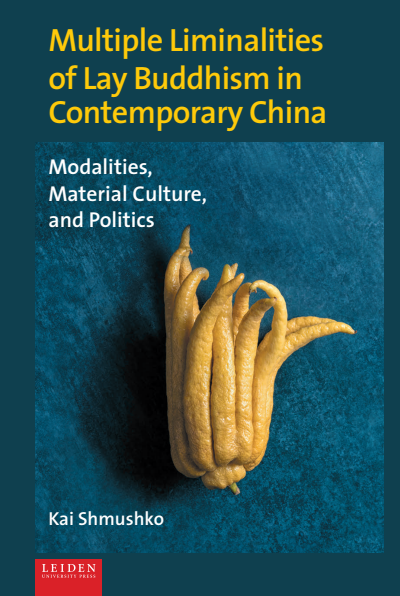
Multiple Liminalities of Lay Buddhism in Contemporary China
Modalities, Material Culture, and Politics- Autor:innen:
- Verlag:
- 2024
Zusammenfassung
In the past decades, various forms of Buddhism have emerged in-between, above, and beyond conventional conceptions of religious and spiritual life in China. This book is a qualitative study exploring manifestations of the massive revival of Buddhism among non-monastic people and communities. The book wishes to answer the central question: How do Chinese groups and individuals practice Buddhism under the socio-political and cultural circumstances of contemporary China? This inquiry is based on a sample of case studies from the People’s Republic of China (PRC) and the Republic of China (Taiwan, ROC), exploring Buddhist communities, individual practitioners, materials, spaces, practice modalities and relationships. Each chapter examines a significant paradigm that plays a role in the revival of Buddhism in China, highlighting how lay practitioners negotiate their spaces, resources, moral and ethical beliefs, and values, in the face of rapid societal changes. The research reveals how state policies, economic shifts, local trends, and global developments, such as environmental concerns and technological advances impact and transform older Buddhist traditions. Overall, the author argues for the concept of
multiple liminalities
as a framework to describe the contemporary predicament of lay Buddhism in Chinese societies. Accordingly, lay Buddhist actors occupy liminal positions or operate across ambiguous boundaries where realms of in-betweenness, serve as avenues for religious responses to the complex challenges Buddhism in China faces.
Publikation durchsuchen
Bibliographische Angaben
- Auflage
- 1/2024
- Copyrightjahr
- 2024
- ISBN-Print
- 978-90-8728-456-5
- ISBN-Online
- 978-94-006-0494-0
- Verlag
- Leiden University Press, Leiden
- Sprache
- Englisch
- Seiten
- 300
- Produkttyp
- Monographie
Inhaltsverzeichnis
- Contents Kein Zugriff
- List of Figures Kein Zugriff
- Acknowledgements Kein Zugriff
- List of Abbreviations Kein Zugriff
- Hypothesis and Research Questions Kein Zugriff
- Methodology and Research Strategy Kein Zugriff
- Positioning Kein Zugriff
- Buddhism under the Chinese Communist Party Kein Zugriff
- A Buddhist Revival in the Late Twentieth and Early Twenty-First Centuries Kein Zugriff
- PRC Policy Towards Religion and its Influence on Buddhism Kein Zugriff
- Laying the Groundwork: Lay Buddhism Kein Zugriff
- Multiple Liminalities Kein Zugriff
- Introduction Kein Zugriff
- Tibetan Buddhism in Modern China Kein Zugriff
- Some Characteristics of Tibetan Esoteric Buddhism Kein Zugriff
- Between the Tibetan Plateau and Residential Shanghai Kein Zugriff
- A Layered Community Modality Kein Zugriff
- Practice and Orthopraxy Kein Zugriff
- The Birth of The Living Hall Model Kein Zugriff
- Regulations and Discourse on Religion in the Xi Jinping Era Kein Zugriff
- Commodification, Enchantment, and Material Culture Kein Zugriff
- Between Religious Commodities and Cultural Elements Kein Zugriff
- Conclusion Kein Zugriff
- Introduction Kein Zugriff
- Practice and Community During the Pandemic—The Pure Light Valley Retreat Kein Zugriff
- COVID‑19‑related Ritual Economy Kein Zugriff
- The New Normal or the Old Normal Accelerated? Kein Zugriff
- Religious Tourism in Tibet Kein Zugriff
- Conclusion: Resilience, Adaptation, and Permanent Liminality Kein Zugriff
- Introduction Kein Zugriff
- Urbanization and Shenzhen Kein Zugriff
- The Spatiality of Buddhism in Shenzhen Kein Zugriff
- Hongfa Temple—an Institutionalized Space for Lay Buddhism Kein Zugriff
- Modern Orthopraxy—Accelerated Merit Economy Kein Zugriff
- Lay Practices—Bottom Up or Top Down? Kein Zugriff
- Conclusion—Clean Worship? Kein Zugriff
- Urban Villages in Shenzhen Kein Zugriff
- Arriving in Wutong Kein Zugriff
- Wutong—an Art Village Kein Zugriff
- Grassroot Buddhist Groups in Wutong Kein Zugriff
- Ms. Li’s Fermented Lemons Kein Zugriff
- The Ru Family Tea–Guesthouse – Expanding the Space of Practice Kein Zugriff
- Nun Niangu’s Buddhist Center Kein Zugriff
- Between Religion and Culture Kein Zugriff
- Conclusion—Liminoid and the Future of Buddhism in Wutong Kein Zugriff
- Introduction: The Digital Turn of Religion in Asia and Beyond Kein Zugriff
- The Context of the PRC Kein Zugriff
- Regulations Regarding Religion on the Internet Kein Zugriff
- The Digital Turn and Liminality Kein Zugriff
- The Little Things—Recitation as Ritual Technology Kein Zugriff
- Count Your Prayers! Together Kein Zugriff
- Cybersanghas Kein Zugriff
- Embedding in The Little Red Book Kein Zugriff
- “Inspire Lives” Kein Zugriff
- Esthetics, Symbols, and Performativity Kein Zugriff
- Visuals and Stories Kein Zugriff
- Micro-Practices of Belonging Kein Zugriff
- Tea Drinking Going “Viral”—Tea Practices and Symbolism Replicated Kein Zugriff
- The Online Presence of Tea Rooms Kein Zugriff
- Impact of Measures and Regulations—2017–2022 Kein Zugriff
- Conclusion Kein Zugriff
- Introduction Kein Zugriff
- The Material Turn Kein Zugriff
- Modern Buddhism in Taiwan Kein Zugriff
- Taiwan and China Kein Zugriff
- Tea and the “Four Great Mountains” of Taiwan Kein Zugriff
- Tzu Chi’s “Four Jing” Tea Kein Zugriff
- Buddhist Practice in the Shanwaishan Organic Tea Farm—Setting Kein Zugriff
- Community Structure Kein Zugriff
- Combining Scripture Reading in the Daily Farm Routine Kein Zugriff
- Tea as More Than a Material Kein Zugriff
- The Practice of Tea—From the Ground Up Kein Zugriff
- Lay Agency and Skillful Means Kein Zugriff
- Conclusion—Between Science and Supernatural Power Kein Zugriff
- Destabilization of Religious Structures Kein Zugriff
- Cyberspace as a Locus for Lay Buddhism Kein Zugriff
- Commodification, Commercialization, Materialization Kein Zugriff
- Multiple Liminalities—Beyond Positive and Negative Kein Zugriff
- Bibliography Kein Zugriff Seiten 275 - 292
- Index Kein Zugriff Seiten 293 - 298