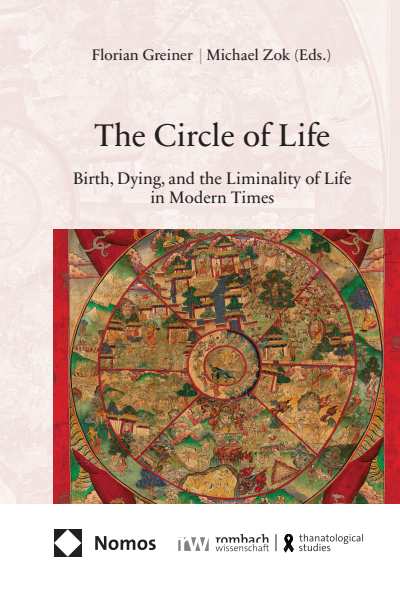
The Circle of Life
Birth, Dying, and the Liminality of Life in Modern Times- Herausgeber:innen:
- |
- Reihe:
- Thanatologische Studien | Thanatological Studies, Band 4
- Verlag:
- 2024
Zusammenfassung
Säkularisierung, Verwissenschaftlichung und Rationalisierung haben in modernen Gesellschaften große Auswirkungen auf Glaubenssysteme und das Alltagsleben. Diese Prozesse beeinflussten die Bedeutung von Liminalität und Übergangsriten, die Gegenstand öffentlicher Diskurse sowie politischer, ethischer, medizinischer oder rechtlicher Entscheidungen sind. Seit dem frühen 20. Jahrhundert standen sie im Mittelpunkt kontroverser Debatten, insbesondere mit Fokus auf den Anfang und das Ende des Lebens, die auf zentrale Unsicherheiten jeder Gesellschaft hinweisen: Was bedeutet menschliches Leben? Wie definieren wir seine Grenzen? Wo kommen wir her? Und wohin gehen wir? Dieser interdisziplinäre Band zeichnet die Geschichte dieses Diskurses nach – und seine Implikationen für die Gegenwart. Mit Beiträgen vonMarina Bantiou | Anna Bauer | Thorsten Benkel | P. Boopathi | Julia Dornhöfer | Christoph Egen | Eric Benjamin Franklin | Florian Greiner | Christoph Gutenbrunner | Luisa Klatte | Wiebke Lisner | Anne Ostermann | Cornelia Weiß | Michael Zok
Schlagworte
Publikation durchsuchen
Bibliographische Angaben
- Auflage
- 1/2024
- Copyrightjahr
- 2024
- ISBN-Print
- 978-3-98858-063-4
- ISBN-Online
- 978-3-98858-064-1
- Verlag
- Rombach Wissenschaft, Baden-Baden
- Reihe
- Thanatologische Studien | Thanatological Studies
- Band
- 4
- Sprache
- Englisch
- Seiten
- 234
- Produkttyp
- Sammelband
Inhaltsverzeichnis
- Titelei/InhaltsverzeichnisSeiten 1 - 6 Download Kapitel (PDF)
- Autor:innen: |Download Kapitel (PDF)
- Structure of the Book
- References
- Autor:innen: | | |Download Kapitel (PDF)
- Introduction and Background
- PND and PGD as treatments of prevention
- Conclusion
- References
- Autor:innen:Download Kapitel (PDF)
- Introduction: Pregnancies as a liminal stage of life and death at the center of Nazi biopolitics
- Pregnancies: Perceptions and Choices
- Abortions: Biopolitical Goals and the Politics of Germanization
- Detecting Abortions: Denunciations and Investigations
- Prosecution Practices
- Conclusions
- References
- Autor:innen:Download Kapitel (PDF)
- Introduction
- Methodology
- The Impact of Ceausescu’s Pronatalist Policies on Reproductive Rights
- Consequences of the Decree: Children in Orphanages and State Institutions
- Epilogue
- References
- Autor:innen:Download Kapitel (PDF)
- Introduction
- Controversies around § 218
- Liberal handling in post-war Germany
- Nation-building and motherhood
- Internal and External Pressures for Liberalization
- Abortion in GDR’s civil rights movements
- Abortion during German reunification
- Conclusion
- References
- Autor:innen:Download Kapitel (PDF)
- Introduction
- Some background
- »Little Human Beings«. The Catholic Church, the Beginning of Life and the Absence of Liminality
- Legal Debates and Distribution of Believes
- Two Sides of the Coin: Abortion and Euthanasia
- Social Consequences and the Question of Nation
- Conclusion: The Liminal Stage That Was Not
- References
- Autor:innen:Download Kapitel (PDF)
- Disappearance
- Reappearance
- Science and art
- References
- Autor:innen:Download Kapitel (PDF)
- Taboo or not Taboo?
- Living Wills in Germany
- The Emergency Case as a Liminal Period
- Missed out Conversations about the End of Life
- Conclusion: Think Liminal and Break the Death Taboo!
- References
- Autor:innen:Download Kapitel (PDF)
- Introduction
- Analysis of Actor Constellations
- What does the friend say?
- What does the physician say?
- What does the hospice manager say?
- What do the nurses say?
- What does the hospice resident say?
- What does the chief physician say?
- What do the other physicians say?
- What does the nurse say?
- What does the physiotherapist say?
- Summary of the two cases
- Distributed ›death brokering‹
- Conclusion – Liminality and the Transfiguration of Agony
- References
- Autor:innen:Download Kapitel (PDF)
- Introduction
- Historical Views on Death in India
- Euthanasia Debate in India
- The Case of Aruna Shanbaug
- Religious Implications
- Legal Implications
- Ethical Implications
- The Present Situation
- Conclusion
- References
- Autor:innen:Download Kapitel (PDF)
- The emergence of national criminal codes in the nineteenth century
- The second half of the twentieth century
- Formalizing the status quo versus legalizing mercy killing
- Conclusion
- References
- AuthorsSeiten 233 - 234 Download Kapitel (PDF)