, um zu prüfen, ob Sie einen Vollzugriff auf diese Publikation haben.
Monographie Kein Zugriff
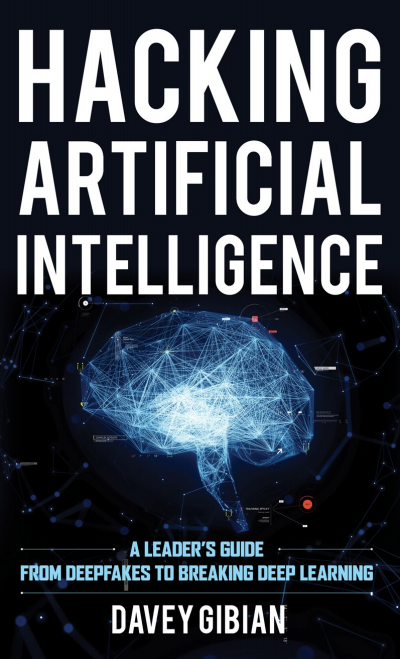
Hacking Artificial Intelligence
A Leader's Guide from Deepfakes to Breaking Deep Learning
Autor:innen:
Verlag:
2022
Zusammenfassung
Sheds light on the ability to hack AI and the technology industry’s lack of effort to secure vulnerabilities.
We are accelerating towards the automated future. But this new future brings new risks. It is no surprise that after years of development and recent breakthroughs, artificial intelligence is rapidly transforming businesses, consumer electronics, and the national security landscape. But like all digital technologies, AI can fail and be left vulnerable to hacking. The ability to hack AI and the technology industry’s lack of effort to secure it is thought by experts to be the biggest unaddressed technology issue of our time. Hacking Artificial Intelligence sheds light on these hacking risks, explaining them to those who can make a difference.
Today, very few people—including those in influential business and government positions—are aware of the new risks that accompany automated systems. While society hurdles ahead with AI, we are also rushing towards a security and safety nightmare. This book is the first-ever layman’s guide to the new world of hacking AI and introduces the field to thousands of readers who should be aware of these risks. From a security perspective, AI is today where the internet was 30 years ago. It is wide open and can be exploited. Readers from leaders to AI enthusiasts and practitioners alike are shown how AI hacking is a real risk to organizations and are provided with a framework to assess such risks, before problems arise.
Schlagworte
Publikation durchsuchen
Bibliographische Angaben
Copyrightjahr
2022
ISBN-Print
978-1-5381-5508-0
ISBN-Online
978-1-5381-5509-7
Verlag
Rowman & Littlefield, Lanham
Sprache
Englisch
Seiten
182
Produkttyp
Monographie
Inhaltsverzeichnis
KapitelSeiten
Contents Kein Zugriff
Introduction Kein Zugriff Seiten 1 - 10
Chapter One A Brief Overview of Artificial Intelligence Kein Zugriff Seiten 11 - 18
Chapter Two How AI Is Different from Traditional Software Kein Zugriff Seiten 19 - 24
Chapter Three Data Bias Kein Zugriff Seiten 25 - 40
Chapter Four Hacking AI Systems Kein Zugriff Seiten 41 - 48
Chapter Five Evasion Attacks Kein Zugriff Seiten 49 - 70
Chapter Six Data Poisoning Kein Zugriff Seiten 71 - 84
Chapter Seven Model Inversion (“Privacy”) Attacks Kein Zugriff Seiten 85 - 94
Chapter Eight Obfuscation Attacks Kein Zugriff Seiten 95 - 98
Chapter Nine Talking to AI: Model Interpretability Kein Zugriff Seiten 99 - 108
Chapter Ten Machine versus Machine Kein Zugriff Seiten 109 - 114
Chapter Eleven Will Someone Hack My AI? Kein Zugriff Seiten 115 - 128
Chapter Twelve The Machine Told Us to Do It Kein Zugriff Seiten 129 - 152