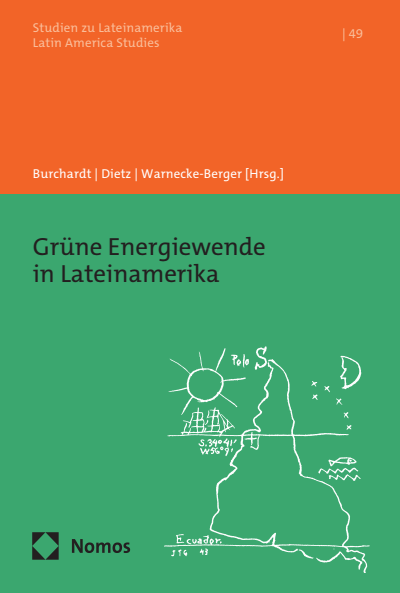
Grüne Energiewende in Lateinamerika
- Herausgeber:innen:
- | |
- Reihe:
- Studien zu Lateinamerika, Band 49
- Verlag:
- 2024
Zusammenfassung
Im Kontext von Klimakrise, Dekarbonisierung und Energiewende erlangt Lateinamerika eine neue geopolitische Bedeutung. Zum einen ist die Region als Lieferant für sogenannte kritische Rohstoffe, ohne die Elektroautos, Windräder und Solarpaneele nicht gebaut werden könnte, wichtig. Zum anderen gewinnt sie als Absatzmarkt für grüne Technologien, die in China, den USA oder Europa produziert werden, an Bedeutung. Gleichzeitig verfügt Lateinamerika über viel Wind, Sonne und Wasser, wichtige Bedingungen für die Herstellung von grünem Wasserstoff. Diese Gemengelage wird den Subkontinent grundlegend verändern. Der anstehende Wandel schafft neue Möglichkeiten, provoziert aber auch neue Konflikte. Der Sammelband leuchtet am Beispiel der Energiewende die Zukunft Lateinamerikas aus und legt einen besonderen Fokus auf geopolitische Veränderungen, entwicklungspolitische Optionen, Konflikte und alternative Lösungsansätze.Mit Beiträgen vonHans-Jürgen Burchardt | Luíza Cerioli | Kristina Dietz | Felix Malte Dorn | Andreas Gutmann | Alina Heuser | Javier Lastra-Bravo | Sebastian Matthes | Fabricio Rodríguez | Nina Schlosser | Hannes Warnecke-Berger
Schlagworte
Publikation durchsuchen
Bibliographische Angaben
- Auflage
- 1/2025
- Copyrightjahr
- 2024
- ISBN-Print
- 978-3-7560-1873-4
- ISBN-Online
- 978-3-7489-4605-2
- Verlag
- Nomos, Baden-Baden
- Reihe
- Studien zu Lateinamerika
- Band
- 49
- Sprache
- Deutsch
- Seiten
- 218
- Produkttyp
- Sammelband
Inhaltsverzeichnis
- Titelei/InhaltsverzeichnisSeiten 1 - 6 Download Kapitel (PDF)
- Autor:innen: | |Download Kapitel (PDF)
- 1 Die Energiewende in Lateinamerika
- 2 Die Beiträge des Sammelbandes
- 3 Literatur
- Autor:innen:Download Kapitel (PDF)
- 1 Einleitung
- 2 Die Geopolitik der Energiewende und ihre Bedeutung für Lateinamerika
- 3 Energiewende und Energiewendepfade – ein Analyserahmen
- 4.1 Grüner Extraktivismus
- 4.2 Grüne Entwicklung
- 4.3 Ökologische Modernisierung der fossilen Energiewirtschaft
- 5 Fazit
- 6 Literatur
- Autor:innen:Download Kapitel (PDF)
- 1 Einleitung
- 2 Unsicherheiten der globalen Energiewende
- 3 China, USA und die EU
- 4.1 Neue Rohstoffe: das Beispiel Lithium
- 4.2 Grüner Wasserstoff
- 4.3 Die Zukunft fossiler Rohstoffe
- 4.4 Grüne Industrialisierung
- 5 Fazit
- 6 Literatur
- Autor:innen:Download Kapitel (PDF)
- 1 Einleitung
- 2 Energiewende, Dekarbonisierung und Extraktivismus
- 3 Das Beispiel Kupfer
- 4 Ökologie, Technologie und Autoritarismus
- 5 Fazit: Energiewende und neue Machtverhältnisse
- 6 Literatur
- Autor:innen:Download Kapitel (PDF)
- 1 Einleitung
- 2.1 Ein theoretischer Streit ohne empirische Erdung
- 2.2 Das Konzept der ungleichen Spezialisierung
- 2.3 Rohstoffe und Renten
- 2.4 Renten verändern Gesellschaft
- 3.1 Energiewende, Struktur der Nachfrage und soziale Ungleichheiten
- 3.2 Grüne Technologie und Substituierbarkeit der Rohstoffe
- 3.3 Das notwendige Auftreten der Renten
- 4 Die neue Rolle Lateinamerikas
- 5 Literatur
- Autor:innen:Download Kapitel (PDF)
- 1 Einleitung
- 2 Rohstoffe und Entwicklung in Lateinamerika
- 3 Rohstoffe und Arbeit
- 4 Rohstoffe und Verteilung
- 5 Steuern und Energiewende
- 6 Literatur
- Autor:innen:Download Kapitel (PDF)
- 1 Einleitung
- 2 Frontiers und Territorialisierung
- 3.1 Argentinien
- 3.2 Chile
- 3.3 Kolumbien
- 4 Fazit
- 5 Literatur
- Autor:innen:Download Kapitel (PDF)
- 1 Einleitung
- 2 Staat und Konsens
- 3 (Prä-)Lithium-Ära: Lebensweisen und Lithiumabbau im Salar de Atacama
- 4 Widersprüche und Widerstände
- 5 Fazit: Die Grenzen des Staates und ihre Überwindung
- 6 Literatur
- Autor:innen:Download Kapitel (PDF)
- 1 Einleitung
- 2 Gender und Bergbau in Lateinamerika: ein Analyserahmen
- 3 Konflikte um Kupferbergbau im südlichen Bergbaukorridor Perus
- 4.1 Transformation (re)produktiver Arbeitsverhältnisse
- 4.2 Körper in Protesten um Kupferbergbau
- 4.3 Politische Partizipation von Frauen
- 5 Fazit
- 6 Literatur
- Autor:innen: |Download Kapitel (PDF)
- 1 Einleitung
- 2.1 Die Folgen der Energiewende für Lateinamerika
- 2.2 Zur Rolle Chinas in der lateinamerikanischen Kupferproduktion
- 3.1 Der ecuadorianische Neo-Extraktivismus
- 3.2 Kupferabbau in Ecuador
- 4.1 Hintergrund des Konflikts
- 4.2 Juristische Schritte zum Schutz der Rechte der Natur
- 5 Fazit
- 6 Literatur
- Autor:innen:Download Kapitel (PDF)
- 1 Einleitung
- 2.1 Rechte der Natur und Energiewende
- 2.2 Die ecuadorianische Verfassung von 2008 und der Extraktivismus
- 3 Rechte der Natur oder Pacha Mama
- 4 Der Inhalt der Rechte der Natur
- 5.1 Stellvertretung
- 5.2 Pluralisierung des Sprechens über Natur
- 6 Rechtliche Aushandlung der Energiewende
- 7 Literatur
- Hinweise zu den Autor*innenSeiten 217 - 218 Download Kapitel (PDF)