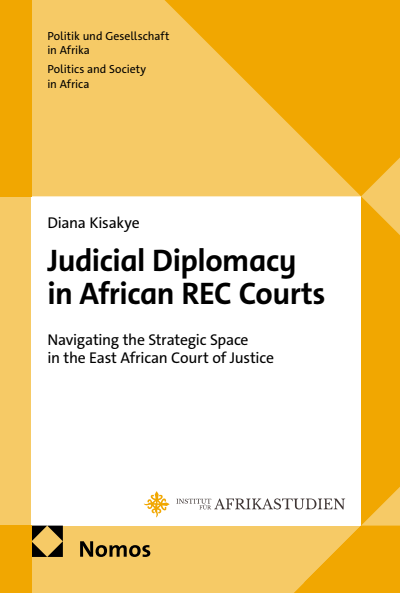
Judicial Diplomacy in African REC Courts
Navigating the Strategic Space in the East African Court of Justice- Autor:innen:
- Verlag:
- 2025
Zusammenfassung
Dieses Buch bietet eine detaillierte Darstellung der rechtlichen, sozioökonomischen und politischen Überlegungen, die bei der Herstellung institutioneller Autorität durch junge internationale Gerichte eine Rolle spielen. Auf der Grundlage umfassender ethnografischer Originaldaten und Archivmaterialien bietet es neue Einblicke in die internationale Rechtsprechung, die über staatszentrierte Ansätze hinausgehen. Mithilfe des neuartigen Konzepts der Justizdiplomatie wird ein neues Verständnis für die gegenwärtigen Veränderungen internationaler Justizbeziehungen herausgearbeitet. Dabei werden die Aktivitäten der Richter:innen innerhalb und außerhalb des Gerichtssaals als gleichermaßen relevante Merkmale des Justizprozesses verstanden. Dieser Titel erscheint auch Open Access.
Schlagworte
Publikation durchsuchen
Bibliographische Angaben
- Copyrightjahr
- 2025
- ISBN-Print
- 978-3-7560-2016-4
- ISBN-Online
- 978-3-7489-5553-5
- Verlag
- Nomos, Baden-Baden
- Reihe
- Politik und Gesellschaft in Afrika | Politics and Societies in Africa
- Band
- 16
- Sprache
- Englisch
- Seiten
- 318
- Produkttyp
- Monographie
Inhaltsverzeichnis
- Acknowledgements
- Abbreviations and Acronyms
- 1.1 Research Questions
- 1.2 Project Rationale
- 1.3 Project Aims
- 1.4 Dissertation Outline
- 2.1 Realist Explanations
- 2.2 Rational Choice Institutionalism
- 2.3.1 Trustee Theories
- 2.3.2 Constrained Independence Theory
- 2.3.3 The Altered Politics Framework
- 2.4 Constructivist Accounts
- 2.5.1 Extraversion Explanations
- 2.5.2 Critical Studies of African ICs
- 2.5.3 Neither Agents nor Trustees
- 2.6.1 Defining Judicial Diplomacy
- 2.6.2 Theoretical Take of Thesis
- 3.1 Case Selection
- 3.2.1 Case Mapping
- 3.2.2.1 Selecting Research Participants
- 3.2.2.2 Interview Methods Appendix
- 3.2.2.3 Interview Summary
- 3.2.3 Participant Observation
- 3.3 Navigating Access Limitations
- 3.4 Analytic Approach
- 3.5 Reflections on Positionality
- 4.1.1 EACJ Mandate
- 4.1.2 Composition and Leadership
- 4.2.1 Meagre Budget Allocation
- 4.2.2 Ad hoc Service and Double Agency
- 4.2.3 Opaque Judicial Appointments
- 4.2.4 Not an Appellate Court!
- 4.3 Resistance in a Strategic Space
- 5.1 Judicial Biographies
- 5.2.1 Mobilising Judicial Allies
- 5.2.2 Legal Norm Socialisation
- 5.3 From “Legal Cocoon” to Initial Backlash
- 5.4.1 Formally Recording Pressures
- 5.4.2 Reactive Scholarly Engagement
- 5.4.3 Expansive Interpretation of Legal Principles
- 5.5 East Africa Law Society to the Rescue
- 5.6 The Makings of a “Bold” Bench
- 6.1.1 Drawing Inspiration from Other ICs
- 6.1.2 Mapping the Human Rights Trajectory
- 6.2.1 Evidence and Fact-finding Assistance
- 6.2.2 Initiating Strategic Litigation
- 6.3.1 Streamlining EAC Institutions
- 6.3.2.1 Jurisdictional Limitations
- 6.3.2.2 Avoidance through the Statute of Limitations
- 6.3.2.3 Vague Explanations
- 6.3.3.1 Opening of Sub-registries
- 6.3.3.2 Engaging Academic Audiences
- 6.4 From Human Rights to Commercial Bench
- 7.1 Cooperative Solutions over Litigation
- 7.2 Limited Jurisdiction
- 7.3.1 Beyond Declaratory Orders
- 7.3.2 The BAT case: Pushback against a Trendsetter
- 7.3.3 The Emergence of Silent Compliance
- 7.4.1 Intervention in Megapolitical Disputes
- 7.4.2 Challenging Judicial Appointments
- 7.5.1 Between Avoidance and Activism
- 7.5.2 Whither Consensual Decision-making?
- 7.6.1 Lobbying for Funding
- 7.6.2 Localisation of Hearings
- 7.6.3 Forging Judicial Alliances
- 7.6.4 Allies in the Media and Academy
- 7.6.5 Digital Socialisation
- 7.7 Towards a “Commercial” Bench
- 8.1 The Significance of Appointments
- 8.2.1 Judicial Diplomacy On-bench
- 8.2.2 Judicial Diplomacy Off-bench
- 8.2.3 On the Role of Allies
- 8.3 Unexpected Interventions
- 9.1 Main Findings
- 9.2 Lessons and Implications for Research and Policy
- Chapter 3
- Chapter 4
- Chapter 5
- Chapter 6
- BibliographySeiten 295 - 318 Download Kapitel (PDF)