, um zu prüfen, ob Sie einen Vollzugriff auf diese Publikation haben.
Monographie Kein Zugriff
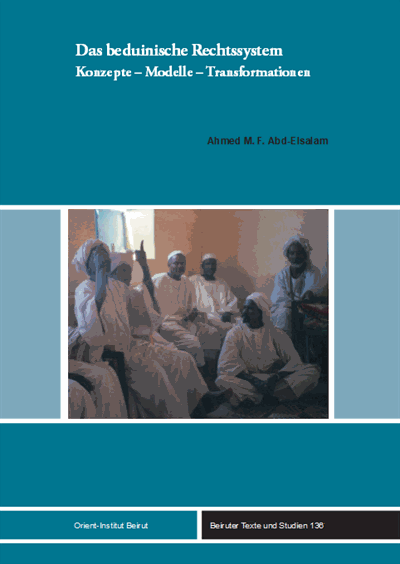
Das beduinische Rechtssystem
Konzepte - Modelle - Transformationen- Autor:innen:
- Reihe:
- Beiruter Texte und Studien (BTS), Band 136
- Verlag:
- 2015
Zusammenfassung

Publikation durchsuchen
Bibliographische Angaben
- Auflage
- 1/2015
- Copyrightjahr
- 2015
- ISBN-Print
- 978-3-95650-133-3
- ISBN-Online
- 978-3-95650-501-0
- Verlag
- Ergon, Baden-Baden
- Reihe
- Beiruter Texte und Studien (BTS)
- Band
- 136
- Sprache
- Deutsch
- Seiten
- 180
- Produkttyp
- Monographie
Inhaltsverzeichnis
KapitelSeiten
- Titelei/Inhaltsverzeichnis Kein Zugriff Seiten 1 - 10
- Vorwort Kein Zugriff Seiten 11 - 12
- Einleitung: Prinzipien des beduinischen Rechts Kein Zugriff Seiten 13 - 24
- 1.1. Die Frage des Rechtspluralismus Kein Zugriff
- 1.2. Die normativen Grundlagen beduinischer Rechtspraktiken in der Neuzeit Kein Zugriff
- 1.3. Zeichen einer Transformation in der Neuzeit Kein Zugriff
- 1.4. Erweiterung vertraglicher Rechtsräume Kein Zugriff
- 2.1. Die Grundrechte und das beduinische ḥaqq-Konzept Kein Zugriff
- 2.2. Das Verhältnis zwischen individuellen Rechten und kollektiven Pflichten Kein Zugriff
- 2.3. Die Mechanismen des Ausschlusses aus dem eigenen Rechtsraum Kein Zugriff
- 2.4. Rechtsklassenhaftigkeit und Heterogenität des tribalen Zusammenlebens Kein Zugriff
- 2.5. Der Rechtsraum der Frau in der beduinischen Gemeinschaft Kein Zugriff
- 3.1. Die Wurzel neuzeitlicher Institutionen der Gerichtsbarkeit arabischer Stämme Kein Zugriff
- 3.2. Die Moderne und das Hervortreten der beduinischen Rechtskultur Kein Zugriff
- 3.3. Modelle tribaler Rechtstransformationen der Neuzeit Kein Zugriff
- 3.4. Die Rechtspraktiken neuzeitlicher Beduinen und Mechanismen der Erneuerung Kein Zugriff
- 3.5. Strukturelle Entwicklungen im beduinischen Rechtssystem Kein Zugriff
- 3.6. Funktionale Entwicklungen im beduinischen Rechtssystem Kein Zugriff
- 4.1. Die Aulād ʿAlī und ihre murābiṭūn Kein Zugriff
- 4.2. Die politischen Strukturen der Aulād ʿAlī: Die Verflechtung legislativer und exekutiver Mechanismen Kein Zugriff
- 4.3. Dirbat Aulād ʿAlī: Die Legende eines vertraglichen Codex Kein Zugriff
- 4.4. Das kodifizierte Recht: Die dirba nach der Darstellung von Ǧauharī Kein Zugriff
- 5.1. Die tribalen Rechtskreise der Zentralregion Kein Zugriff
- 5.2. Die interaktive richterliche Kooperation in der Zentralregion Kein Zugriff
- 5.3. Die Institutionalisierung der Rechtsinstanzen in der Zentralregion Kein Zugriff
- 5.4. Die Funktionen vor- und außergerichtlicher Rechtsinstanzen Kein Zugriff
- 5.5. Die Klassifizierung der Fachrichter Kein Zugriff
- 5.6. Die Bezeichnungen der fachkompetenten Richter und ihre Signifikanz Kein Zugriff
- 6. Rechtssouveränität als Modell institutioneller Rechtstransformation Kein Zugriff Seiten 141 - 148
- 7.1. Tötung und Tötungsdelikte in der Zentralregion im Zeichen des Wandels Kein Zugriff
- 7.2. Regionale Entwicklungen der Blutkaufspraxis (šarwat ad-dam) Kein Zugriff
- 7.3. Anmerkungen zur gegenwärtigen Entwicklung der diya Kein Zugriff
- 8. Resümee Kein Zugriff Seiten 167 - 172
- Literaturverzeichnis Kein Zugriff Seiten 173 - 180
Literaturverzeichnis (151 Einträge)
Es wurden keine Treffer gefunden. Versuchen Sie einen anderen Begriff.
- ʿAbbādī, Aḥmad ʿUwaidī al-. 2005. ʿAšāʾir al-Urdunn: Ǧaulāt maidānīya wa-taḥlīlāt. ʿAmmān: al-Ahlīya. Google Scholar öffnen DOI: 10.5771/9783956505010
- ʿAbbādī, Aḥmad ʿUwaidī al-. 2004. al-ʿAšāʾir al-urdunnīya: Al-arḍ wa-l-insān wa-t-tārīḫ: Muḏakkirāt wa-waṯāʾiq wa-murāsalāt. ʿAmmān: Maktabat al-Muḥtasab li-n-Našr wa-t-Tauzīʿ. Google Scholar öffnen DOI: 10.5771/9783956505010
- ʿAbbādī, Aḥmad ʿUwaidī al-. 1988. al-Qaḍāʾ inda l-ʿašāʾir al-urdunnīya. ʿAmmān: k. A. Google Scholar öffnen DOI: 10.5771/9783956505010
- ʿAbbādī, Aḥmad ʿUwaidī al-. 1987. al-Ǧarāʾim aṣ-ṣuġrā ʿinda l-ʿašāʾir al-urdunnīya (1900–1986). ʿAmmān: Dār al-Fikr. Google Scholar öffnen DOI: 10.5771/9783956505010
- ʿAbbādī, Aḥmad ʿUwaidī al-. 1985a. al-Ǧarāʾim al-ǧināʾīya al-kubrā ʿinda l-ʿašāʾir al-urdunnīya. ʿAmmān: Dār al-Fikr. Google Scholar öffnen DOI: 10.5771/9783956505010
- ʿAbbādī, Aḥmad ʿUwaidī al-. 1985b. Muqaddima li-dirāsat al-ʿašāʾir al-urdunnīya. ʿAmmān: Ad-Dār al-ʿArabīya. Google Scholar öffnen DOI: 10.5771/9783956505010
- ʿAbbādī, Aḥmad ʿUwaidī al-. 1983. Min al-adilla al-qaḍāʾīya ʿinda l-badw fī l-Urdunn (1921–1983). ʿAmmān: Dār Maǧdalāwī. Google Scholar öffnen DOI: 10.5771/9783956505010
- ʿAbbādī, Aḥmad ʿUwaidī al-. 1976. Min al-qiyam wa-l-ādāb al-badawīya. ʿAmmān: Wizārat al-Iʿlām. Google Scholar öffnen DOI: 10.5771/9783956505010
- ʿAbbādī, Aḥmad ʿUwaidī al-. 1973. al-Marʾa al-badawīya. ʿAmmān: k. A. Google Scholar öffnen DOI: 10.5771/9783956505010
- Abdul-Jabar, Faleh und Dawod, Hosham (Hg.). 2003. Tribes and power: Nationalism and ethnicity in the Middle East. London: Saqi. Google Scholar öffnen DOI: 10.5771/9783956505010
- Abū l-Baṣal, ʿAbd an-Nāṣir Mūsā. 1990a. „al-Waḍʿ at-tašrīʿī li-l-ʿurf al-ʿašāʾirī fī l-Urdunn“, in: Mu¬ḥam¬mad ʿAdnān al-Baḫīt (Hg.), The Bedouin custom law between shari'a (Islamic law) and positive law (= al-ʿUrf al-ʿašāʾirī baina š-šarīʿa wa-l-qanūn: Nadwa, ʿAmmān, 19–21 rabīʿ aṯ-ṯānī 1410h, 18–20 tišrīn ṯānī 1989). Amman: University of Jordan, 13–30. Google Scholar öffnen DOI: 10.5771/9783956505010
- Abū l-Baṣal, ʿAbd an-Nāṣir Mūsā. 1990b. „Aḥkām ad-diya fī l-ʿurf al-ʿašāʾirī wa-š-šarīʿa al-islāmīya“, in: Mu¬ḥam¬mad ʿAdnān al-Baḫīt (Hg.), The Bedouin custom law between shari'a (Islamic law) and positive law (= al-ʿUrf al-ʿašāʾirī baina š-šarīʿa wa-l-qānūn: Nadwa, ʿAmmān, 19–21 rabīʿ aṯ-ṯānī 1410h, 18–20 tišrīn ṯānī 1989). Amman: University of Jordan, 316–353. Google Scholar öffnen DOI: 10.5771/9783956505010
- Abū Ǧābir, Raʾūf. 1990. „Dirāsāt al-ʿurf wa-l-qaḍāʾ al-ʿašāʾirī fī l-Urdunn“, in: Mu¬ḥam¬mad ʿAdnān al-Baḫīt (Hg.), The Bedouin custom law between shari'a (Islamic law) and positive law (= al-ʿUrf al-ʿašāʾirī baina š-šarīʿa wa-l-qānūn: Nadwa, ʿAmmān, 19–21 rabīʿ aṯ-ṯānī 1410h, 18–20 tišrīn ṯānī 1989). Amman: University of Jordan, 87–96. Google Scholar öffnen DOI: 10.5771/9783956505010
- Abū Ḥassān, Mu¬ḥam¬mad. 1974. Turāṯ al-badw al-qaḍāʾī. ʿAmmān: Dāʾirat aṯ-Ṯaqāfa. Google Scholar öffnen DOI: 10.5771/9783956505010
- Abū Hūṣa, Aḥmad Salāma. 1990. „ad-Dam“, in: Mu¬ḥam¬mad ʿAdnān al-Baḫīt (Hg.), The Bedouin custom law between shari'a (Islamic law) and positive law (= al-ʿUrf al-ʿašāʾirī baina š-šarīʿa: Nadwa, ʿAmmān, 19–21 rabīʿ aṯ-ṯānī 1410h, 18–20 tišrīn ṯānī 1989). Amman: University of Jordan, 326–361. Google Scholar öffnen DOI: 10.5771/9783956505010
- Abū Ibrīz, Fāyiz al-. 1990. „al-ʿIrḍ“, in: Mu¬ḥam¬mad ʿAdnān al-Baḫīt (Hg.), The Bedouin custom law between shari'a (Islamic law) and positive law (= al-ʿUrf al-ʿašāʾirī baina š-šarīʿa: Nadwa, ʿAmmān, 19–21 rabīʿ aṯ-ṯānī 1410h, 18–20 tišrīn ṯānī 1989). Amman: University of Jordan, 218–222. Google Scholar öffnen DOI: 10.5771/9783956505010
- Abu Rabiʿa, ʿAref. 2001. A Bedouin Century: Education and development among the Negev tribes in the 20th century. New York: Berghahn Books. Google Scholar öffnen DOI: 10.5771/9783956505010
- Abū Zaid, Mu¬ḥam¬mad ʿAbd al-Ḥamīd. 1986. al-Qiṣāṣ wa-l-ḥayāt: Dirāsa muqārana baina š-šarīʿa al-islāmīya wa-l-qānūn al-waḍʿī. al-Qāhira: Dār an-Nahḍa al-ʿArabīya. Google Scholar öffnen DOI: 10.5771/9783956505010
- Augostini, Enrico De [Aġusṭīnī, Hinrīkū dī]. 1990. Sukkān Lībyā, al-ǧuzʾ aṯ-ṯānī, übersetzt aus dem Italienischen von Ḫalīfa Mu¬ḥam¬mad at-Tillīsī. Ṭarāblus: ad-Dār al-ʿArabīya li-l-Kitāb [Originaltitel: La popolazione della Cirenaica. Bengasi 1922–23]. Google Scholar öffnen DOI: 10.5771/9783956505010
- Aharoni, Reuven. 2007. The pasha’s Bedouin: Tribes and state in the Egypt of Mehmet Ali (1805–1848). London: Routledge. Google Scholar öffnen DOI: 10.5771/9783956505010
- ʿAiyāšī, ʿAbd Allāh b. Mu¬ḥam¬mad al-. 1977. Riḥlat al-ʿAiyāšī al-musammā Māʾ al-mawāʾid. Fās: [k. A.] Google Scholar öffnen DOI: 10.5771/9783956505010
- Alafenish, Salim. 1982. “Der Stellenwert der Feuerprobe im Gewohnheitsrecht der Beduinen der Negev“, in: Fred Scholz und Jörg Janzen (Hg.), Nomadismus, ein Entwicklungsproblem? Beiträge zu einem Nomadismus-Symposium, veranstaltet in der Gesellschaft für Erdkunde zu Berlin vom 11 bis 14. Februar 1982, Berlin: Dietrich Reimer, 143–158. Google Scholar öffnen DOI: 10.5771/9783956505010
- ʿAlī, Ǧawād. 2004. al-Mufaṣṣal fī adyān al-ʿarab qabla l-islām. al-Qāhira: Dār aš-Šuʿāʿ. Google Scholar öffnen DOI: 10.5771/9783956505010
- ʿAlī, Ǧawād. 1993. al-Mufaṣṣal fī tārīḫ al-ʿarab qabla l-islām. 10 Bde., Baġdād: Ǧāmiʿat Baġdād. Google Scholar öffnen DOI: 10.5771/9783956505010
- Amīn, Aḥmad. 1986. aṣ-Ṣaʿlaka wa-l-futūwa fī l-islām. al-Qāhira: Dār al-Maʿārif. Google Scholar öffnen DOI: 10.5771/9783956505010
- Anderson, James Norman Dalrymple. 1957. „Law as a social force in Islamic culture and history“, Bulletin of the School of Oriental and African Studies, University of London, Jhrg. (20): 13–40. Google Scholar öffnen DOI: 10.5771/9783956505010
- ʿĀrif, ʿĀrif al-. 2004. al-Qaḍāʾ baina l-badw. Bairūt: al-Mūʾassasa l-ʿArabīya li-d-Dirāsāt wa-n-Našr. Google Scholar öffnen DOI: 10.5771/9783956505010
- ʿĀrif, ʿĀrif al-. 1999. Tārīḫ Bīr Sabʿ wa-qabāʾilihā. al-Qāhira: Maktabat Madbūlī. Google Scholar öffnen DOI: 10.5771/9783956505010
- ʿĀrif, ʿĀrif al- [Aref, Aref el-]. 1938. Die Beduinen von Beerseba. Ihre Rechtsverhältnisse, Sitten und Gebräuche / ein Buch des Gouverneurs ʿAref el-ʿAref in Beerseba, aus dem Arabischen übersetzt von Leo Haefeli. Luzern: Räber. Google Scholar öffnen DOI: 10.5771/9783956505010
- Arminjon, Pierre, Nolde, Boris und Wolff, Martin. 1950. Traité de droit comparé. Paris: Pichon & Durand-Auzias. Google Scholar öffnen DOI: 10.5771/9783956505010
- ʿAzzāwī, ʿAbbās al-. [Reprint 1947–1956]. ʿAšāʾir al-ʿIrāq. London: Maktabat aṣ-Ṣafā wa-l-Marwā. Google Scholar öffnen DOI: 10.5771/9783956505010
- Baġdādī, Aḥmad Mu¬ḥam¬mad al-. 2005. At-Taṭauwur al-qānūnī li-l-muǧtamaʿāt as-sāmīya wa-ẓāhirat al-ʿaulama al-qānūnīya: Muḥāḍarāt fī tārīḫ an-nuẓum al-qānūnīya wa-l-iǧtimāʿīya fī Bilād mā baina n-Nahrain wa-ladā al-yahūd wa-l-ʿarab qabla l-islām. al-Qāhira: Dār an-Nahḍa l-ʿArabīya. Google Scholar öffnen DOI: 10.5771/9783956505010
- Baġdādī, Aḥmad Mu¬ḥam¬mad al-. 2000. Taṭauwur as-sulṭa al-qabalīya fī l-ǧāhilīya: Dirāsa fī baʿḍ aškāl as-sulṭa fī Makka wa-baʿd ǧārātihā. al-Qāhira: Dār an-Nahḍa l-ʿArabīya. Google Scholar öffnen DOI: 10.5771/9783956505010
- Baġdādī, Aḥmad Mu¬ḥam¬mad al-. 1998. At-Tārīḫ al-iǧtimāʿī li-t-taǧrīm wa-l-ʿiqāb fī Miṣr fī l-ʿaṣr al-ʿuṯmānī. al-Qāhira: Dār an-Nahḍa l-ʿArabīya. Google Scholar öffnen DOI: 10.5771/9783956505010
- Bell, Gawain W. 1943. „The Tribal Courts of the Sudan, Palestine & Transjordan“. Originalbericht in der Durham University Library, Signatur 700/4/12. Google Scholar öffnen DOI: 10.5771/9783956505010
- Bīk, Frīdrik Ǧ. [1935]. Tārīḫ Šarqī l-Urdunn wa-qabāʾilihā: Taʿrīb Bahāʾ ad-Dīn Ṭūqān. Baġdād: Maktabat an-Nahḍa. Google Scholar öffnen DOI: 10.5771/9783956505010
- Binay, Sara. 2006. Die Figur des Beduinen in der arabischen Literatur, 9.-12. Jahrhundert. Wiesbaden: Reichert. Google Scholar öffnen DOI: 10.5771/9783956505010
- Bräunlich, Erich. 1934. „Beiträge zur Gesellschaftsordnung der arabischen Beduinenstämme“, Islamica, Jhrg. (6): 68–111; 182–229. Google Scholar öffnen DOI: 10.5771/9783956505010
- Buḫārī, Mu¬ḥam¬mad b. Ismāʿīl al-. 2003. Ṣaḥīḥ al-Buḫārī, al-Manṣūra: Maktabat al-Imān. Google Scholar öffnen DOI: 10.5771/9783956505010
- Burckhardt, Johann Ludwig. 1830. Reisen in Arabien. Weimar: Verlag des Großh. Sächs. pr. Landes-Industrie-Comptoirs. Google Scholar öffnen DOI: 10.5771/9783956505010
- Chelhod, Joseph. 1986. „La place de la coutume dans le Fiqh primitif et sa permanence dans les sociétés arabes à tradition orale“, Studia Islamica, Jhrg. (64): 11–37. Google Scholar öffnen DOI: 10.5771/9783956505010
- Chelhod, Joseph. 1971. Le droit dans la société bédouine. Recherches ethnologiques sur le ʿorf ou droit coutumier des bédouins. Paris: Rivière. Google Scholar öffnen DOI: 10.5771/9783956505010
- Colucci, Massimo. 1928. „Il diritto consuetudinario della Cirenaica“, Rivista Coloniale, Jhrg. (22): 24–37. Google Scholar öffnen DOI: 10.5771/9783956505010
- Constantinesco, Léontin-Jean. 1983. Rechtsvergleichung III: Die rechtsvergleichende Wissenschaft. Köln: Heymann. Google Scholar öffnen DOI: 10.5771/9783956505010
- Conte, Edouard. 2003. „Agnatic illusions: The element of choice in Arab kinship“, in: Faleh Abdul-Jabar und Hosham Dawod (Hg.) 2003. Tribes and power: Nationalism and ethnicity in the Middle East, London: Saqi, 15–49. Google Scholar öffnen DOI: 10.5771/9783956505010
- David, René. 1950. Traité élémentaire de droit civil comparé: Introduction à l'étude des droits étrangers et à la méthode comparative. Paris: Pichon & Durand-Auzias. Google Scholar öffnen DOI: 10.5771/9783956505010
- David, René und Grasmann, Günther. 1966. Einführung in die großen Rechtssysteme der Gegenwart: Rechtsvergleichung. München: C.H. Beck. Google Scholar öffnen DOI: 10.5771/9783956505010
- Dostal, Walter (Hg.). 2006. Tribale Gesellschaften der südwestlichen Regionen des Königreiches Saudi Arabien: Sozialanthropologische Untersuchungen. Wien: Verlag der österreichischen Akademie der Wissenschaften. Google Scholar öffnen DOI: 10.5771/9783956505010
- Dostal, Walter und Kraus, Wolfgang (Hg.). 2005. Shattering tradition: custom, law and the individual in the Muslim Mediterranean. London: I.B. Tauris. Google Scholar öffnen DOI: 10.5771/9783956505010
- Dostal, Walter. 2005. „Tribal Customary Law of the Zahran Confederation in Southern Hijaz (Kingdom of Saudi Arabia)“, in: Walter Dostal und Wolfgang Kraus (Hg.). Shattering tradition: custom, law and the individual in the Muslim Mediterranean. London: I.B. Tauris, 122–147. Google Scholar öffnen DOI: 10.5771/9783956505010
- Dostal, Walter 1983. Egalität und Klassengesellschaft in Südarabien. Horn: Ferdinand Berger & Söhne. Google Scholar öffnen DOI: 10.5771/9783956505010
- Evans-Pritchard, Edward Evan. 1954. The Sanusi of Cyrenaica. Oxford: Clarendon Press. Google Scholar öffnen DOI: 10.5771/9783956505010
- Evans-Pritchard, Edward Evan. 1946. „Hereditary Succession of Shaikhs of Sanusiya Lodges in Cyrenaica“, Man, Jhrg. (46): 58–62. Google Scholar öffnen DOI: 10.5771/9783956505010
- Gabrieli, Art. „ʿaṣabiyya“, in: The Encyclopaedia of Islam. 2nd edition, Bd. I: 681a. Leiden: Brill. Google Scholar öffnen DOI: 10.5771/9783956505010
- Ǧāḥiẓ, ʿAmr b. Baḥr al-. [1960]. al-Buḫalāʾ. al-Qāhira: Dār al-Maʿārif. Google Scholar öffnen DOI: 10.5771/9783956505010
- Ǧauharī, Rifʿat al-. 1961. Šarīʿat aṣ-ṣaḥrāʾ. al-Qāhira: al-Haiʾa al-ʿĀmma li-Šuʾūn al-Maṭābiʿ al-Amīrīya. Google Scholar öffnen DOI: 10.5771/9783956505010
- Ǧauharī, Rifʿat al-. 1937. Mušāhadāt fī ṣ-ṣaḥrāʾ aš-šarqīya wa-Sīnāʾ. al-Qāhira: Nādī as-Saiyarāt al-Malakī. Google Scholar öffnen DOI: 10.5771/9783956505010
- Glassner, Martin Ira. 1974. „The Bedouin of Southern Sinai under Israeli administration“, Geographical Review, Jhrg. (64): 31–60. Google Scholar öffnen DOI: 10.5771/9783956505010
- Goldziher, Ignaz. 1970. Gesammelte Schriften IV. Hildesheim: Olms. Google Scholar öffnen DOI: 10.5771/9783956505010
- Gräf, Erwin. 1952. Das Rechtswesen der heutigen Beduinen. Walldorf: Verlag für Orientkunde. Google Scholar öffnen DOI: 10.5771/9783956505010
- Granqvist, Hilma. 1965. Muslim death and burial: Arab customs and traditions studies in a village in Jordan. Helsingfors: Societas Scientiarum Fennica. Google Scholar öffnen DOI: 10.5771/9783956505010
- Granqvist, Hilma. 1950. Child problems among the Arabs: Studies in a Muhammadan village in Palestine. Helsingfors: Söderstrøm. Google Scholar öffnen DOI: 10.5771/9783956505010
- Granqvist, Hilma. 1947. Birth and childhood among the Arabs: Studies in a Muhammadan village in Palestine. Helsingfors: Söderstrøm Reprinted 1975, New York. Google Scholar öffnen DOI: 10.5771/9783956505010
- Granqvist, Hilma. 1935. Marriage conditions in a Palestinian village: II. Helsingfors: Societas Scientiarum Fennica. Google Scholar öffnen DOI: 10.5771/9783956505010
- Granqvist, Hilma. 1931. Marriage conditions in a Palestinian village: I. Helsingfors: Societas Scientiarum Fennica. Google Scholar öffnen DOI: 10.5771/9783956505010
- Griffiths, John. 1986. „What is Legal Pluralism?“ Journal of Legal Pluralism and Unofficial Law, Jhrg. (24): 1–56. Google Scholar öffnen DOI: 10.5771/9783956505010
- Ġubain, Fahd Maqbūl al-. 1990. „al-ʿurf al-ʿašāʾirī baina š-šarīʿa wa-l-qānūn“, in: Mu¬ḥam¬mad ʿAdnān al-Baḫīt (Hg.), The Bedouin custom law between shari'a (Islamic law) and positive law (= al-ʿUrf al-ʿašāʾirī baina š-šarīʿa: Nadwa, ʿAmmān, 19–21 rabīʿ aṯ-ṯānī 1410h, 18–20 tišrīn ṯānī 1989). Amman: University of Jordan, 66–85. Google Scholar öffnen DOI: 10.5771/9783956505010
- Ibn ʿĀbidīn, Mu¬ḥam¬mad Amīn. 1998. Radd al-muḥtār ʿalā ad-durr al-muḫtār. Bairūt: Dār Iḥyāʾ at-Turāṯ al-ʿArabī. Google Scholar öffnen DOI: 10.5771/9783956505010
- Ibn Ḫaldūn, ʿAbd ar-Raḥman b. Mu¬ḥam¬mad. 1971. Muqaddimat Ibn Ḫaldūn. Bairūt: Muʾassasat al-Aʿlām li-l-Maṭbūʿāt. Google Scholar öffnen DOI: 10.5771/9783956505010
- Ibn Hišām, ʿAbd al-Malik. 2002. As-Sīra an-nabawīya, (4 Teile in 2 Bänden). al-Qāhira: Dār al-ʿInān. Google Scholar öffnen DOI: 10.5771/9783956505010
- Ibn al-Muǧāwir, Yūsuf b. Yaʿqūb. 1954. Ṣifat bilād al-Yaman wa-Makka wa-baʿḍ al-Ḥiǧāz al-musammā Tārīḫ al-mustabṣir. Leiden: Brill. Google Scholar öffnen DOI: 10.5771/9783956505010
- Inglehart, Ronald. 1998. Modernisierung und Postmodernisierung: Kultureller, wirtschaftlicher und politischer Wandel in 43 Gesellschaften. Frankfurt/M.: Campus. Google Scholar öffnen DOI: 10.5771/9783956505010
- Inglehart, Ronald. 1989. Kultureller Umbruch: Wertwandel in der westlichen Welt. Frankfurt/M.: Campus. Google Scholar öffnen DOI: 10.5771/9783956505010
- Iṣfahānī, ʿAlī b. al-Ḥusain. [1868]. Kitāb al-aġānī, al-Qāhira: [Maṭbaʿat Būlāq]. Google Scholar öffnen DOI: 10.5771/9783956505010
- ʿIṭīwa, Ḫair Allāh Faḍl. 1982. Riḥlat al-alf ʿām maʿa qabāʾil Awlād ʿAlī. al-Iskandarīya: k. A. Google Scholar öffnen DOI: 10.5771/9783956505010
- Jacob, Georg. 1967. Altarabisches Beduinenleben. Hildesheim: Georg Olms. Google Scholar öffnen DOI: 10.5771/9783956505010
- Jaussen, Antonin et Savignac, Raphaël. 1914. Mission archéologique en Arabie / 2, Texte. Paris: Geuthner. Google Scholar öffnen DOI: 10.5771/9783956505010
- Jaussen, Antonin et Savignac, Raphaël. 1909. Mission archéologique en Arabie / [1]: De Jérusalem au Hedjaz Médain-Saleh. Paris: Leroux. Google Scholar öffnen DOI: 10.5771/9783956505010
- Jaussen, Antonin. 1908. Coutumes des Arabes au pays de Moab. Paris: Gabalda. Google Scholar öffnen DOI: 10.5771/9783956505010
- Jaussen, Antonin und Savignac, Raphaël. 1907. Mission archéologique en Arabie: (Mars–Mai 1907). Le Caire: IFAO. Google Scholar öffnen DOI: 10.5771/9783956505010
- Kemper, Michael und Reinkowski, Maurus (Hg.). 2005. Rechtspluralismus in der Islamischen Welt. Berlin: Walter de Gruyter. Google Scholar öffnen DOI: 10.5771/9783956505010
- Kennett, Austin. 1925. Bedouin justice: Law and customs among the Egyptian Bedouin. Cambridge: Cambridge University Press. Google Scholar öffnen DOI: 10.5771/9783956505010
- Kirkbride, Alec S. 1945. „Changes in tribal life in Trans-Jordan“, Man, Jhrg. (45): 40–41. Google Scholar öffnen DOI: 10.5771/9783956505010
- Kressel, Gideon M. 1993. „Haqq akhu manshad: Major and minor wrongs and specialized judges among the Negev Bedouin“, International Journal of Middle East Studies, Jhrg. (25): 17–31. Google Scholar öffnen DOI: 10.5771/9783956505010
- Layish, Aharon. 2004. Sharīʿa and custom in Libyan tribal society: An annotated translation of decisions from the sharīʿa courts of Adjabiya and Kufra. Leiden: Brill. Google Scholar öffnen DOI: 10.5771/9783956505010
- Layish, Aharon. 1991. „The fatwā as an instrument of the Islamization of a tribal society in process of sedentarization“,Bulletin of the School of Oriental and African Studies, Jhrg. (54): 449–459. Google Scholar öffnen DOI: 10.5771/9783956505010
- Layish, Aharon und Shmueli, Avshalom. 1979. „Custom and sharia in the Bedouin family according to legal documents from the Judaean desert“, Bulletin of the School of Oriental and African Studies, University of London, Jhrg. (62): 29–45. Google Scholar öffnen DOI: 10.5771/9783956505010
- Leder, Stefan. 2002. „Nomaden und nomadische Lebensformen in arabischer Begrifflichkeit – Eine Annäherung“, Orientwissenschaftliche Hefte, Heft 3, 11–40. Halle. Google Scholar öffnen DOI: 10.5771/9783956505010
- Lewis, Norman N. 1987. Nomads and Settlers in Syria and Jordan 1800–1980. Cambridge: Cambridge University Press. Google Scholar öffnen DOI: 10.5771/9783956505010
- MacMichael, Harold A. 1967. A history of the Arabs in the Sudan. London: Cass. Google Scholar öffnen DOI: 10.5771/9783956505010
- Maḥǧūb, Mu¬ḥam¬mad ʿAbduh [Mahgoub, Mohamad Abdo]. 2015a. Customary laws and social order in Arab society. Socio-anthropological field studies in Egypt. Newcastle: Cambridge Scholars Publishing. Google Scholar öffnen DOI: 10.5771/9783956505010
- Maḥǧūb, Mu¬ḥam¬mad ʿAbduh [Mahgoub, Mohamad Abdo]. 2015b. „Ethographic documentation of ‚AL AWAYID’. I.e. the customary laws of Awlad Ali Tribes in the Western Desert of Egypt, and tracing the changes that have occurred throughout the past forty years“ in: ders. (Hg.), Customary laws and social order in Arab society. Socio-anthropological field studies in Egypt. Newcastle: Cambridge Scholars Publishing, 1–30. Google Scholar öffnen DOI: 10.5771/9783956505010
- Maḥǧūb, Mu¬ḥam¬mad ʿAbduh und Šarīf, Fātin. 2005. aṯ-Ṯaqāfa wa-l-muǧtamaʿ al-badawī. al-Iskandarīya: Dār al-Wafāʾ. Google Scholar öffnen DOI: 10.5771/9783956505010
- Maḥǧūb, Mu¬ḥam¬mad ʿAbduh, Ġunaim, Mu¬ḥam¬mad und Šarīf, Fātin. 1997. Dirasāt fī l-muǧtamaʿ al-badawī. al-Iskandarīya: Dār al-Maʿrifa al-Ǧāmiʿīya. Google Scholar öffnen DOI: 10.5771/9783956505010
- Maḥǧūb, Mu¬ḥam¬mad ʿAbduh. 1985. al-Bitrūl wa-s-sukkān wa-t-taġyīr al-iǧtimāʿī: Dirāsa anṯrūbūlūǧīya. al-Iskandarīya: Dār al-Maʿrifa al-Ǧāmiʿīya. Google Scholar öffnen DOI: 10.5771/9783956505010
- Maḥǧūb, Mu¬ḥam¬mad ʿAbduh. 1976a. Anṯrūbūlūǧyā al-muǧtamaʿāt al-badawīya. Al-Iskandarīya: al-Haiʾa l-Miṣrīya l-ʿĀmma li-l-Kitāb. Google Scholar öffnen DOI: 10.5771/9783956505010
- Maḥǧūb, Mu¬ḥam¬mad ʿAbduh. 1976b. al-Anṯrūbūlūǧyā as-siyāsīya: Muqaddima li-dirāsat an-nuẓum as-siyāsīya fī l-muǧtamaʿāt al-qabalīya. Al-Iskandarīya: al-Haiʾa l-Miṣrīya l-ʿĀmma li-l-Kitāb. Google Scholar öffnen DOI: 10.5771/9783956505010
- Maidānī, Aḥmad b. Mu¬ḥam¬mad al-. 1987. Maǧmaʿ al-amṯāl. Bairūt: Dār al-Ǧīl. Google Scholar öffnen DOI: 10.5771/9783956505010
- Maisel, Sebastian. 2006. Das Gewohnheitsrecht der Beduinen: Der Stellenwert von Urf in den Rechtsvorstellungen tribaler Gruppen im Norden der Arabischen Halbinsel. Frankfurt/M.: Peter Lang. Google Scholar öffnen DOI: 10.5771/9783956505010
- Maisel, Sebastian. 2002. Das Gewohnheitsrecht der Beduinen im Norden der Arabischen Halbinsel. (Dissertation als Elektronische Ressource / CD). Google Scholar öffnen DOI: 10.5771/9783956505010
- Marshall, Arthur H. 2002. „The Position of Tribal Leaders in the Life of the Sudan“, in: The British Documents of the Sudan (1940–1956), Jhrg. (8): 94–106. Google Scholar öffnen DOI: 10.5771/9783956505010
- Marx, Emanuel. 1967. Bedouin of the Negev. Manchester: Manchester University Press. Google Scholar öffnen DOI: 10.5771/9783956505010
- Müller, Christian. 2005. „Sitte, Brauch und Gewohnheitsrecht im mālikitischen fiqh“, in: Michael Kemper und Maurus Reinkowski (Hg.), Rechtspluralismus in der Islamischen Welt. Berlin: Walter de Gruyter, 17–38. Google Scholar öffnen DOI: 10.5771/9783956505010
- Müller-Mahn, Hans-Detlef. 1989. Die Aulad 'Ali zwischen Stamm und Staat: Entwicklung und sozialer Wandel bei den Beduinen im nordwestlichen Ägypten. Berlin: Dietrich Reimer Verlag. Google Scholar öffnen DOI: 10.5771/9783956505010
- Murray, George William. 1953. „The Land of Sinai“, Geographical Journal, Jhrg. (119): 140–154. Google Scholar öffnen DOI: 10.5771/9783956505010
- Musil, Alois. 1928a. The manners and customs of the Rwala Bedouins. New York: American Geographical Society. Google Scholar öffnen DOI: 10.5771/9783956505010
- Musil, Alois. 1928b. Northern Nejd: A topographical itinerary. New York: American Geographical Society. Google Scholar öffnen DOI: 10.5771/9783956505010
- Musil, Alois. 1907–1908. Arabia Petraea (3 Teile in 4 Bänden). Wien: Hölder in Komm. Google Scholar öffnen DOI: 10.5771/9783956505010
- Oppenheim, Max Freiherr von, Bräunlich, Erich und Caskel, Werner. 1939–1952. Die Beduinen (4 Bände). Leipzig/Wiesbaden: Harrassowitz. Google Scholar öffnen DOI: 10.5771/9783956505010
- Peters, Emrys L. 1998. The Bedouin of Cyrenaica: Studies in personal and corporate power. Cambridge: Cambridge University Press. Google Scholar öffnen DOI: 10.5771/9783956505010
- Radcliffe-Brown, Albert R. 1959. Structure and function in primitive society: Essays and addresses. 3rd ed., Glencoe, Ill.: The Free Press. Google Scholar öffnen DOI: 10.5771/9783956505010
- Raswan, Carl Reinhard. 1930. „Tribal areas and migration lines of the North Arabian Bedouins“, Geographical Review, Jhrg. (20): 494–502. Google Scholar öffnen DOI: 10.5771/9783956505010
- Rothenberg, Celia. 1998/1999. „A review of the anthropological literature in English on the Palestinian hamula and the status of women“, Journal of Arabic and Islamic Studies, Jhrg. (2): 24–48. Google Scholar öffnen DOI: 10.5771/9783956505010
- Ṣabrī Bāšā, Aiyūb. 1999. Mirʾāt ǧazīrat al-ʿarab [Mirʾāt al-ḥaramain]. al-Qāhira: Dār al-Afāq al-ʿArabīya. Google Scholar öffnen DOI: 10.5771/9783956505010
- Ṣadr, Mu¬ḥam¬mad Ṣādiq aṣ-. 2002. Fiqh al-ʿašāʾir: Ḥiwār fatwāʾī maʿa Samāḥat Āyatillāh al-ʿUẓmā aš-šahīd as-Saiyid Mu¬ḥam¬mad aṣ-Ṣadr. Bairūt: Dār al-Aḍwāʾ. Google Scholar öffnen DOI: 10.5771/9783956505010
- Salmān, Būlus. 1919. Ḫamsat aʿwām fī šarqī l-Urdunn. Ḥarīṣā: St. Paulus. Google Scholar öffnen DOI: 10.5771/9783956505010
- Sarḥānī, Sulṭān Ṭuraiḫim as-. [1995]. Ǧāmiʿ ansāb qabāʾil al-ʿarab. Ad-Dauḥa: Dār aṯ-Ṯaqāfa. Google Scholar öffnen DOI: 10.5771/9783956505010
- Seabrook, William B. 2003. Adventures in Arabia 1927. Montana: Kessinger Publishing. Google Scholar öffnen DOI: 10.5771/9783956505010
- Shaham, Ron. 1993. „A woman's place: A confrontation with Bedouin custom in the sharīʿa court“, Journal of the American Oriental Society, Jhrg. (113): 192–197. Google Scholar öffnen DOI: 10.5771/9783956505010
- Stewart, Frank Henderson. 2007. „A Bedouin proto-state in late Ottoman Syria: The Jubūr on the Khābūr in 1914“, Jerusalem Studies in Arabic and Islam, Jhrg. (33): 334–374. Google Scholar öffnen DOI: 10.5771/9783956505010
- Stewart, Frank Henderson. 2006. „Customary law among the Bedouin of the Middle East and North Africa“, in: Dawn Chatty (Hg.), Nomadic societies in the Middle East and North Africa entering the 21st century. Leiden: Brill, 239–279. Google Scholar öffnen DOI: 10.5771/9783956505010
- Stewart, Frank Henderson. 2003. „The contract with surety in Bedouin customary law“, UCLA Journal of Islamic and Near Eastern Law, Jhrg. (2): 163–280. Google Scholar öffnen DOI: 10.5771/9783956505010
- Stewart, Frank Henderson. 2000a. Art. „ʿUrf 2. Arab customary law“, in: The Encyclopaedia of Islam. 2nd edition, Bd. X. Leiden: Brill, 888b–892a. Google Scholar öffnen DOI: 10.5771/9783956505010
- Stewart, Frank Henderson. 2000b. „What is Honor?“ Acta Historiae, Jhrg. (8/1): 13–28. Google Scholar öffnen DOI: 10.5771/9783956505010
- Stewart, Frank Henderson. 1998. „The jōz musarrib: An unusual form of marriage among the Arabs“, in: J. Ginat und A. Khazanov (Hg.), Changing nomads in a changing world. Brighton: Sussex Academic Press, 78–93. Google Scholar öffnen DOI: 10.5771/9783956505010
- Stewart, Frank Henderson. 1994. Honor. Chicago: University of Chicago Press. Google Scholar öffnen DOI: 10.5771/9783956505010
- Stewart, Frank Henderson. 1991a. „Notes on dating the arrival of the Bedouin tribes in Sinai“, Journal of the Economic and Social History of the Orient, Jhrg. (34): 97–110. Google Scholar öffnen DOI: 10.5771/9783956505010
- Stewart, Frank Henderson. 1991b. „The woman, her guardian, and her husband in the law of the Sinai Bedouin“, Arabica, Jhrg. (38): 102–129. Google Scholar öffnen DOI: 10.5771/9783956505010
- Stewart, Frank Henderson. 1988/1990. Texts in Sinai Bedouin law. Wiesbaden: Harrassowitz. Google Scholar öffnen DOI: 10.5771/9783956505010
- Stewart, Frank Henderson. 1987. „Tribal law in the Arab World: A revision of the literature“, International Journal of Middle East Studies, Jhrg. (19): 473–490. Google Scholar öffnen DOI: 10.5771/9783956505010
- Stewart, Frank Henderson. 1986. Bedouin boundaries in Central Sinai and the Southern Negev: A document from the Aḥaywāt tribe. Wiesbaden: Harrassowitz. Google Scholar öffnen DOI: 10.5771/9783956505010
- Streck, Bernhard. 2002. „Systematisierungsansätze aus dem Bereich der ethnologischen Forschung“, in: Stefan Leder und Bernhard Streck (Hg.), Nomadismus aus der Perspektive der Begrifflichkeit (Mitteilungen des Sonderforschungsbereichs Differenz und Integration 1 = Orientwissenschaftliche Hefte 3/2002), 1–9. Google Scholar öffnen DOI: 10.5771/9783956505010
- Šuqair, Naʿʿūm. 1916. Tārīḫ Sīnāʾ al-qadīm wa-l-ḥadīṯ wa-ǧuġrafīyatuhā: Maʿa ḫulāṣat tārīḫ Miṣr wa-š-Šām wa-l-ʿIrāq wa-Ǧazīrat al-ʿArab. al-Qāhira: Maṭbaʿat al-Maʿārif. Google Scholar öffnen DOI: 10.5771/9783956505010
- Tanūḫī, ʿI. [N.d.]. Min az-Zarqāʾ ilā l-Quraiyāt fa-Daumat al-Ǧandal. [k. A.]. Google Scholar öffnen DOI: 10.5771/9783956505010
- Tāyib, Ṣ. at-. 1984. al-Qabāʾil al-miṣrīya. [al-Qāhira: al-Haiʾa l-ʿĀmma li-l-Kitāb]. Google Scholar öffnen DOI: 10.5771/9783956505010
- Toth, A. 2006. „Last battles of the Bedouin and the rise of modern states in Northern Arabia (1850–1950)“, in: Dawn Chatty (Hg.), Nomadic societies in the Middle East and North Africa entering the 21st century. Leiden: Brill, 654–681. Google Scholar öffnen DOI: 10.5771/9783956505010
- Tröndle, Herbert und Fischer, Thomas. 2007. Strafgesetzbuch und Nebengesetze. 54. Aufl., München: C. H. Beck. Google Scholar öffnen DOI: 10.5771/9783956505010
- Tyan, Emile. 2000. Art. „Diya“, in: The Encyclopaedia of Islam. 2nd edition, Bd. X. Leiden: Brill, 340b. Google Scholar öffnen DOI: 10.5771/9783956505010
- Wellhausen, Julius. 1899. Skizzen und Vorarbeiten: Prolegomena zur ältesten Geschichte des Islam. Berlin: Georg Reimer. Google Scholar öffnen DOI: 10.5771/9783956505010
- Wellhausen, Julius. 1897. Reste arabischen Heidentums. Berlin: Georg Reimer. Google Scholar öffnen DOI: 10.5771/9783956505010
- Wellhausen, Julius. 1893. „Die Ehe bei den Arabern“, Nachrichten von der Königlichen Gesellschaft der Wissenschaften, Jhrg. (11): 431–481. Google Scholar öffnen DOI: 10.5771/9783956505010
- Winkler von Mohrenfels, Peter, Koch, Harald und Magnus, Ulrich. 1995. IPR und Rechtsvergleichung. München: C. H. Beck. Google Scholar öffnen DOI: 10.5771/9783956505010
- Wrobel, Ralph Mihael. 2001. Transformation als Grenzfall langfristigen Wandels: Aspekte einer klassisch-evolutionären Theorie der Systemtransformation. Tartu: Tartu University Press. Google Scholar öffnen DOI: 10.5771/9783956505010
- Yaʿqūbī, Aḥmad b. Isḥāq al-. 1883. Historiae [= Tārīḫ al-Yaʿqūbī]. Leiden: Brill. Google Scholar öffnen DOI: 10.5771/9783956505010
- Zanātī, Maḥmūd Sallām. 1994a. Nuẓum al-ʿarab al-qabalīya al-muʿāṣira, al-ǧuzʾ aṯ-ṯānī. [al-Qāhira: Selbstverlag]. (abgekürzt zitiert: Nuẓum al-ʿarab II). Google Scholar öffnen DOI: 10.5771/9783956505010
- Zanātī, Maḥmūd Sallām. 1994b. Nuẓum al-ʿarab al-qabalīya al-muʿāṣira, al-ǧuzʾ aṯ-ṯāliṯ. [al-Qāhira: Selbstverlag]. (abgekürzt zitiert: Nuẓum al-ʿarab III). Google Scholar öffnen DOI: 10.5771/9783956505010
- Zanātī, Maḥmūd Sallām. 1993. Nuẓum wa-ʿādāt: Maǧmūʿat maqālāt. [al-Qāhira: k. A.]. Google Scholar öffnen DOI: 10.5771/9783956505010
- Zanātī, Maḥmūd Sallām. 1992a. Nuẓum al-ʿarab qabla l-islām. [al-Qāhira: k. A.]. (abgekürzt zitiert: Nuẓum). Google Scholar öffnen DOI: 10.5771/9783956505010
- Zanātī, Maḥmūd Sallām. 1992b. Nuẓum al-ʿarab al-qabalīya al-muʿāṣira, al-ǧuzʾ al-auwal. [al-Qāhira: Selbstverlag]. (abgekürzt zitiert: Nuẓum al-ʿarab I). Google Scholar öffnen DOI: 10.5771/9783956505010
- Zuhair, Barakāt al. 1990. „ad-Dam (al-qatl)“, in: Mu¬ḥam¬mad ʿAdnān al-Baḫīt (Hg.), The Bedouin custom law between shari'a (Islamic law) and positive law (= al-ʿUrf al-ʿašāʾirī baina š-šarīʿa wa-l-qanūn: Nadwa, ʿAmmān, 19–21 rabīʿ aṯ-ṯānī 1410h, 18–20 tišrīn ṯānī 1989). Amman: University of Jordan, 404–409. Google Scholar öffnen DOI: 10.5771/9783956505010
- Zweigert, Konrad und Kötz, Hein. 1996. Einführung in die Rechtsvergleichung auf dem Gebiete des Privatrechts. Tübingen: J.C.B.Mohr (Paul Siebeck). Google Scholar öffnen DOI: 10.5771/9783956505010