, um zu prüfen, ob Sie einen Vollzugriff auf diese Publikation haben.
Monographie Kein Zugriff
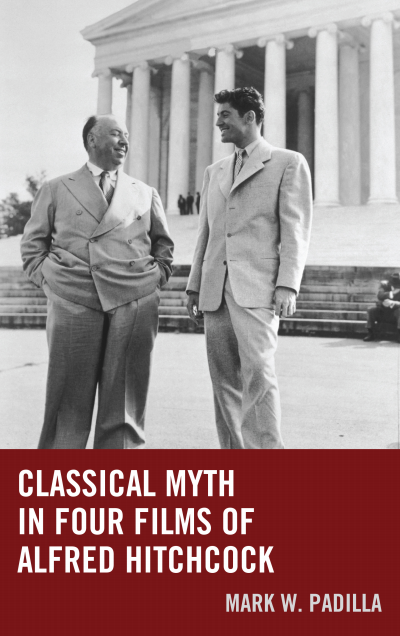
Classical Myth in Four Films of Alfred Hitchcock
Autor:innen:
Verlag:
2016
Zusammenfassung
Classical Myth in Four Films of Alfred Hitchcock presents an original study of Alfred Hitchcock by considering how his classics-informed London upbringing marks some of his films. The Catholic and Irish-English Hitchcock (1899-1980) was born to a mercantile family and attended a Jesuit college preparatory, whose curriculum featured Latin and classical humanities. An important expression of Edwardian culture at-large was an appreciation for classical ideas, texts, images, and myth. Mark Padilla traces the ways that Hitchcock’s films convey mythical themes, patterns, and symbols, though they do not overtly reference them. Hitchcock was a modernist who used myth in unconscious ways as he sought to tell effective stories in the film medium. This book treats four representative films, each from a different decade of his early career. The first two movies were produced in London: The Farmer’s Wife (1928) and The Man Who Knew Too Much (1934); the second two in Hollywood: Rebecca (1940) and Strangers on a Train (1951). In close readings of these movies, Padilla discusses myths and literary texts such as the Judgment of Paris, The Homeric Hymn to Demeter, Aristophanes’s Frogs, Apuleius’s tale “Cupid and Psyche,” Homer’s Odyssey, and The Homeric Hymn to Hermes. Additionally, many Olympian deities and heroes have archetypal resonances in the films in question. Padilla also presents a new reading of Hitchcock’s circumstances as he entered film work in 1920 and theorizes why and how the films may be viewed as an expression of the classical tradition and of classical reception.
This new and important contribution to the field of classical reception in the cinema will be of great value to classicists, film scholars, and general readers interested in these topics.
Schlagworte
Publikation durchsuchen
Bibliographische Angaben
Auflage
1/2016
Copyrightjahr
2016
ISBN-Print
978-1-4985-2915-0
ISBN-Online
978-1-4985-2916-7
Verlag
Lexington, Lanham
Sprache
Englisch
Seiten
296
Produkttyp
Monographie
Inhaltsverzeichnis
KapitelSeiten
Contents Kein Zugriff
The Feature Films of Alfred Hitchcock Kein Zugriff
List of Illustrations Kein Zugriff
Preface Kein Zugriff
Introduction Kein Zugriff Seiten 1 - 48
Chapter One. Hestia’s Hearths and the Judgment of Paris in The Farmer’s Wife Kein Zugriff Seiten 49 - 96
Chapter Two. Eleusinian Mysteries and Heroic Catabasis in the 1934 The Man Who Knew Too Much Kein Zugriff Seiten 97 - V
Chapter Three. The Heroine Pattern of Cupid and Psyche in Rebecca Kein Zugriff Seiten 151 - 210
Chapter Four. Crisscrossing Strangers on a Train with the Homeric Hymn to Hermes Kein Zugriff Seiten 211 - 268
Appendix. Story Summaries Kein Zugriff Seiten 269 - 276