, um zu prüfen, ob Sie einen Vollzugriff auf diese Publikation haben.
Monographie Kein Zugriff
Oracles of the Cosmos
Between Pantheism and Secularism
Autor:innen:
Verlag:
2022
Zusammenfassung
The divide between science and religion has its roots in the early modern period. In the first part, the popular talk of oracles of reason is traced back to the ancient oracles published in the 15th century, and it is shown how this led to the emergence of a “natural” theology that does without revelation, so that eventually reference to a divine creator seems superfluous. In the second part, using the concept of the cosmos, it is shown that mathematics, especially geometry, has been part of the theological interpretation of Creation since the Middle Ages. From this developed the concept of transcendence as rooted in human thought. Therefore, cosmos, creation, and humanity, which are mutually exclusive, form a unity of complementary elements.
Schlagworte
Publikation durchsuchen
Bibliographische Angaben
Copyrightjahr
2022
ISBN-Print
978-3-7965-4546-7
ISBN-Online
978-3-7965-4547-4
Verlag
Schwabe, Basel / Berlin
Sprache
Englisch
Seiten
105
Produkttyp
Monographie
Inhaltsverzeichnis
KapitelSeiten
Titelei/Inhaltsverzeichnis Kein Zugriff Seiten 1 - 8
Preface Kein Zugriff Seiten 9 - 10
Oracles of Reason Kein Zugriff
Chaldean Oracles: Stanley and Plethon Kein Zugriff
Platonism and Christianity since Marsilio Ficino Kein Zugriff
Natural Theology without God? From Sabundus to Comenius, from Cardano to Bacon Kein Zugriff
Non-overlapping magisteria? Kein Zugriff
Summary of Part I: How to balance the Authority of God with the Intelligibility of the World Kein Zugriff
Carl Sagan's Cosmos vs. Humboldt's Kosmos: Admiration and Order Kein Zugriff
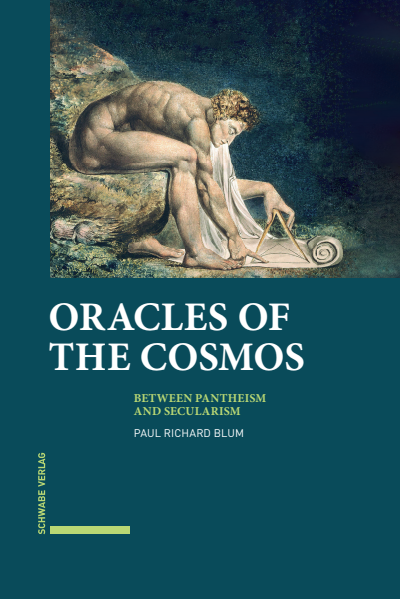
God and Geometry: William Blake's Newton Kein Zugriff
Geometry in Raffaello's School of Athens Kein Zugriff
God and Geometry: The Bible moralisée Kein Zugriff
Human Endeavor and Divine Action Kein Zugriff
Nicholas of Cusa and Roger Boscovich: Through Reflection to Transcendence Kein Zugriff
Modern Conceptual Realization Kein Zugriff
Cosmos, Creator, and Human Understanding: Non-overlapping and Complementary Kein Zugriff