, um zu prüfen, ob Sie einen Vollzugriff auf diese Publikation haben.
Monographie Kein Zugriff
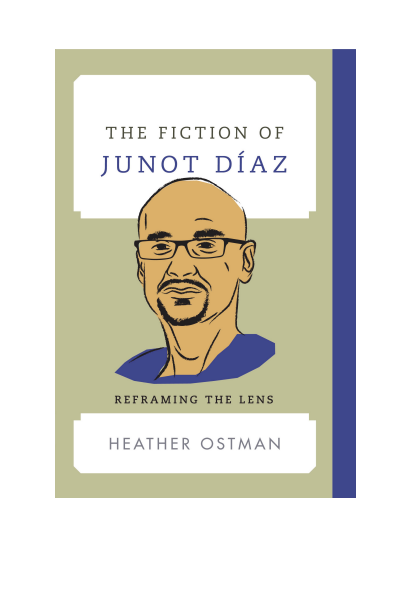
The Fiction of Junot Díaz
Reframing the Lens
Autor:innen:
Verlag:
2016
Zusammenfassung
The influence of Latin American writers—as well as other immigrant writers and their first-generation peers—has reframed the literary lens to include multiple views and codify the shift away from the tradition of white male writers who formed the core of the American literary canon for generations. Junot Díaz is one of the most prominent and influential writers in contemporary American literature. A first-generation Dominican American, the New Jersey native is at the forefront of a literary renaissance, portraying the significant demographic shifts taking place in the United States.
In The Fiction of Junot Díaz: Reframing the Lens, Heather Ostman closely examines the linguistic, popular culture, and literary references woven throughout Díaz’s fiction, including the short story collections Drown and This Is How You Lose Her, as well as the Pulitzer prize–winning novel The Brief Wondrous Life of Oscar Wao. Ostman also considers Díaz’s work as it relates to issues of identity, citizenship, culture, aesthetics, language, class, gender, and race.
By exploring how Díaz reframes the immigrant narrative—highlighting his innovative linguistic and genre-based approach—Ostman provides crucial insights into how Díaz’s writings relate to key issues in today’s world. The Fiction of Junot Díaz will be of interest to scholars and students of the immigrant experience as well as fans of this gifted writer.
Publikation durchsuchen
Bibliographische Angaben
Auflage
1/2016
Copyrightjahr
2016
ISBN-Print
978-1-4422-7246-0
ISBN-Online
978-1-4422-7247-7
Verlag
Rowman & Littlefield, Lanham
Sprache
Englisch
Seiten
181
Produkttyp
Monographie
Inhaltsverzeichnis
KapitelSeiten
Contents Kein Zugriff
Acknowledgments Kein Zugriff
Introduction Kein Zugriff
1 Díaz in Context Kein Zugriff Seiten 1 - 32
2 Drown Kein Zugriff Seiten 33 - 88
3 The Brief Wondrous Life of Oscar Wao Kein Zugriff Seiten 89 - 126
4 This Is How You Lose Her Kein Zugriff Seiten 127 - 168
Conclusion Kein Zugriff Seiten 169 - 172
Works Cited Kein Zugriff Seiten 173 - 176
Index Kein Zugriff Seiten 177 - 180
About the Author Kein Zugriff Seiten 181 - 181
Ähnliche Veröffentlichungen
aus dem Schwerpunkt "Sprachwissenschaft & Linguistik"