, um zu prüfen, ob Sie einen Vollzugriff auf diese Publikation haben.
Sammelband Kein Zugriff
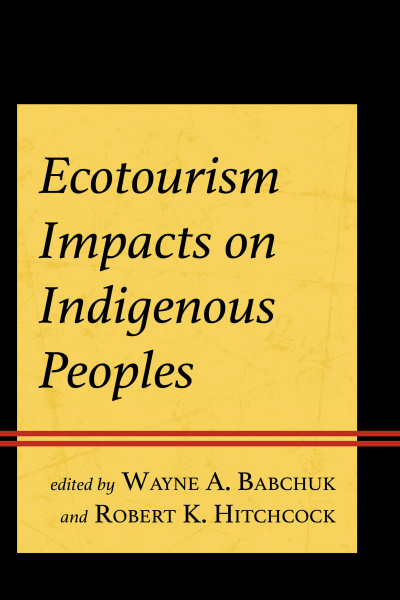
Ecotourism Impacts on Indigenous Peoples
Herausgeber:innen:
|
Verlag:
2024
Zusammenfassung
Ecotourism, defined as responsible travel to natural areas that conserves the environment and improves the well-being of local people, has become one of the fastest growing industries in the world. The impacts of ecotourism on people in virtually every part of the planet are particularly true for Indigenous people. Indigenous people are found in over half of the world’s countries and their cultures, customs, traditions, identities, and natural resource management systems are of great interest to scientists, tourists, and travelers. Many Indigenous peoples reside in conservation hotspots and places with high biological biodiversity. As shown in this book, ecotourism has both promises and pitfalls for Indigenous peoples, who seek to enhance their livelihoods while conserving the habitats in which they reside and the sacredness of their traditions. Drawing on cases from South America, North America, Africa, and Asia, Ecotourism Impacts on Indigenous Peoples examines the social, economic, political, and environmental impacts of ecotourism. A common plea of Indigenous people is that they have greater control over incoming ecotourists and receive more equitable social, economic, and cultural benefits from what they recognize as a highly complex industry with significant environmental, economic, and political effects.
Publikation durchsuchen
Bibliographische Angaben
Auflage
1/2024
Copyrightjahr
2024
ISBN-Print
978-1-7936-4384-1
ISBN-Online
978-1-7936-4385-8
Verlag
Lexington, Lanham
Sprache
Englisch
Seiten
250
Produkttyp
Sammelband
Inhaltsverzeichnis
KapitelSeiten
Contents Kein Zugriff
Figures Kein Zugriff
Tables Kein Zugriff
Acknowledgments Kein Zugriff
Chapter 1: Ecotourism, Indigenous Peoples, and Societal Impacts Kein Zugriff Seiten 1 - 10
Chapter 2: Sustainable Tourism: Marketing Indigenous Identity in the Plurinational State of Bolivia Kein Zugriff Seiten 11 - 28
Chapter 3: Challenges of Ecotourism among the San of Botswana, Namibia, and Zimbabwe Kein Zugriff Seiten 29 - 56
Chapter 4: Ecotourism, Anthropology, and San Community Docents and Activists: Some Interactions Kein Zugriff Seiten 57 - 64
Chapter 5: “Your Soul Will Remember”: Reconnecting with the Kalahari, Celebrating Traditional Knowledge, Sharing the Meat, and Becoming a Community on the ǂKhomani San Lands Today Kein Zugriff Seiten 65 - 112
Chapter 6: The Mayanization of the Ch’orti’: Indigenous Identity amid Tourism-Based Development Initiatives in Copán, Honduras Kein Zugriff Seiten 113 - 146
Chapter 7: Aboriginal Alternative Tourism in Arnhem Land: Tourism as Cultural Learning Kein Zugriff Seiten 147 - 158
Chapter 8: How Does Cultural Tourism in a National Monument Affect Its Affiliated Pueblo Tribes? Kein Zugriff Seiten 159 - 182
Chapter 9: COVID-19 and the Limits of Community-Based Ecotourism as a Sustainable Livelihood Diversification Strategy: The Case of the Indigenous Karo of Batu Katak, North Sumatra, Indonesia Kein Zugriff Seiten 183 - 202
Chapter 10: Change among the Wannilaeto of Sri Lanka: Land, Livelihoods, and Ecotourism Impacts Kein Zugriff Seiten 203 - 238
Index Kein Zugriff Seiten 239 - 244
About the Contributors Kein Zugriff Seiten 245 - 250
Ähnliche Veröffentlichungen
aus dem Schwerpunkt "Kulturgeschichte & Kulturwissenschaft"