, um zu prüfen, ob Sie einen Vollzugriff auf diese Publikation haben.
Monographie Kein Zugriff
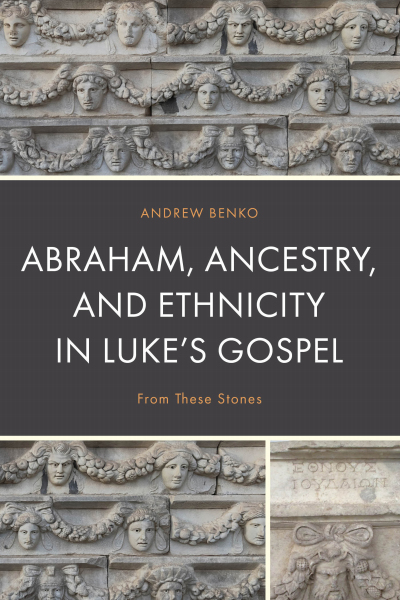
Abraham, Ancestry, and Ethnicity in Luke’s Gospel
From These Stones
Autor:innen:
Verlag:
2025
Zusammenfassung
What happens to the racial identity of those who follow Jesus? Abraham, Ancestry, and Ethnicity in Luke’s Gospel: From These Stones explores how Luke employs the concept of ancestry—especially descent from Abraham—to recategorize believers and nonbelievers. Luke’s use of the patriarch is informed by his function in Second Temple literature, as the ancestor of the Israel, but also the father of several other races, and a point of surprising contact between Jews and gentiles. In his gospel, Luke offers a new layer of ethnic identity to gentile believers, as adjunct members of Abraham’s family tree.
Publikation durchsuchen
Bibliographische Angaben
Auflage
1/2025
Copyrightjahr
2025
ISBN-Print
978-1-9787-1446-5
ISBN-Online
978-1-9787-1447-2
Verlag
Lexington, Lanham
Sprache
Englisch
Seiten
254
Produkttyp
Monographie
Inhaltsverzeichnis
KapitelSeiten
Contents Kein Zugriff
Topic, Thesis, and Approach Kein Zugriff
Chapter Structure and Prospect Kein Zugriff
Finding One’s Pedestal: Christians among the Ethnē Kein Zugriff
Notes Kein Zugriff
Ancient Terms: εθνος, γενος, etc. Kein Zugriff
“A race, by any other name . . .” Kein Zugriff
Race as Social Construct Kein Zugriff
Ancient Sources on of the Criteria of Race Kein Zugriff
Synthesis: A Three-Criteria Model of Race in Antiquity Kein Zugriff
Ethnic Genealogies Kein Zugriff
Individuals’ Genealogies Kein Zugriff
Negotiating Ancestral Claims Kein Zugriff
“Subscriptive Descent” vs. “Ascriptive Descent” Kein Zugriff
Migration / Relocation Kein Zugriff
Change in Political Situation / Cultural Environment Kein Zugriff
Sense of Connection with a Homeland Kein Zugriff
Ethno-cultural Umbrellas: Hellenism, Judaism, Romanitas Kein Zugriff
Race and Religious Practice Kein Zugriff
i. Constructive Effect of Conversion: The Proselyte Is Added to the People Kein Zugriff
ii. Deconstructive Effect of Conversion: The Apostate Abandons the People Kein Zugriff
iii. Constructed Kinship and Subscriptive Descent Kein Zugriff
The Polythetic Nature of Race Kein Zugriff
Race in Antiquity: Chapter Conclusions Kein Zugriff
Notes Kein Zugriff
Excursis: Abraham in the “Animal Apocalypse” of 1 Enoch Kein Zugriff
Abrahamic Blessings for (Just) the Judeans Kein Zugriff
Subscriptive Descent—Abraham’s Children follow Abraham’s Ways Kein Zugriff
Summary: Abraham as Wall Kein Zugriff
Ascriptive Descent—Israel’s Kinship to Other Abrahamic Races Kein Zugriff
Cultural Connections—Abraham among the Nations Kein Zugriff
Subscriptive Descent—Abraham, “Father” of Converts Kein Zugriff
Summary: Abraham as Bridge Kein Zugriff
Chapter Conclusions: Abraham in Second Temple Judaism Kein Zugriff
Notes Kein Zugriff
Abrahamic Stock: The Family of Jesus in Luke 1–2 Kein Zugriff
The Songs of Elizabeth and Mary (Luke 1:39–56) Kein Zugriff
The Song of Zechariah (Luke 1:67–79) Kein Zugriff
The Songs of Simeon and Anna (Luke 2:25–38) Kein Zugriff
Abraham in the Genealogy of Jesus (Luke 3:23–38) Kein Zugriff
Abraham in the Infancy Narratives: Conclusions Kein Zugriff
Notes Kein Zugriff
Brood of Vipers (Luke 3:7) Kein Zugriff
Sons from Stones (Luke 3:8) Kein Zugriff
Axes, Trees, Fruit (Luke 3:8–9) Kein Zugriff
“What then shall we do?” Kein Zugriff
John the Baptist on Abrahamic Identity: Summary Kein Zugriff
A Daughter of Abraham (Luke 13:10–17)105 Kein Zugriff
A Son of Abraham (Luke 19:1–10)118 Kein Zugriff
The Bosom of Abraham (Luke 16:19–31) Kein Zugriff
Abraham and the Eschaton (Luke 13:23–30, 17:29–32) Kein Zugriff
Abraham in Luke: Chapter Conclusions Kein Zugriff
Notes Kein Zugriff
One Human Line: “. . . son of Adam, son of God” (Luke 3:23–38) Kein Zugriff
One Human Line: “We are indeed God’s genos” (Acts 17:24–31) Kein Zugriff
Diverging Lines: Whose Fathers Killed the Prophets? Kein Zugriff
Our Father, Naaman (Luke 4:25–27) Kein Zugriff
Gentile Queens and Gentile Cities (Luke 11:29–32) Kein Zugriff
Designating “Brothers” Kein Zugriff
Ethnic Deviance, and Estrangement between “Brothers” Kein Zugriff
Chapter Conclusions Kein Zugriff
Notes Kein Zugriff
Two Brothers Kein Zugriff
Notes Kein Zugriff
Bibliography Kein Zugriff Seiten 235 - 246
Index Subjects Kein Zugriff Seiten 247 - 252
About the Author Kein Zugriff Seiten 253 - 254
Ähnliche Veröffentlichungen
aus dem Schwerpunkt "Religionswissenschaft"
Sammelband Kein Zugriff
Konferenz der evangelischen und katholischen Kirchenleitungen Baden-Württemberg