, um zu prüfen, ob Sie einen Vollzugriff auf diese Publikation haben.
Monographie Kein Zugriff
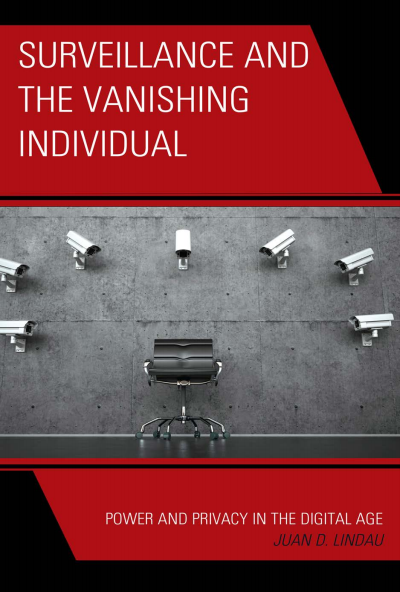
Surveillance and the Vanishing Individual
Power and Privacy in the Digital Age
Autor:innen:
Verlag:
2022
Zusammenfassung
Surveillance and the Vanishing Individual is an investigation into the impact of the spread of digital technologies and practices, and especially the wide-spread practice of mass surveillance, on privacy and personhood. The book argues that the quest for prediction, certainty, and control lying at the heart of the state’s security apparatus destroys an essential component of human dignity and fundamentally undermines liberalism.
The book begins with a discussion of the rise of the digital age and the historical import of this development. Subsequent chapters of the book examine different cultural understandings of privacy, the philosophical discussion of its centrality to human existence, and the form and extent of its legal protection. Lindau explores the reasons behind the rise of mass state surveillance, the modest legal restraints governing its use, and its deployment against activists, protestors, and dissidents and its impact on individuals and on privacy. The book then turns to a discussion of the rise of “surveillance capitalism” and, because this is not just—or even primarily—a U.S. phenomenon, examines the political, social, and other impacts of social media around the world. The book includes a case study discussing the global use of surveillance during the Covid-19 pandemic and the implications of this development before concluding with reflections on the relationship between mass surveillance and liberalism.
The book will appeal equally to readers across the social sciences and philosophy, and to students in courses on privacy, surveillance, and democracy. Lindau expertly explores the social, political, and economic consequences of digitization and one of its essential features – the appropriation and “mining” of ever large troves of personal information. The book primarily focuses on the experience of the United States but includes a comparative cross-national and cross-regional analysis and a discussion of the link between different regime types and state surveillance.
Schlagworte
Publikation durchsuchen
Bibliographische Angaben
Copyrightjahr
2022
ISBN-Print
978-1-5381-7350-3
ISBN-Online
978-1-5381-7352-7
Verlag
Rowman & Littlefield, Lanham
Sprache
Englisch
Seiten
309
Produkttyp
Monographie
Inhaltsverzeichnis
KapitelSeiten
Acknowledgments Kein Zugriff
Introduction Kein Zugriff
Chapter 1: The Transition from the Industrial to the Digital Age Kein Zugriff Seiten 1 - 20
Chapter 2: Interdisciplinary Discussions of Privacy and Its Loss Kein Zugriff Seiten 21 - 42
Chapter 3: Philosophical Debates about Privacy Kein Zugriff Seiten 43 - 54
Chapter 4: Privacy as a Legal and Constitutional Right Kein Zugriff Seiten 55 - 76
Chapter 5: National Security and the Expansion of Digital Surveillance Kein Zugriff Seiten 77 - 100
Chapter 6: The Legal Architecture Governing Mass State Surveillance in the United States Kein Zugriff Seiten 101 - 120
Chapter 7: Features of State Surveillance in the United States Kein Zugriff Seiten 121 - 136
Chapter 8: Surveilling the Most Vulnerable: The State and Refugees, Migrants, Dissidents, and Minorities Kein Zugriff Seiten 137 - 156
Chapter 9: Global Digital Mass-Surveillance Practices Kein Zugriff Seiten 157 - 174
Chapter 10: Representative Examples of State Surveillance around the World Kein Zugriff Seiten 175 - 200
Chapter 11: The Rise of Surveillance Capitalism Kein Zugriff Seiten 201 - 218
Chapter 12: Conspiracy Theories and Other Impacts of Social Media Platforms Kein Zugriff Seiten 219 - 242
Chapter 13: Surveillance Tools and the Coronavirus Pandemic: A Case Study Kein Zugriff Seiten 243 - 268
Conclusion and Epilogue Kein Zugriff Seiten 269 - 290