, um zu prüfen, ob Sie einen Vollzugriff auf diese Publikation haben.
Sammelband Kein Zugriff
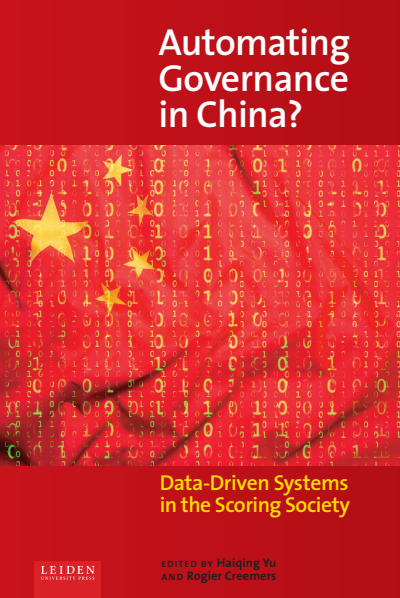
Automating Governance in China?
Data-Driven Systems in the Scoring Society
Herausgeber:innen:
|
Verlag:
2025
Zusammenfassung
This book considers the interplay between the affordances of technologies, the experiences and processes of technological systems, and the process of learning and adaptation by state actors as part of governance reform in China. It offers detailed studies of specific projects and applications that are automated or quasi-automated in organising and governing social, economic, and cultural lives in the world’s largest techno-authoritarian regime. Written by scholars from six countries across four continents, case studies illustrate new modes of digital governance employed by the Chinese government, as it interacts and collaborates with technology companies, ordinary citizens, and other key stakeholders. They offer new insights on the deployment of automated decision-making in authoritarian governance, and on its application and implementation in real-life scenarios. In a broader sense, the book contributes to global debates about the integration of decision-making technologies in governmental practices.
Publikation durchsuchen
Bibliographische Angaben
Auflage
1/2025
Copyrightjahr
2025
ISBN-Print
978-90-8728-465-7
ISBN-Online
978-94-006-0502-2
ePub ISBN
9789400605428
Verlag
Leiden University Press, Leiden
Sprache
Englisch
Seiten
241
Produkttyp
Sammelband
Inhaltsverzeichnis
KapitelSeiten
Table of Contents Kein Zugriff
List of illustrations and tables Kein Zugriff
Acknowledgements Kein Zugriff
Chapter 1. Automating Governance and Data-Driven Scoring in China: A Critical Introduction Kein Zugriff Seiten 11 - 32
Autor:innen: |
Chapter 2. Locating and Localizing Automated Decision-Making Failures in China Kein Zugriff Seiten 33 - 52
Autor:innen:
Chapter 3. A Democratic Ethos? Explorations of Blockchains and Governance in China Kein Zugriff Seiten 53 - 72
Autor:innen:
Chapter 4. Techno-Utopia or Techno-Trap? Unveiling the Enigma of Smart Courts in China’s Judicial Reform Kein Zugriff Seiten 73 - 94
Autor:innen:
Chapter 5. Balancing Control and Engagement: China’s Sociotechnical Imaginary in Facial Recognition Technology Kein Zugriff Seiten 95 - 120
Autor:innen: | | | |
Chapter 6. The Social Credit System as a Law-Enforcing Tool: Pillars of Local Implementation Kein Zugriff Seiten 121 - 142
Autor:innen:
Chapter 7. Scientific Fairness: Justifications and Critiques of Points Systems in Shenzhen Kein Zugriff Seiten 143 - 166
Autor:innen:
Chapter 8. Queer Social Sorting: Control and Criminalization in China’s LGBTQIA+ Activism Kein Zugriff Seiten 167 - 186
Autor:innen:
Chapter 9. Regulating Algorithmic Price Discrimination on Chinese Digital Platforms Kein Zugriff Seiten 187 - 210
Autor:innen: |
Chapter 10. The Algorithmic Divide in China and An Emerging Comparative Research Agenda Kein Zugriff Seiten 211 - 236
Autor:innen:
List of contributors Kein Zugriff Seiten 237 - 238
Index Kein Zugriff Seiten 239 - 240
Ähnliche Veröffentlichungen
aus dem Schwerpunkt "Religionswissenschaft"
Sammelband Kein Zugriff
Konferenz der evangelischen und katholischen Kirchenleitungen Baden-Württemberg