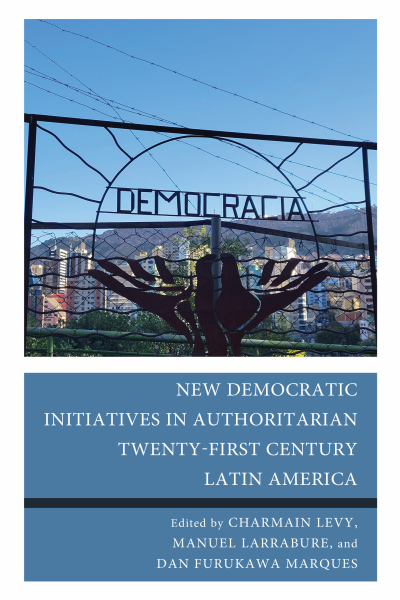
New Democratic Initiatives in Authoritarian Twenty-First Century Latin America
- Herausgeber:innen:
- | |
- Verlag:
- 2024
Zusammenfassung
New Democratic Initiatives in Authoritarian Twenty-First Century Latin America uses a multidisciplinary approach to understand the coincidence of emerging social movements, seeking more meaningful forms of democratic participation, on the one hand, and the rise of new authoritarian politics that in part rely on chaos and disorder as mechanisms of domination, on the other. This edited collection argues that Latin America has entered a new phase of political and economic volatility in which traditional conceptual divisions between democracy and authoritarianism need to be re-thought. How are democratic movements coping with and reacting to the new right-wing politics of Jair Bolsonaro and Javier Milei, which among other things, attempt to incorporate the popular classes? Does the “second pink tide” offer meaningful avenues for popular empowerment? How are counter hegemonic struggles built? What are the challenges and opportunities faced by women, queer and trans people, cultural workers, people with disabilities and indigenous groups in this conjuncture? These are the key questions addressed in this book.
Publikation durchsuchen
Bibliographische Angaben
- Auflage
- 1/2024
- Copyrightjahr
- 2024
- ISBN-Print
- 978-1-6669-4622-2
- ISBN-Online
- 978-1-6669-4623-9
- Verlag
- Lexington, Lanham
- Sprache
- Englisch
- Seiten
- 302
- Produkttyp
- Sammelband
Inhaltsverzeichnis
- Contents Kein Zugriff
- Acknowledgments Kein Zugriff
- Pragmatic and Undermining Alliances Kein Zugriff
- Latin American Progressive Neoliberalism and Neodevelopmentism Kein Zugriff
- Pink Tide, New World Order, and the Return of the Empire Kein Zugriff
- The Specificities of the Capitalist Crisis of Overaccumulation in Latin America Kein Zugriff
- Deepening and Expanding Procedural and Substantive Democracy Kein Zugriff
- Notes Kein Zugriff
- Bibliography Kein Zugriff
- Local Participatory Initiatives Kein Zugriff
- National Participatory Mechanisms Kein Zugriff
- First Pink Tide’s Crisis and Right-Wing Counter Tide Kein Zugriff
- Mexico: Citizens Consultations Kein Zugriff
- Chile: Constituent Process Kein Zugriff
- Colombia: Binding Regional Dialogues Kein Zugriff
- Discussion and Conclusions Kein Zugriff
- Notes Kein Zugriff
- Bibliography Kein Zugriff
- Hegemony During the Protests Kein Zugriff
- Conceptualization of the Phenomenon: Hegemonic Counter-Hegemony Kein Zugriff
- Methodology and Some Observations on the Protests Kein Zugriff
- Capitalization and Representation in Subsequent Years Kein Zugriff
- Conclusions Kein Zugriff
- Notes Kein Zugriff
- Bibliography Kein Zugriff
- Feminist Urban Interventions Kein Zugriff
- Introduction of Case Studies Kein Zugriff
- Utopía (Iztapalapa) and Blocks of Care (Bogotá) Kein Zugriff
- Fortalecidas (Montevideo) and Home Centers (San Miguel de Tucumán) Kein Zugriff
- Common Aspects, Different Routes, Similar Results Kein Zugriff
- Policy Entrepreneurs Kein Zugriff
- The Ideal Triangle Kein Zugriff
- Reflexive Femocrats Kein Zugriff
- Processes from Below: Home Centers (San Miguel de Tucumán) Kein Zugriff
- Conclusions Kein Zugriff
- Notes Kein Zugriff
- Bibliography Kein Zugriff
- Causes and Context for the Rise of Indigenous Autonomies Kein Zugriff
- Retrenchment of the State in the Neoliberal Era Kein Zugriff
- The Historical Right to Have Rights Kein Zugriff
- Implications for Democracy Kein Zugriff
- Liberal Representative Democracy and Autonomous Challenges Kein Zugriff
- Occupying and Reconfiguring Spaces Kein Zugriff
- Dilemmas of Autonomy Kein Zugriff
- New Political Imaginaries: Brief Concluding Reflections Kein Zugriff
- Notes Kein Zugriff
- Bibliography Kein Zugriff
- Ethnographic Work Kein Zugriff
- Legal Violence Kein Zugriff
- Legal Violence and Disability Kein Zugriff
- Case 1 Kein Zugriff
- Case 2 Kein Zugriff
- Case 3 Kein Zugriff
- Case 4 Kein Zugriff
- Searching for Intersectional Activism Kein Zugriff
- Conclusion Kein Zugriff
- Notes Kein Zugriff
- Bibliography Kein Zugriff
- Stage 1: Fighting against Repressive State Institutions Kein Zugriff
- Stage 2: Demands toward the State for Identity Recognition Kein Zugriff
- Stage 3: Affirmative Action Policies Kein Zugriff
- Pink Tide: Kirchnerism and Human Rights Movement (2003–2015) Kein Zugriff
- Purple Tide: Ni Una Menos Movement (2015–) Kein Zugriff
- Green Tide: Legalization of Abortion Movement (2018–2020) Kein Zugriff
- The New Ministry and the Employment Quota Executive Order Kein Zugriff
- The Employment Quota Law and the Activist Task of Implementing It Kein Zugriff
- Legal Recognition of Non-Binary Identities Kein Zugriff
- Conclusion Kein Zugriff
- Notes Kein Zugriff
- Bibliography Kein Zugriff
- Democratic Innovation Kein Zugriff
- Definition of Collective Mandate Kein Zugriff
- Initiative Kein Zugriff
- Group Size Kein Zugriff
- Eligibility Kein Zugriff
- Moment of Access Kein Zugriff
- Decision-Making Process Kein Zugriff
- Interaction Mechanism Kein Zugriff
- Methodology Kein Zugriff
- Case Study: The Gabinetona Kein Zugriff
- Critical Factors in Implementation Kein Zugriff
- Risks Kein Zugriff
- Administrative Features Kein Zugriff
- Outcome Kein Zugriff
- Conclusions Kein Zugriff
- Notes Kein Zugriff
- Bibliography Kein Zugriff
- Who Are Cultural Workers? Kein Zugriff
- Scattered but Organized Kein Zugriff
- Methodology Kein Zugriff
- The Relationship between Culture and State in Brazil Kein Zugriff
- Ocupa MinC Kein Zugriff
- From the Streets to Digital Platforms Kein Zugriff
- Conclusion Kein Zugriff
- Notes Kein Zugriff
- Bibliography Kein Zugriff
- Participatory Budgeting in Porto Alegre Kein Zugriff
- Diverse and Complex Ways to Interact with State Institutions Kein Zugriff
- The Origins of the Movement: Lomba in Authoritarian Context (1950–1980)5 Kein Zugriff
- Re-democratization, Frente Popular, and the Introduction of PB (from the 1990s to 2004) Kein Zugriff
- Institutionalized Participation Kein Zugriff
- Proximity Politics Kein Zugriff
- Protests and Direct Confrontation Kein Zugriff
- Notes Kein Zugriff
- Bibliography Kein Zugriff
- Why This Topic? Kein Zugriff
- Main Argument Kein Zugriff
- Structure of the Chapter Kein Zugriff
- What Is Ordoliberalism? Kein Zugriff
- Triangulation as a Hallmark of Ordoliberalism and Chile’s Center-left Kein Zugriff
- Morphology of Political Ideologies Kein Zugriff
- Deconstructing Discourse Based on Its Interaction with Social Power Kein Zugriff
- Ordoliberalism and the Chilean Left Kein Zugriff
- Context and Shared Problematics Kein Zugriff
- Order Kein Zugriff
- Competition Kein Zugriff
- State Kein Zugriff
- Third Way Kein Zugriff
- Ordnungspolitik Kein Zugriff
- Vitalpolitik Kein Zugriff
- The Plebes and Mass Society Kein Zugriff
- Ordoliberal Compulsions in the Periphery Kein Zugriff
- Neo-Ordoliberalism = Ordoliberalism + Woke Twenty-First-Century Social Democracy Kein Zugriff
- Three Mechanisms of Social Coordination for Legitimacy and Social Cohesion Kein Zugriff
- Subjectivity: A Crucial Dimension for Producing and Managing “Articulated” Citizens Kein Zugriff
- Eco-Extractivism and Green Colonialism Kein Zugriff
- Conclusion: Neo-Ordoliberalism or Radical Reforms? Kein Zugriff
- Foreclosure of Radical Democratic Politics Kein Zugriff
- A Need for Strengthening a Radical Democratic Politics from below Kein Zugriff
- Notes Kein Zugriff
- Bibliography Kein Zugriff
- New Authoritarianisms and the Case of the PDG Kein Zugriff
- Contradictions and Opportunities of the Chilean Neoliberal Demos Kein Zugriff
- Democracy of Individuals and Ideological Ambivalence Kein Zugriff
- Conclusion Kein Zugriff
- Notes Kein Zugriff
- Bibliography Kein Zugriff
- Index Kein Zugriff Seiten 291 - 296
- About the Editors Kein Zugriff
- About the Contributors Kein Zugriff