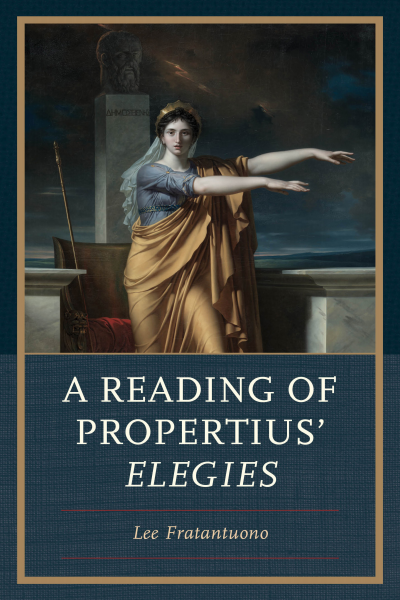
A Reading of Propertius' Elegies
- Autor:innen:
- Verlag:
- 2025
Zusammenfassung
Among the surviving poets of the Age of Augustus, the elegist Propertius is an enigma. Now brooding, now buoyant, Propertius’ couplets offer mesmerizing commentary on the history of Rome and the renaissance of the republic in the wake of the Augustan victory at Actium. The elusive figure who dominates the poems is Cynthia, a literate, musically-inclined, chestnut-haired Muse who calls to mind aspects of both the huntress goddess Diana and the battle goddess Minerva. Through the course of his Cynthia cycle, Propertius composes a breathtaking array of verse meditations on love and death, the nature of passion and obsession, and the quest to remain forever young. In A Reading of Propertius’ Elegies, Lee Fratantuono reveals Propertius’ work to be nothing less than an elegiac Aeneid, a spellbinding, intertextual edifice whose rooms both charm and terrify. Dazzling and decadent, gorgeous and ghostly, sophisticated and seductive, Propertius’ Cynthia ultimately presents us with the image of wolfish Roma herself, a city that is not only an anagram of Amor, but also the mistress of the world. In a Roman empire that has beheld the drama of Cleopatra and Antony, the rites of Isis, and the madness inspired by Bacchus and the Great Mother, Propertius dispenses elegiac medicine as the horror of civil war and the aftermath of intoxicated excess give way to an Augustan remedy.
Publikation durchsuchen
Bibliographische Angaben
- Auflage
- 1/2025
- Copyrightjahr
- 2025
- ISBN-Print
- 978-1-6669-7241-2
- ISBN-Online
- 978-1-6669-7242-9
- Verlag
- Lexington, Lanham
- Sprache
- Englisch
- Seiten
- 450
- Produkttyp
- Monographie
Inhaltsverzeichnis
- Dedication Kein Zugriff
- Contents Kein Zugriff
- Preface and Acknowledgments Kein Zugriff
- Introduction Kein Zugriff Seiten 1 - 18
- c. 1.1 Cynthia Prima Kein Zugriff
- c. 1.2 Quid Iuvat Kein Zugriff
- c. 1.3 Qualis Thesea Kein Zugriff
- c. 1.4 Quid Mihi Tam Multas Kein Zugriff
- c. 1.5 Quid Tibi Vis, Insane? Kein Zugriff
- c. 1.6 Non Ego Nunc Kein Zugriff
- c. 1.7 Dum Tibi Kein Zugriff
- c. 1.8 Tune Igitur Demens Kein Zugriff
- c. 1.9 Dicebam Tibi Kein Zugriff
- c. 1.10 O Iucunda Quies Kein Zugriff
- c. 1.11 Ecquid Te Kein Zugriff
- c. 1.12 Quid Mihi Kein Zugriff
- c. 1.13 Tu, Quod Saepe Soles Kein Zugriff
- c. 1.14 Tu Licet Abiectus Kein Zugriff
- c. 1.15 Saepe Ego Kein Zugriff
- c. 1.16 Quae Fueram Kein Zugriff
- c. 1.17 Et Merito Kein Zugriff
- c. 1.18 Haec Certe Deserta Loca Kein Zugriff
- c. 1.19 Non Ego Nunc Kein Zugriff
- c. 1.20 Haec Pro Continuo Te Kein Zugriff
- c. 1.21 Tu, qui . . . Kein Zugriff
- c. 1.22 Qualis Et Unde Genus Kein Zugriff
- Notes Kein Zugriff
- c. 2.1 Quaeritis Unde Kein Zugriff
- c. 2.2 Liber eram Kein Zugriff
- c. 2.3 Qui Nullum Kein Zugriff
- c. 2.4 At Veluti Kein Zugriff
- c. 2.5 Hoc Verum Est Kein Zugriff
- c. 2.6 Non Ita Kein Zugriff
- c. 2.7 Nos Uxor Numquam Kein Zugriff
- c. 2.8 Eripitur Nobis Kein Zugriff
- c. 2.9 Iste Quod Est Kein Zugriff
- c. 2.10. Sed Tempus Lustrare Kein Zugriff
- c. 2.11 Scribant De Te Kein Zugriff
- c. 2.12 Quicumque Ille Kein Zugriff
- c. 2.13 Non tot Achaemeniis Kein Zugriff
- c. 2.14 Non ita Dardanio Kein Zugriff
- c. 2.15 Io Me Felicem! Kein Zugriff
- c. 2.16 Praetor ab Illyricis . . . Kein Zugriff
- c. 2.17 Mentiri Noctem Kein Zugriff
- c. 2.18 Assiduae Multis Kein Zugriff
- c. 2.19 Etsi Me Invito Kein Zugriff
- c. 2.20 Quid Fles Kein Zugriff
- c. 2.21 A Quantum De Me Kein Zugriff
- c. 2.22a Scis Heri Mi Kein Zugriff
- c. 2.22b Aut, Si Es Dura Kein Zugriff
- c. 2.23 Cui Fuit Indocti Kein Zugriff
- c. 2.24a Tu loqueris (= Fedeli c. 2.24a + b) Kein Zugriff
- C. 2.24b Hoc Erat In Primis . . . (= Fedeli C. 2.24c) Kein Zugriff
- c. 2.25 Unica Nata Meo Kein Zugriff
- c. 2.26 Vidi Te in Somnis Kein Zugriff
- c. 2.27 At Vos Incertam Kein Zugriff
- c. 2.29 Hesterna, Mea Lux Kein Zugriff
- c. 2.30 Quo Fugis, A Demens? Kein Zugriff
- c. 2.31 Quaeris Kein Zugriff
- c. 2.32 Qui Videt, Is Peccat . . . Kein Zugriff
- c. 2.33 Tristia Iam Redeunt Kein Zugriff
- c. 2.34 Cur Quisquam Kein Zugriff
- Notes Kein Zugriff
- c. 3.1 Callimachi Manes Kein Zugriff
- c. 3.2 Carminis Interea Nostri Kein Zugriff
- c. 3.3 Visus Eram Kein Zugriff
- c. 3.4 Arma Deus Kein Zugriff
- c. 3.5 Pacis Amor Deus Est Kein Zugriff
- c. 3.6 Dic Mihi Kein Zugriff
- c. 3.7 Ergo Sollicitae Kein Zugriff
- c. 3.8 Dulcis Ad Hesternas Kein Zugriff
- c. 3.9 Maecenas, Eques Kein Zugriff
- c. 3.10 Mirabar Kein Zugriff
- c. 3.11 Quid Mirare Kein Zugriff
- c. 3.12 Postume Kein Zugriff
- c. 3.13 Quaeritis, Unde Avidis Kein Zugriff
- c. 3.14 Multa Tuae, Sparte Kein Zugriff
- c. 3.15 Sic Ego Kein Zugriff
- c. 3.16 Nox Media Kein Zugriff
- c. 3.17 Nunc, O Bacche Kein Zugriff
- c. 3.18 Clausus Ab Umbroso Kein Zugriff
- c. 3.19 Obicitur Totiens Kein Zugriff
- c. 3.20 Credis Eum Kein Zugriff
- c. 3.21 Magnum Iter Kein Zugriff
- c. 3.22 Frigida Tam Multos Kein Zugriff
- c. 3.23 Ergo Tam Doctae Kein Zugriff
- c. 3.24 Falsa Est Kein Zugriff
- Notes Kein Zugriff
- c. 4.1a Hoc Quodcumque Vides Kein Zugriff
- c. 4.1b Quo Ruis Imprudens? Kein Zugriff
- c. 4.2 Qui Mirare Kein Zugriff
- c. 4.3 Haec Arethusa Kein Zugriff
- c. 4.4 Tarpeium Nemus Kein Zugriff
- c. 4.5 Terra Tuum Kein Zugriff
- c. 4.6 Sacra Facit Vates Kein Zugriff
- c. 4.7 Sunt Aliquid Manes Kein Zugriff
- c. 4.8 Disce, Quid Kein Zugriff
- c. 4.9 AMPHITRYONIADES Kein Zugriff
- c. 4.10 Nunc Iovis Kein Zugriff
- c. 4.11 Desine, Paulle Kein Zugriff
- Notes Kein Zugriff
- Bibliography Kein Zugriff Seiten 433 - 438
- Index Kein Zugriff Seiten 439 - 448
- About the Author Kein Zugriff Seiten 449 - 450