, um zu prüfen, ob Sie einen Vollzugriff auf diese Publikation haben.
Monographie Kein Zugriff
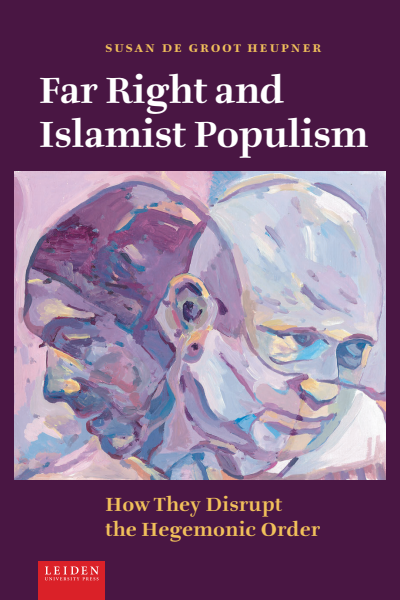
Far Right and Islamist Populism
How They Disrupt the Hegemonic Order
Autor:innen:
Verlag:
2024
Zusammenfassung
Far Right and Islamist Populism: How They Disrupt the Hegemonic Order
undertakes the challenging task of bringing dialectical logic together with the empirical study of discursive and ideological antagonisms. Examining the European far right, as represented by Geert Wilders and his Party for Freedom in the Netherlands, and Hizb ut-Tahrir as the Islamic interlocutor, the book demonstrates the inner logic by which two opposing political ideologies create a single populist front. In their shared practice of opposing and disrupting the hegemonic order, they draw on each other to encapsulate the contradictory desires and discontents of people in a mutually constituted Muslim Other. These cleavages and dissonances are reconciled in a bipolar identification of the 'people' versus the 'ummah' to establish a new hegemonic formation. The book demonstrates the reality and seriousness of this symbiotic relationship for pluralist democracies and harmonious coexistence. It explores how different, alternative formulations of populism drawing on the works of Ernesto Laclau, Chantal Mouffe, Slavoj Zizek, among others, can function as a counter-movement to the influence of far right and Islamist populist politics.
Publikation durchsuchen
Bibliographische Angaben
Auflage
1/2024
Copyrightjahr
2024
ISBN-Print
978-90-8728-444-2
ISBN-Online
978-94-006-0485-8
Verlag
Leiden University Press, Leiden
Sprache
Englisch
Seiten
162
Produkttyp
Monographie
Inhaltsverzeichnis
KapitelSeiten
Table of Contents Kein Zugriff
List of Figures Kein Zugriff
Introduction: Thinking about the Other Kein Zugriff Seiten 11 - 34
Chapter 1: Cultural and religious populisms Kein Zugriff Seiten 35 - 56
Chapter 2: Desire for a Muslim Other Kein Zugriff Seiten 57 - 70
Chapter 3: Mutual investment in a Muslim Other Kein Zugriff Seiten 71 - 96
Chapter 4: Manufacturing division Kein Zugriff Seiten 97 - 114
Chapter 5: Constructive and destructive implications Kein Zugriff Seiten 115 - 130
Chapter 6: Thinking beyond the ideological subject Kein Zugriff Seiten 131 - 142
Conclusion Kein Zugriff Seiten 143 - 152
References Kein Zugriff Seiten 153 - 158
Acknowledgements Kein Zugriff Seiten 159 - 160
Index Kein Zugriff Seiten 161 - 161
Ähnliche Veröffentlichungen
aus dem Schwerpunkt "Kultursoziologie & Wissenssoziologie"