, to see if you have full access to this publication.
Monograph No access
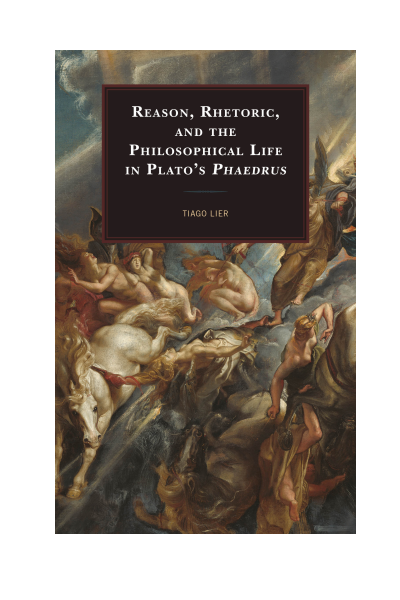
Reason, Rhetoric, and the Philosophical Life in Plato's Phaedrus
Authors:
Publisher:
2019
Summary
Plato is a well-known critic of rhetoric, but in the Phaedrus, he defends the art of rhetoric, arguing that it can be perfected with the aid of philosophy. In Reason, Rhetoric, and the Philosophical Life in Plato’s Phaedrus, Tiago Lier provides a new and comprehensive interpretation of this important dialogue. He argues that Plato’s defense of rhetoric is based on philosophy’s ethical nature, and that philosophy is a way of life rather than a body of knowledge. For Plato, an essential element of both rhetoric and the philosophical life is that every use of speech, whether to persuade or to learn, depends upon the psychology of the speaker and the audience. Lier shows how Socrates develops a dynamic account of this psychology over the course of the dialogue in order to help Phaedrus understand how he is personally engaged in, and shaped by, every act of communication. Only when we grasp the tension between eros and logos will we discover the limitations of the art of rhetoric and that rhetoric alone cannot show us what we truly desire. Instead, Lier concludes, the greatest power of speech is to reveal to ourselves our own desires and understanding of our place in the world. This continual self-reflection is the philosophical life around which Socrates and Plato fashion their distinctive forms of rhetoric.
The insights developed in this book will be of particular relevance to students and scholars of ancient philosophy, classics, and rhetorical theory, but it will also be of interest to those working in political science, literary studies, and communication studies.