, to see if you have full access to this publication.
Edited Book No access
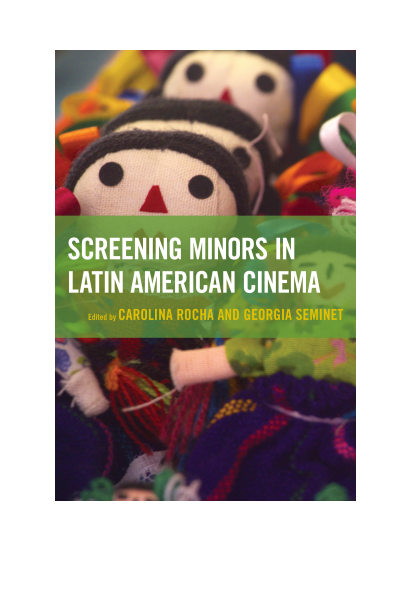
Screening Minors in Latin American Cinema
Editors:
|
Publisher:
2014
Summary
Screening Minors in Latin American Cinema is the first volume to delve into the construction of children's subjectivity and agency in Latin American film, and addresses such questions as: How and to what extent do films express the point of view of the child? How do plots and film practices represent children’s subjectivity and agency? Childhood studies has demonstrated the importance of examining the lives of children. Building on those insights, together with current research from film studies and Latin American cultural studies, the essays in this volume analyze the development of agency and voices of minors in contemporary Latin American film. The theoretical perspectives used—gender studies, psychoanalytic and postcolonial theory, film studies, play and performance studies, and emotion studies, among others—take into account innovative approaches to filmic techniques as they explore the varied representations of children.
Keywords
Search publication
Bibliographic data
Edition
1/2014
Copyright Year
2014
ISBN-Print
978-0-7391-9951-0
ISBN-Online
978-0-7391-9952-7
Publisher
Lexington, Lanham
Language
English
Pages
204
Product Type
Edited Book
Table of contents
ChapterPages
Contents No access
Acknowledgments No access
Introduction No access
1 Can Children Speak in Film? No access
2 From the Child Who Dies to the Adolescent Who Kills No access
3 Scribbles from a Little Girl No access
4 “Yo No Soy Invisible” No access
5 Playing Woman in María Novaro’s Lola No access
6 “Be a Man!” No access
7 Subjectivities in the Making No access
8 Bordering Adolescence No access
9 Embodying Childhood Social Agency in Gustavo Loza’s Al otro lado No access
10 Adolescent Subjectivity and Gender-Based Sexual Violence in Marisa Sistach’s Perfume de violetas (Nadie te oye) and La niña en la piedra (Nadie te ve) No access
11 The Advent of Child-Centric Perspectives in Brazil’s Urban-Realist Cinema No access
12 Agency, Performance, and Social Recognition in Priscila Padilla’s La eterna noche de las doce lunas No access
Index No access Pages 195 - 200
About the Contributors No access Pages 201 - 204
Similar publications
from the topics "Medienwissenschaft, Kommunikationsforschung"