, to see if you have full access to this publication.
Edited Book No access
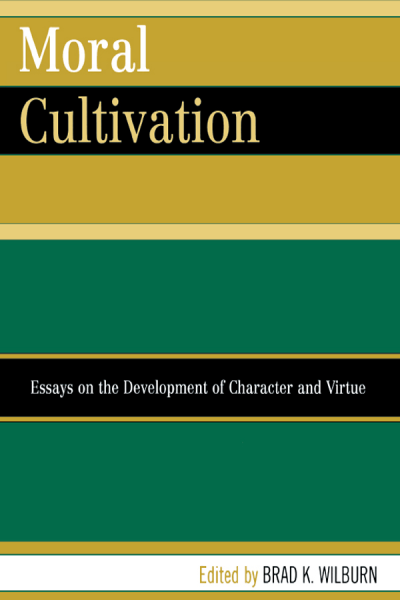
Moral Cultivation
Essays on the Development of Character and Virtue
Editors:
Publisher:
2007
Summary
The volume Moral Cultivation explores an overlooked topic in the renewed interest in virtue ethics, the concept of moral cultivation. While the study of virtue ethics focuses on the concept of virtue itself, an exploration of moral cultivation explores the process of attaining that virtue. The essays in this collection explore the question: How do we develop good character? Brad Wilburn has brought together a range of moral perspectives on this issue. Drawing on many different traditions, the essayists employ many schools of thought and thinkers regarding this issue, including: the Confucian tradition, Ancient Greek philosophy, Classical Rabbinic thought, the moral theory of Hume, and the imperatives of Kant. Although the essays cover a wide breadth, the focus is on a few basic questions: What does moral cultivation look like? What parts of us need to be cultivated and what methods should be used? How do moral theories connect with this aspect of our moral experience? Moral Cultivation is a great contribution to the study of virtue ethics. It is a rewarding volume for all levels of thinkers and students with an interest in philosophy or ethics.
Search publication
Bibliographic data
Edition
1/2007
Copyright Year
2007
ISBN-Print
978-0-7391-1220-5
ISBN-Online
978-0-7391-5785-5
Publisher
Lexington, Lanham
Language
English
Pages
161
Product Type
Edited Book
Table of contents
ChapterPages
Table of Contents No access
Acknowledgments No access
Introduction No access Pages 1 - 12
1. The Ethics of Style and Attitude No access Pages 13 - 28
2. Literature and Ethics in the Chinese Confucian Tradition No access Pages 29 - 48
3. Moral Philosophy and Moral Cultivation No access Pages 49 - 68
4. Moral Self-Improvement No access Pages 69 - 84
5. Self-Cultivation and Relations with Others in Classical Rabbinic Thought No access Pages 85 - 100
6. Moral Naturalism and the Possibility of Making ourselves Better No access Pages 101 - 124
7. Self-Development as an Imperfect Duty No access Pages 125 - 146