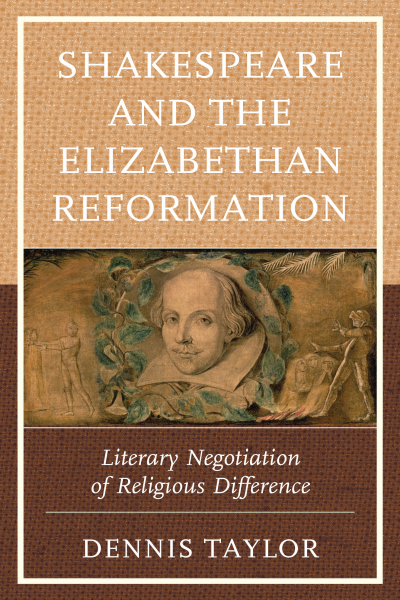
Shakespeare and the Elizabethan Reformation
Literary Negotiation of Religious Difference- Authors:
- Publisher:
- 2022
Summary
Shakespeare and the Elizabethan Reformation: Literary Negotiation of Religious Difference explores how Shakespeare’s plays dramatize key issues of the Elizabethan Reformation, the conflict between the sacred, the critical, and the disenchanted; alternatively, the Catholic, the Protestant, and the secular. Each play imagines their reconciliation or the failure of reconcilation. The Catholic sacred is shadowed by its degeneration into superstition, Protestant critique by its unintended (fissaparous) consequences, the secular ordinary by stark disenchantment. Shakespeare shows how all three perspectives are needed if society is to face its intractable problems, thus providing a powerful model for our own ecumenical dialogues. Shakespeare begins with history plays contrasting the saintly but impractical King Henry VI, whose assassination is the ”primal crime,” with the pragmatic and secular Henry IV, until imagining in the later 1590’s how Hal can reconnect with sacred sources. At the same time in his comedies, Shakespeare imagines cooperative ways of resolving the national ”comedy of errors,” of sorting out erotic and marital and contemplative confusions by applying his triple lens. His late Elizabethan comedies achieve a polished balance of wit and devotion, ordinary and the sacred, old and new orders. Hamlet is Shakespeare’s ultimate Elizabethan consideration of these issues, its so-called lack of objective correlation a response to the unsorted trauma of the Reformation.
Keywords
Search publication
Bibliographic data
- Edition
- 1/2022
- Copyright Year
- 2022
- ISBN-Print
- 978-1-6669-0208-2
- ISBN-Online
- 978-1-6669-0209-9
- Publisher
- Lexington, Lanham
- Language
- English
- Pages
- 480
- Product Type
- Monograph
Table of contents
- Dedication No access
- Contents No access
- Preface No access
- Acknowledgments No access
- Summary of the Argument No access
- Scholarly Issues No access
- Fictionality and Interiority No access
- Aesthetic Issues No access
- Development and Dating No access
- Notes No access
- Saint Henry VI No access
- Henry and the Search for Unity No access
- Complications of Henry VI’s Sanctity No access
- Vita Contemplativa and Vita Activa No access
- Queen Margaret on Henry’s Catholicism: Reformation Lists No access
- Machiavellianism and Protestantism No access
- Duke Humphrey’s Catholic Humanism No access
- Joan of Arc No access
- The Case of the St. Albon’s Miracle No access
- The Image of Reconciliation: Richmond’s Final Speech No access
- The Wars of the Roses and the Tillyard Thesis No access
- Why does Shakespeare Begin his Histories with Henry VI? No access
- Notes No access
- Henry and a New Machiavelliansm No access
- Catholicism and Conjuring No access
- The Loss of the Erasmian Duke Humphrey No access
- Jack Cade and Puritanism No access
- The Coming of Richard, “the murtherous Machevil” No access
- Queen Margaret and the “Tygers hart” No access
- Henry’s Tragic Flaw No access
- “None Dare Call It Treason” No access
- The Ghost of Henry VI No access
- Joan of Arc and “brave Talbot”: French Catholicism and English Patriotism No access
- The Late Introduction of Henry VI No access
- A New Vita Activa No access
- Richard’s Parody of Catholicism No access
- The Sanctuary Debate No access
- The Young Prince’s Historicism No access
- A Note on Oaths No access
- Richmond’s Institution of a Renewed Integrated Order No access
- The Play of King Henry VII No access
- Notes No access
- The Outer Frame No access
- The World of “Error” No access
- Exorcism in the Comedy No access
- The Abbess No access
- Marriage Sacred and/or Companionate No access
- Sanctuary in the Comedy No access
- The Gossips’ Feast No access
- Idolatrous Love and Its Destructive Effects No access
- A Note on the Word, “Idolatry” No access
- Eros, Idolatry, and Rape No access
- Protestant Radicalization of Idolatry No access
- Shakespeare’s Sources No access
- Erotic Idolatry Transformed No access
- The Outer Frame: Society and the Woods No access
- The Problem of Discipline: Avant Foucault No access
- Catholic Renaissance Humanism No access
- The Nature of Renaissance Humanism No access
- Petruchio’s Constructive Manipulation No access
- Courteous Love and Chaucer No access
- Kate’s Final Marriage Speech No access
- Catholic and Protestant Marriage No access
- The Sly Alternative No access
- Addendum on the Regime of Queen Elizabeth No access
- Contemporary French Allusions No access
- The World of Academies No access
- The Princess’s Joke No access
- Berowne’s Joke No access
- Penance Satirized and Vindicated No access
- Conclusion: “Lost Causes” No access
- Notes No access
- An Inner Circle No access
- The Challenge of Robert Southwell No access
- The Eros and Asceticism Debate No access
- Mater Dolorosa No access
- Rape of the Holy No access
- Blaming the Victim? The Embodied Holy No access
- Rape and Idolatry No access
- Lucius Brutus as Reconciler No access
- Was Shakespeare Catholic, Protestant, or Secular? No access
- Notes No access
- Drama and Dialogue No access
- Hiems and Ver in Love’s Labour’s Lost No access
- Notes No access
- Protestant Disappointment with Shakespeare No access
- The Case of Pandulph No access
- Contemporary Resonance No access
- The Norm of Arthur No access
- A New Prince Henry No access
- A Plague on Both Houses No access
- Romeo and Juliet’s Petrarchism No access
- Friar Lawrence and Reconciliation No access
- Sacrifice and Resurrection No access
- The Joy of Mab No access
- Faeryland as Competing Reality No access
- Shakespeare versus Spenser No access
- Shakespeare’s Ars Poetica No access
- Notes No access
- A More Complicated Catholic Monarch No access
- Richard’s Divine Anointment Nevertheless No access
- Parodic and Real Catholicism No access
- The Two Bodies No access
- Bishop Carlisle and the Old Religion No access
- Bolingbroke and the New Synthesis No access
- Hal’s Synthesis No access
- Falstaff as Mimicker of Puritanism No access
- Hal’s Retention and Rejection of the Falstaffian World No access
- Rabkin’s Rabbits, Ducks No access
- Archbishop Scroop and the Old Catholic Order No access
- The Lost Merry World of Falstaff No access
- The Epilogue: “Not the Man” No access
- Deathbed Reconciliation No access
- Atonement No access
- Henry and the Archbishops No access
- The Stripping of the Pax No access
- Summary of the Case So Far No access
- Ceremony No access
- The Issue of Saint Crispin No access
- Falstaff and Redeeming Ceremony No access
- Calvinist and Catholic Notions of Transformation No access
- Hal’s Triumph No access
- The French Connection No access
- The Matter of Britain and Europe No access
- International Courtship No access
- Notes No access
- Much Ado as Comic Romeo No access
- Comic Deception and Miraculous Implication No access
- The Catholic Plot No access
- The Iconoclastic Plot No access
- Iconoclastic Wit, Catholic Doting, and Miracle No access
- The Taming of the Shrews No access
- Dogberry No access
- The Title of the Play No access
- The Catholic Forest and the Old Divisions No access
- Conversions and Miracles No access
- Cross-Dressing and the Reform of Idolatry No access
- The Allusion to Public Issues No access
- The Epilogue No access
- A Dream of Society No access
- Androgyny again with True Love No access
- Malvolio and the Protestant Future No access
- The Last Exorcism No access
- The Imminence of Civil War No access
- Notes No access
- King Hamlet “Unhous’led, disappointed, unanel’d” No access
- A Deformed Catholic Ghost No access
- Hamlet’s Madness No access
- Ophelia and the Stripping of the Altars No access
- Claudius as the New Accepted Order No access
- Polonius and Laertes No access
- Drama as Historical Intervention No access
- Gertrude No access
- The Diet of Worms No access
- Prudent, Predestined, or Provident Action No access
- The Violent Ending No access
- Hamlet’s Delay and the Objective Correlative No access
- Shakespeare and the Elizabethan Reformation No access
- The Hope of Scholarship No access
- Shakespeare and the Jacobean Reformation No access
- Notes No access
- Bibliography No access Pages 413 - 460
- Index No access Pages 461 - 478
- About the Author No access Pages 479 - 480