, to see if you have full access to this publication.
Monograph No access
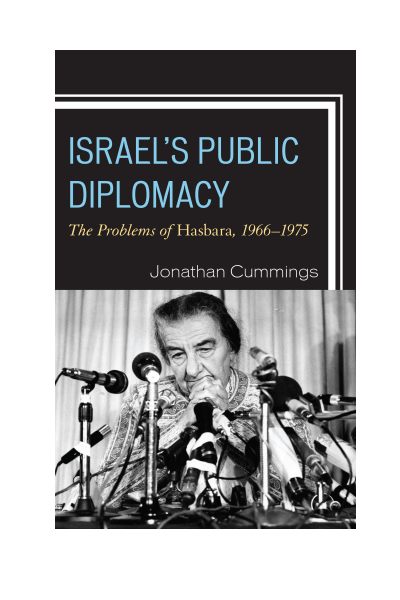
Israel's Public Diplomacy
The Problems of Hasbara, 1966-1975
Authors:
Publisher:
2016
Summary
Hasbara (explaining), the Israeli variant of public diplomacy, is the subject of endless domestic debate. Israel in the 1960s and 1970s saw many changes in its political and military international stage. This was a period of unusually intensive attention to the problems of hasbara, beginning with the appointment of Yisrael Galili as minister with responsibility for government communications and ending with the dismantling of the Ministry of Information in 1974, less than a year after it had been created. Israel had only been able to “muddle through,” and, at the end, there was no greater sophistication in Israeli thinking and no stronger administrative structure in spite of many organizational changes. Accessible to anyone interested in the history of Israel as well as political history and diplomacy, the book serves as a case study of how entrenched political culture can limit policy options and casts light on the emergence of public diplomacy as a feature of foreign policy.
Keywords
Search publication
Bibliographic data
Copyright Year
2016
ISBN-Print
978-1-4422-6598-1
ISBN-Online
978-1-4422-6599-8
Publisher
Rowman & Littlefield, Lanham
Language
English
Pages
205
Product Type
Monograph
Table of contents
ChapterPages
Contents No access
Abbreviations and Glossary No access
Acknowledgments No access
Introduction No access Pages 1 - 12
1 The Genesis of Hasbara No access Pages 13 - 42
2 “Trapped in the Past” No access Pages 43 - 68
3 Breech Birth No access Pages 69 - 88
4 “The Image Problem of a Tough Victor” No access Pages 89 - 110
5 Deterioration and Diffusion No access Pages 111 - 136
6 The Rise and Fall of the Ministry of Information No access Pages 137 - 162