, to see if you have full access to this publication.
Edited Book No access
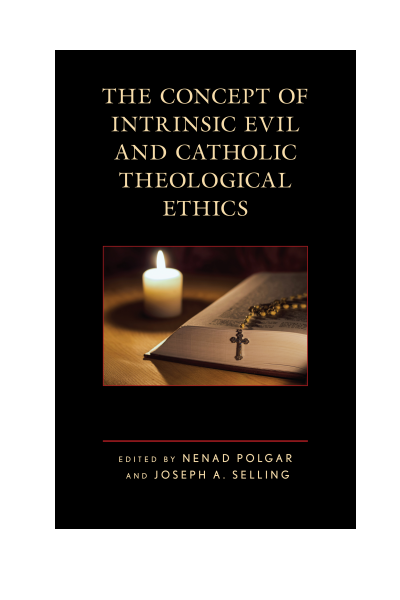
The Concept of Intrinsic Evil and Catholic Theological Ethics
Editors:
|
Publisher:
2019
Summary
One of the most sweeping, categorical, and absolute phrases that has ever been employed by the hierarchical teaching authority of the Roman Catholic Church refers to a concept called ‘intrinsic evil’. In short, intrinsic evil is invoked to describe certain kinds of human acts that can never be morally justified or permitted, regardless of the intention of the person who performs them or any circumstances within which they take place. The most common examples of things that people recognize as being classified as intrinsically evil are, suicide, euthanasia, abortion, and the use of contraception.
The ease with which the term ‘intrinsic evil’ gets right to the point, thereby making the fairly complex field of ethical reflection seem manageable and widely accessible, is one of the reasons for its attractiveness within Roman Catholic ethical teaching. However, this kind of simplification risks or even encourages avoidance of critical questions such as, "Where does this concept come from and what meanings are associated with it?", "Is it supposed to express an ethical judgment or to form it?", and "Is there a substantial difference between intrinsically evil acts and morally wrong acts?". The contributors to this volume engage with these and similar issues surrounding the formation and use of the concept, and in the process dispel the naïve belief that the concept can somehow escape the complexity of ethical discourse or establish certainty of ethical judgments that is otherwise unattainable. In light of this realization, the most important issue becomes whether the concept can still be useful for Catholic theological ethics. Although the contributors to this volume do not completely agree on this issue, they have shown that a critical scrutiny of the concept must necessarily precede settling this issue and that the concept might not be able to withstand such critical judgment.
The book provides a description of the origin and meanings of the concept of intrinsic evil. While the term itself tends to create confusion rather than clarity, eliminating its use does not imply that we cannot still have a meaningful discussion about ‘things that should never be done’.
Keywords
Search publication
Bibliographic data
Edition
1/2019
Copyright Year
2019
ISBN-Print
978-1-9787-0324-7
ISBN-Online
978-1-9787-0325-4
Publisher
Lexington, Lanham
Language
English
Pages
167
Product Type
Edited Book
Table of contents
ChapterPages
Contents No access
The Proliferation of “Intrinsic Evil” No access
1 Aristotle on Intrinsically Bad Actions No access
2 The Concept of Intrinsic Evil No access
3 Intrinsic Evil in Catholic Sexual Ethics No access
4 Intrinsic Evil in Catholic Sexual Ethics No access
5 Intrinsic Evil in Veritatis Splendor and Two Contemporary Debates No access
6 What Are Intrinsically Evil Acts? No access
7 The Naming of Evil in Fundamental Theological Ethics No access
8 Intrinsic Evil and the Sources of Morality No access
9 Intrinsic Evil in Different Ethical Perspectives No access
10 Pope Francis’s Heresy? No access
What Is Intrinsic Evil? No access Pages 149 - 160
Index No access Pages 161 - 164
About the Contributors No access Pages 165 - 167
Similar publications
from the topics "Religion und Theologie allgemein"