, to see if you have full access to this publication.
Monograph No access
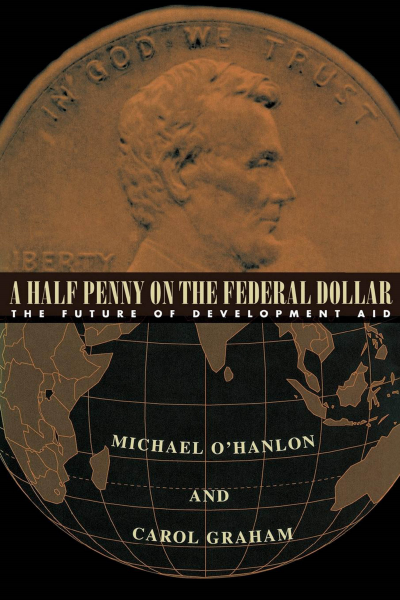
A Half Penny on the Federal Dollar
The Future of Development Aid
Authors:
|
Publisher:
2010
Summary
Spending on U.S. foreign affairs, which constitutes only about one percent of the federal budget, is being sharply reduced. Under the President's 1996 budget plan, it will decline by just as great a percentage as defense between 1990 and 2002and by substantially more than defense over the 1980-2002 period. No other major category of federal spending will undergo a real cut over either time period. The shrinking budget, totaling about $19 billion in 1997, will still have to fund the State Department, international broadcasting and educational exchanges, trade subsidies and investment guarantees for U.S. business overseas; United Nations operations including peacekeeping, and all types of foreign assistance.
In this book, O'Hanlon and Graham focus primarily on this last component of international spending. Specifically, they analyze U.S. official development assistance (ODA) to poor countries. The authors place U.S. ODA in a broad historical, international, and economic perspective. They then recommend an alternative approach to ODA for the United States as well as other donors. They favor continuing to provide humanitarian and grass-roots aid to most poor countries, but providing ODA to promote macroeconomic growth only to those countries that maintain coherent, market-oriented economic policy frameworks. The authors argue that to provide effective aid, as well as to maintain U.S. leadership in world affairs, net resources for ODA and the international account need to increase only modestly.
Search publication
Bibliographic data
Edition
1/2010
Copyright Year
2010
ISBN-Print
978-0-8157-6445-8
ISBN-Online
978-0-8157-0520-8
Publisher
Rowman & Littlefield, Lanham
Language
English
Pages
102
Product Type
Monograph
Table of contents
ChapterPages
Contents No access
What Is Development Aid? No access
Why Is This Subject Important? No access
The U.S. International Affairs Budget No access
U.S. Official Development Assistance No access
U.S. Assistance in International Perspective No access
Uses and Effects of Development Assistance No access
Most Development Aid Should Focus on Promoting Growth No access
The "Conditionally" Paradigm No access
Does Aid Tend to Lead to Economic Growth? No access
Reevaluating Conditionality No access
The Chicken or the Egg: Do Policies or Initial Conditions Determine Economic Performance? No access
Implications for Future Assistance No access
Aid for Grass-Roots and Humanitarian Purposes No access
Aid for General Economic Development and Nationwide Programs No access
Debt Relief No access
Reconstructing Societies Ravaged by Conflict No access
Environmental Programs No access
Social Safety Nets No access
Summary No access
How Many Countries Should Get More Aid, and How Many, Less? No access
Desirable Global Aid Levels No access
The U.S. Foreign Assistance and International Affairs Budgets No access
Other Reforms in Existing Aid Approaches No access