, to see if you have full access to this publication.
Monograph No access
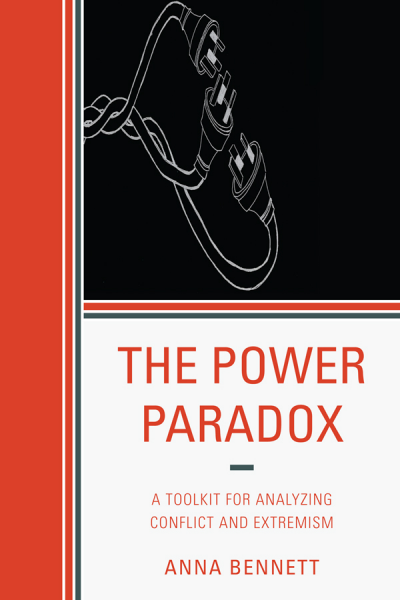
The Power Paradox
A Toolkit for Analyzing Conflict and Extremism
Authors:
Publisher:
2012
Summary
The Power Paradox: A Toolkit for Analyzing Conflict and Extremism reveals how mainstream views of power restrict the conceptual insights needed to resolve conflict. Anna Bennett insightfully explores Michel Foucault’s work on power and discourse in order to advance conceptual and contextual tools for understanding power dynamics. Through an examination of a range of extremist, terrorist, and counter-terrorist rhetoric, as well as various theories of power, Bennett analyzes the widespread problems associated with assuming that power is only repressive and competitive. This limited view reinforces — often unwittingly — divisive dynamics and stubborn polemics, which serve to continue conflict. By offering a comprehensive and constructive view of power struggles, The Power Paradox argues that power is a relational dynamic. Bennett identifies fascinating contradictions within discourses of power and relational dynamics, acknowledging the enduring quandary of power struggles: we are all implicated within them.
Search publication
Bibliographic data
Edition
1/2012
Copyright Year
2012
ISBN-Print
978-0-7618-5796-9
ISBN-Online
978-0-7618-5798-3
Publisher
Hamilton Books, Lanham
Language
English
Pages
138
Product Type
Monograph
Table of contents
ChapterPages
Contents No access
Preface No access
Acknowledgments No access
Introduction No access
Chapter One. Power and Resistance No access
Chapter Two. Foucault’s Legacy No access
Chapter Three. The Notion of Power No access
Chapter Four. Re-cognising Power No access
Chapter Five. The American Militias No access
Chapter Six. Waco No access
Chapter Seven. Hansonism No access
Chapter Eight. The Unabomber No access
Chapter Nine. Terrorism and the War Against It No access
Conclusion. Power As Generative—The Ongoing Work of Insight and Reflection No access Pages 125 - 128