, to see if you have full access to this publication.
Monograph No access
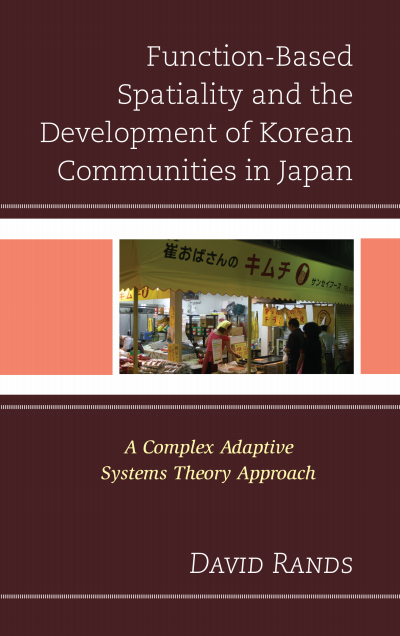
Function-Based Spatiality and the Development of Korean Communities in Japan
A Complex Adaptive Systems Theory Approach
Authors:
Publisher:
2014
Summary
Function-Based Spatiality and the Development of Korean Communities in Japan utilizes the theoretical model of complex adaptive systems and introduces the concept of function-based spatiality to investigate the roles of the urban environments of Tokyo and Osaka in the development of Korean communities in Japan. Analysis of distinct Korean communities allows for the examination of urban factors of each city which contributed to the patterns of Korean immigration and community formation. By utilizing a comparative narrative of the two cities, distinctions between the organic growth of Osaka and the planned city of Tokyo are illuminated. Additionally, the discussion utilizes the concept of function-based spatiality to show how each city interacted with its surrounding regional, national, and global spheres. The functions of Tokyo, as a gateway to Western modernization and center of the Japanese state, shaped the interactions with Korean immigrants. Likewise, Osaka’s functions as a center of mercantilism and second city played a large role in how Koreans were incorporated into the urban ethnoscapes. Taken together, these two examples provide insight to the dynamics of urban systems on the development of immigrant communities.
Keywords
Search publication
Bibliographic data
Edition
1/2014
Copyright Year
2014
ISBN-Print
978-0-7391-7368-8
ISBN-Online
978-0-7391-7369-5
Publisher
Lexington, Lanham
Language
English
Pages
176
Product Type
Monograph
Table of contents
ChapterPages
Contents No access
A Note about Asian Language Terms and Names No access
Acknowledgments No access
Preface: Theoretical Approach No access
Introduction to Part I: Two Very Different Cities No access
Ch01. The Historical Development of Osaka’s Synergies No access
Ch02. The Historical Development of Tokyo’s Synergies No access
Introduction to Part II: Function-Based Spatiality and the Development of Korean Communities in Osaka and Tokyo No access
Ch03. From Initial Sojourners through Annexation No access
Ch04. Annexation Through the Great Kantoˉ Earthquake No access
Ch05. From the Great Kantoˉ Earthquake to Greater Central Oversight No access
Ch06. Increased Central Control, Conscription, and the End of the War No access
Epilogue: Beginning the Postwar Plight No access
Bibliography No access Pages 149 - 170
Index No access Pages 171 - 174
About the Author No access Pages 175 - 176
Similar publications
from the topics "Soziologie allgemein"
Edited Book Full access
Karen Kastenhofer, Marius Albiez, Pauline Riousset, Constanze Scherz, Michael Decker