, to see if you have full access to this publication.
Monograph No access
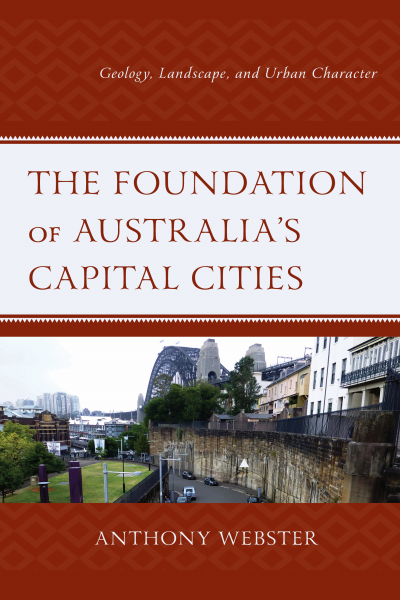
The Foundation of Australia's Capital Cities
Geology, Landscape, and Urban Character- Authors:
- Publisher:
- 2022
Summary
The Foundation of Australia’s Capital Cities is the story of how the places chosen for Australia’s seven colonial capitals came to shape their unique urban character and built environments. Tony Webster traces the effects of each city’s geologically diverse coastal or riverine landform and the local natural materials that were available for construction, highlighting how the geology and original landforms resulted in development patterns that have persisted today.
Keywords
Search publication
Bibliographic data
- Edition
- 1/2022
- Copyright Year
- 2022
- ISBN-Print
- 978-1-4985-9795-1
- ISBN-Online
- 978-1-4985-9796-8
- Publisher
- Lexington, Lanham
- Language
- English
- Pages
- 328
- Product Type
- Monograph
Table of contents
ChapterPages
- Dedication No access
- Contents No access
- List of Figures No access
- Acknowledgments No access
- Purpose and Scope of the Study No access
- Phase 1. 1788–1829: Military Camps as Penal Settlements. No access
- Phase 2. 1820s–1860s: Civil (Commercial) Settlements No access
- Aboriginal Landscape Information No access
- Wider Applications No access
- Geographic Setting and Study Area Boundaries No access
- Hawkesbury Sandstone No access
- Mafic Dikes No access
- Faults and Joint Swarms No access
- Quaternary and Recent Sediments and Early Farming No access
- Influence of Strata on Landforms No access
- The Tank Stream and Marsh No access
- The Botany and Lachlan Swamps No access
- Mangroves No access
- Aboriginal Landscape Feature Names No access
- Campsites No access
- Aboriginal Use of Geological Materials No access
- Rock Engravings and Paintings No access
- Wianamatta Group Strata and Agricultural Soils No access
- Brickmaking Clay and the Brickfields No access
- Lime Sources No access
- The Road Network No access
- Historic Landmark Buildings and Features No access
- Quarries No access
- Geographic Setting and Study Area Boundaries No access
- European Discovery and Early Exploration No access
- Quaternary Geology No access
- Archeological Evidence of Aboriginal Occupation of the Derwent No access
- Aboriginal Natural Feature Names No access
- Aboriginal Use of the Hobart Landscape No access
- Aboriginal Use of Geological Materials No access
- The Risdon Cove Settlement No access
- The Hobart Valley No access
- The Central Ridge and the Sullivan’s Cove Coastal Cliffs No access
- Important Hills in the Settlement Area No access
- Hobart Rivulet and Estuary No access
- Domain Rivulet (Park Street Creek) No access
- Other Significant Watercourses No access
- Wetlands No access
- 1804 Vegetation and Environment No access
- Reasons for the Choice of Sullivan’s Cove No access
- 1804–1812: The First Camp and the Collins Settlement No access
- Stainforth’s Cove (New Town Bay) No access
- Meehan’s 1811 Survey to Arthur’s Appointment of the Commissioners in 1825 No access
- The Road Network No access
- Anchorages and Land Reclamation No access
- Geohazards No access
- Brickmaking Clay and the Hobart Brickfields No access
- Dolerite and Urban Character No access
- Historic Quarries and their Current Landforms No access
- Lime Kiln Hill No access
- The New Town Coalfield No access
- Plains and the Airports No access
- European Discovery and Exploration of Moreton Bay and the Brisbane River No access
- Basement Paleozoic Metamorphic Rocks No access
- The Brisbane Tuff No access
- Quaternary and Recent Cover No access
- The South Brisbane Reach and the Southern Shore No access
- The Brisbane Peninsula No access
- Wheat Creek No access
- Frog Hollow No access
- Spring Hollow/Spring Hill No access
- York’s Hollow No access
- Fortitude Valley No access
- 1825 Vegetation and Environment No access
- The Aboriginal Landscape No access
- The “City Cliffs” and Miller’s First Landing Place No access
- Kangaroo Point Cliffs and the Petrie Bight Cliffs No access
- Quaternary Sediments and the First Farming No access
- The Road Network No access
- A Seat of Government No access
- Wetlands, Sporting Facilities, and Transport Infrastructure No access
- River Flooding No access
- Historic Quarries and Their Current Landforms No access
- Brickmaking Clay and Lime Sources No access
- Timber Structures No access
- Historic Time Frame No access
- Stirling’s Reconnaissance of 1827 No access
- The Superficial Formations No access
- Alluvium and Colluvium No access
- The Swan Valley No access
- The Swan-Canning River Estuary No access
- Reasons for the Choice of Point Fraser No access
- The Perth Ridge No access
- The Steep Southern Shoreline of Point Fraser No access
- St Georges Terrace—the First Elite Suburb No access
- The Mt Eliza Escarpment No access
- Heirisson’s Islands and the Shoals No access
- Burswood Peninsula (Island) No access
- Buckland Hill and the Limestone Cliffs No access
- The Point Fraser Lake and Wetland System No access
- Samphire Creek and the Point Fraser Salt Marshes No access
- Tea Tree Lagoon, Clause’s Brook, and Walter’s Brook No access
- Springs No access
- 1829 Vegetation and Environment No access
- The Limestone Bar No access
- Aboriginal Natural Feature Names No access
- Camp Sites No access
- River Crossings No access
- Stone Tool Technology No access
- Ochre and Pigments No access
- The Garden Island and Fremantle Camps No access
- The Perth Camp, 1829–1834 No access
- Land Grant Surveys No access
- First Farming No access
- Development of the Road Network No access
- Groundwater Contamination No access
- Landmark Limestone Buildings No access
- Minor Buildings and Features No access
- Brickmaking Clay No access
- Geographic Location and Setting No access
- Historic Timeframe Discussed No access
- Choice of the Sullivan’s Bay Site No access
- Geology and the Failure of the Sullivan’s Bay Settlement No access
- The Choice of the Site No access
- Basement Silurian Sedimentary Rocks No access
- Basic Dikes No access
- Cenozoic Volcanics and Interflow Sediments No access
- Pre-Quaternary Sediments No access
- The Yarra Delta No access
- The Yarra and Maribyrnong Rivers No access
- The Beach No access
- The Falls and the “Pond” No access
- The Settlement Hills No access
- Elizabeth Street Creek and Catchment No access
- The West Melbourne or Batman’s Swamp No access
- Moonee Moonee Chain of Ponds No access
- 1835 Vegetation and Environment No access
- Aboriginal Use of the Melbourne Landscape No access
- Aboriginal Use of Geological Materials No access
- First Farming No access
- High Ground as Preferred Suburban Locations No access
- Wider Settlement and Growth No access
- Europeanizing the Landscape No access
- 1850–1880—Gold Rush to “Marvelous Melbourne” No access
- Roads and Railways No access
- Elevated Sites No access
- Port Facilities No access
- Sporting Fields and Parks No access
- Locations of Early Industries and Defense Facilities No access
- Geohazards No access
- Brickmaking No access
- Geographic Setting and Study Area Boundaries No access
- Early Exploration of South Australia No access
- The Choice of the Site No access
- St Vincent Basin No access
- Quaternary Sediments No access
- The Para Fault Block No access
- Hallett Cove Sandstone and the 1836 Landscape No access
- Drainage System and Wetlands No access
- Vegetation and Environment No access
- Aboriginal Use of the Adelaide Landscape No access
- Aboriginal Natural Feature Names No access
- Campsites No access
- The Parklands No access
- The Evolution of the Road and Rail Network No access
- Beyond the Parklands: Early Suburban Development No access
- Anchorages No access
- Torrens River Flooding No access
- Calcrete (Limestone) No access
- Bluestone No access
- Sandstone No access
- Brickmaking Clay No access
- Historic Quarries No access
- Geographic Setting and Study Area Boundaries No access
- Discovery of Port Darwin No access
- The First Northern Territory Expedition—1865–1866 No access
- The Second Northern Territory Expedition—1869–1870 No access
- Paleoproterozoic Basement No access
- The Angular Unconformity No access
- Cretaceous Cover Sequence No access
- Deep Weathering and Lateritization No access
- Quaternary and Recent Sediments No access
- Fannie Bay and Frances Bay No access
- Fort Hill Point and Stokes Hill Point No access
- Doctors Gully No access
- Wetlands and the Drainage System No access
- 1869 Vegetation and Environment No access
- Aboriginal Use of the Darwin Landscape No access
- Choosing the Site of Darwin No access
- Freshwater Supply No access
- Early Gardens and Graveyards No access
- Harbor Facilities No access
- Development of the Road Network No access
- The Government Residency and Administrative Precinct No access
- Defense No access
- Darwin Airfield and Early International Aviation No access
- Geohazards No access
- Landmark Historic Buildings No access
- Fresh Water No access
- Early Agriculture No access
- Wetlands and Settlements No access
- Anchorages, Wharfs, and Other Transport Infrastructure No access
- To Stay or to Move No access
- Drainage Lines and Transport Corridors No access
- Simple Choices Leading to Functional Divisions No access
- Quaternary Deposits and Airfields No access
- Geological Boundaries and Modern Land-Use Zones No access
- Brick Clay and Lime Mortar No access
- Cenozoic (Holocene) Environmental Changes No access
- Landscape Reconstruction and Urban Planning No access
- Public Domain Urban Geology Information No access
- Landscape and Character under Threat No access
- Final Statement No access
- Appendix No access Pages 269 - 286
- Bibliography No access Pages 287 - 312
- Index No access Pages 313 - 326
- About the Author No access Pages 327 - 328