, to see if you have full access to this publication.
Monograph No access
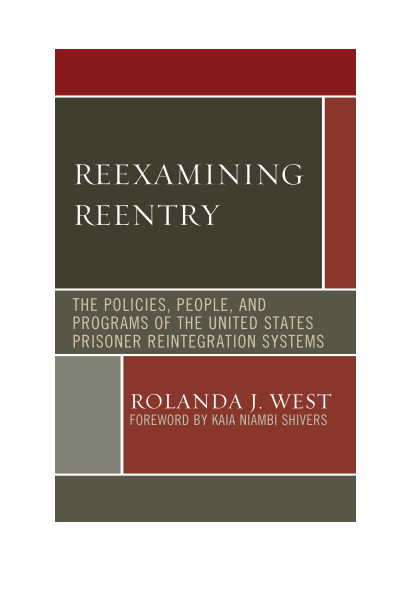
Reexamining Reentry
The Policies, People, and Programs of the United States Prisoner Reintegration Systems
Authors:
Publisher:
2016
Summary
Reexamining Reentry takes an in-depth look at how and why prisoner reentry programs are developed. Furthermore, this book explains how having access to these programs, or not, could potentially stymie the community reintegration of the formerly incarcerated. All too often we see the pervasive criminalization of the formerly incarcerated even after serving their sentences and being released into the general public. What makes this text different from many others that focus on prisoner reentry is the focus on empowerment strategies for the participant of the program rather than the deficits experienced by prison populations while attempting to transition. This book will show how the policies, social labeling and discrimination, trauma experienced prior to and during incarceration, as well as media interpretation of the population prior to incarceration all work together to further criminalize populations that have paid their respective debts to society.
Keywords
Search publication
Bibliographic data
Edition
1/2016
Copyright Year
2016
ISBN-Print
978-0-7391-9202-3
ISBN-Online
978-0-7391-9203-0
Publisher
Lexington, Lanham
Language
English
Pages
167
Product Type
Monograph
Table of contents
ChapterPages
Contents No access
Foreword No access
Preface No access
Acknowledgments No access
Chapter One: What is Prisoner Reentry? No access Pages 1 - 26
Chapter Two: Reentry Programs No access Pages 27 - 44
Chapter Three: Methods No access Pages 45 - 50
Chapter Four: Federal Crimes and the Question of White-Collar Reentry No access Pages 51 - 68
Chapter Five: Incarceration, Reentry, and the Effects on the American Family No access Pages 69 - 80
Chapter Six: Minority Youth in the Criminal Justice System No access Pages 81 - 94
Chapter Seven: Understanding Religious Conversions in the Prison System and Reentry No access Pages 95 - 106
Chapter Eight: The Criminalization of LGBTQ Populations and the Lack of Inclusive Reentry Practices No access Pages 107 - 120
Chapter Nine: A Case for Empowerment Reintegration Programs No access Pages 121 - 148
Chapter Ten: Conclusion No access Pages 149 - 150
Bibliography No access Pages 151 - 162
Index No access Pages 163 - 166
About the Author No access Pages 167 - 167
Similar publications
from the topics "Soziologie allgemein"
Edited Book Full access
Karen Kastenhofer, Marius Albiez, Pauline Riousset, Constanze Scherz, Michael Decker