, to see if you have full access to this publication.
Monograph No access
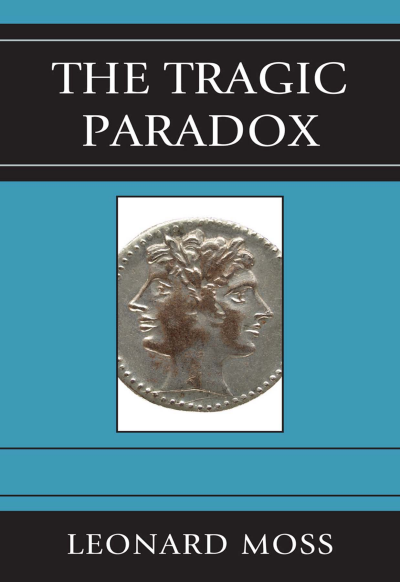
The Tragic Paradox
Authors:
Publisher:
2014
Summary
Paradox informs the narrative sequence, images, and rhetorical tactics contrived by skilled dramatists and novelists. Their literary languages depict not only a war between rivals but also simultaneous affirmation and negation voiced by a tragic individual. They reveal the treason, flux, and duplicity brought into play by an unrelenting drive for respect. Their patterns of speech, action, and image project a convergence of polarities, the convergence of integrity and radical change, of constancy and infidelity. A fanatical drive to fulfill a traditional code of masculine conduct produces the ironic consequence of de-forming that code—the tragic paradox.
Tragic literature exploits irony. In Athenian and Shakespearean tragedy, self-righteous male or female aristocrats instigate their own disgrace, shame, and guilt, an un-expected diminishment. They are victimized by a magnificent obsession, a fantasy of un-alloyed authority or virtue, a dream of perfect self-sufficiency or trust. The authors of tragedy revised the concept of “nobility” to reflect the strange fact that grandeur elicits its own annulment. “Strengths by strengths do fail,” Shakespeare wrote in Coriolanus.
The playwrights made this paradoxical predicament concrete with a narrative format that equates self-assertion with self-detraction, images that revolve between incredible reversals and provisional reinstatements, and speech that sounds impressively weighty but masks deception, disloyalty, cynicism, and insecurity. Three heroic philosophers, Plato, Hegel, and Nietzsche, contributed invaluable but contrasting accounts of these literary languages (Aristotle's Poetics will be discussed in connection with Plato's attitude toward poetry). Their divergent descriptions can be reconciled to show that invalidations as well as affirmations—the transmission of contraries—are essential for tragic composition.
An equivocal rhetoric, a mutable imagery, and an ironic progression convey the tortuous pursuit of personal preeminence or (in later tragic works by Kafka and Strindberg) family solidarity and communal safety. I am trying to integrate the disparate arguments offered by several notable theorists with technical procedures fashioned by the Athenian dramatists and recast by Shakespeare and other writers, procedures that articulate the tragic paradox.
Search publication
Bibliographic data
Edition
1/2014
Copyright Year
2014
ISBN-Print
978-0-7391-7121-9
ISBN-Online
978-0-7391-7122-6
Publisher
Lexington, Lanham
Language
English
Pages
245
Product Type
Monograph
Table of contents
ChapterPages
Contents No access
Acknowledgments No access
Introduction: The Languages of Paradox No access
1. The Masculine Model No access
2. The Tragic Female No access
3. The Tragic Sequence No access
4. Shakespeare's Dangerous Companion No access
5. The Relevance of Hegel No access
6. The Artistry of Flux No access
7. The Logic of Dreams No access
8. Plato's Paragon No access
9. Milton's Potpourri No access
10. Shakespeare's Paradox No access
Conclusion: The Truth of Tragedy No access Pages 165 - 170
Notes No access Pages 171 - 198
Two Bibliographies, 1900–2010 No access Pages 199 - 240