, to see if you have full access to this publication.
Monograph No access
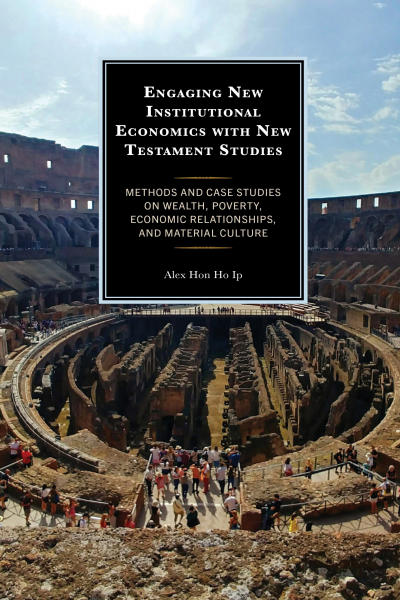
Engaging New Institutional Economics with New Testament Studies
Methods and Case Studies on Wealth, Poverty, Economic Relationships, and Material Culture- Authors:
- Publisher:
- 2025
Search publication
Bibliographic data
- Edition
- 1/2025
- Copyright Year
- 2025
- ISBN-Print
- 978-1-9787-1368-0
- ISBN-Online
- 978-1-9787-1369-7
- Publisher
- Lexington, Lanham
- Language
- English
- Pages
- 176
- Product Type
- Monograph
Table of contents
ChapterPages
- Contents No access
- Acknowledgments No access
- List of Abbreviations No access
- Part I: Methodology and Method No access
- Part II: Demonstrative Example: Wealth Possession in the Gospel of Luke No access
- Part III: Application of NIE in New Testament Studies No access
- Concluding Remark No access
- Formalist vs Substantivist No access
- Moses Finley’s Ancient Economy No access
- The Ambiguity of the Concept of Embeddedness No access
- The Dominance of the Market Economy: Peter Temin No access
- Roland Boer’s Marxist Analysis of Ancient Economies No access
- Justin Meggitt No access
- Peter Oakes No access
- Connectedness View from NIE: Establishing the Contacting Sphere between New Testament Interpretation and the Roman Economy No access
- Notes No access
- Brief and Selective History of NIE No access
- Institution and Intentionality No access
- North’s Theoretical Framework No access
- The Connection Point: The Belief System No access
- Cognitive Science’s Contribution to Patternized Recognition No access
- Step 1. Finding Initial Textual Clues with the Text: Identify the Targeted Inner Qualities, Such as Values, Beliefs or Relationships That Could Relate to the Roman Institutional Environment. No access
- Step 2. Identify the Relevant Institutions Related to the Key Concepts of the Text No access
- Step 3. Analysis of Institutional Layers Using Historical Data No access
- Step 4. Interpretation of Texts: Using the Analysis of the Institutional Structure to Help in the Interpretation of a Text No access
- Conclusion No access
- Notes No access
- Scholars’ Discourse on the Possession of Wealth No access
- Internal Evidence No access
- External Evidence No access
- Calling People to the Kingdom of God as the Key Motif No access
- Texts Related to Wealth Possession and Worldly Belief Systems No access
- Texts Related to One’s Wealth-loving Values No access
- Worrying (μεριμνα) about One’s Wealth No access
- Unsolidarity: Blindness of Our Neighbors No access
- Conclusion No access
- Notes No access
- Institutional Layer of the Wealth Possession Issue No access
- The Economic Contour: Disparity between the Poor and Rich No access
- Foundation of Power for Institutions: Unutilized Military Power No access
- Formal Institutions No access
- The Discriminatory Nature of the Roman Legal System No access
- The Dependence on Local Aristocrats and the Beginning of Oligarchization No access
- Short Summary No access
- The Ideological Layer: Civic Benefaction No access
- The Philosophical Layer No access
- The Manipulative Layer No access
- Entertainment as an Ideological Tool No access
- Greed and Worry: Two Sides of the Same Coin No access
- Breaking Solidarity with Neighbors No access
- Manipulation in the Form of a Good Deed No access
- Loss of Passion No access
- Hedonism No access
- Notes No access
- History of Scholarship: From Allegorical to Contextual interpretation No access
- The Relationship between the Two Sections of the Parable No access
- The Plot: Daily Routine and Natural reaction No access
- Narratological Layer of the Parable No access
- Intertexture: The topos of seeing in the Gospel of Luke No access
- The Contribution of the Institutional Layer to Help to Read the Rhetoric in the Parable No access
- Conclusion No access
- Notes No access
- Agora in the New Testament No access
- Methodological Issue: Why New Institutional Economic (NIE) Theory Matters When Analyzing Material Culture No access
- The Conglomerated Nature of the Agora No access
- The Publicity Function of the Agora No access
- The Continuity of the Ancient Greek Agora and the Roman Forum No access
- Conglomerated Function No access
- Information No access
- Conclusion No access
- Notes No access
- Perception in the Philippians No access
- Prevailing Roman Values No access
- Counter Examples to Prevailing Values No access
- Economic Objectives of Establishing Philippian Colony No access
- Formal institution No access
- Informal Institution No access
- Honor and Shame as an Informal Institution No access
- Perception of “Grief” in the Light of the NIE No access
- Conclusion No access
- Notes No access
- Objectifying Relationship No access
- Manipulating Relationship No access
- Theological Perspective: Eschatological Motif in This World No access
- Core Value: Loving Attitude Replaces the Objectifying Value No access
- Practical Concern: A Partnership Replaces the Manipulating and Exploiting Relationship No access
- Conclusion No access
- Notes No access
- Conclusion No access Pages 161 - 162
- Bibliography No access Pages 163 - 170
- Index No access Pages 171 - 174
- About the Author No access Pages 175 - 176