, to see if you have full access to this publication.
Monograph No access
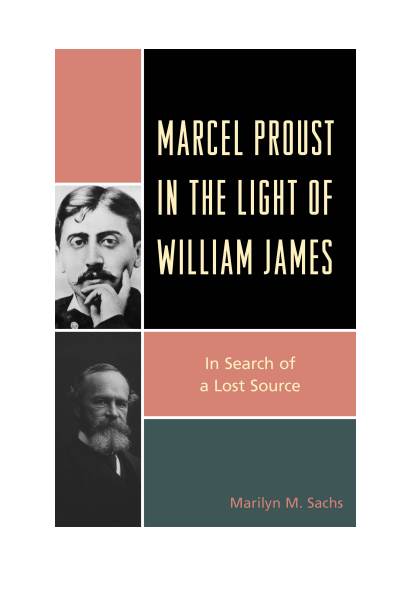
Marcel Proust in the Light of William James
In Search of a Lost Source
Authors:
Publisher:
2013
Summary
For a century now, scholars have searched for the “source” of Marcel Proust’s startlingly innovative novel À la recherche du temps perdu. Some have pointed to Henri Bergson, Sigmund Freud, or Paul Sollier. Others have referenced the novels of Henry James. But no one has focused on the more significant influence of the writings of Henry’s older brother, the psychologist and Harvard professor William James. A close comparison reveals the degree to which Proust’s novel stems from James’s psychological and philosophical theories.
William James was a prominent member of the scientific, medical and philosophical communities in Proust’s Paris and was close friends with two men well known to Proust. His works were translated into French and reviewed in French journals and newspapers. This book discloses how Proust likely became familiar with William James and illustrates how James’s writings were key to Proust’s ability to craft the book he had been trying to write, extending even to his use of similar language and imagery and a narrative schema that arguably mimics James’s descriptions of consciousness, perception, and memory. Proust’s hero assiduously explores the vague, uncertain, relational aspects of experience, the trials and comforts of habit, the salvational potential of memory, the “moral” aspects of personal history teeming with impression and desire—these are the truths of human psychology and behavior theorized by William James and made fictional flesh in Proust’s rendition of lived experience.
Keywords
Search publication
Bibliographic data
Edition
1/2013
Copyright Year
2013
ISBN-Print
978-0-7391-8162-1
ISBN-Online
978-0-7391-8163-8
Publisher
Lexington, Lanham
Language
English
Pages
311
Product Type
Monograph
Table of contents
ChapterPages
Contents No access
Acknowledgments No access
Introduction No access
Chapter One: Text in Context No access Pages 1 - 52
Chapter Two: The Jamesian Stream and the Proustian Art of Consciousness No access Pages 53 - 102
Chapter Three: Parallels in the Penumbra No access Pages 103 - 170
Chapter Four: From Jean to Je No access Pages 171 - 230
Chapter Five: Patterns of Palimpsest No access Pages 231 - 264
Afterword No access Pages 265 - 270
Appendix No access Pages 271 - 280
Works Cited or Consulted No access Pages 281 - 294