, to see if you have full access to this publication.
Edited Book No access
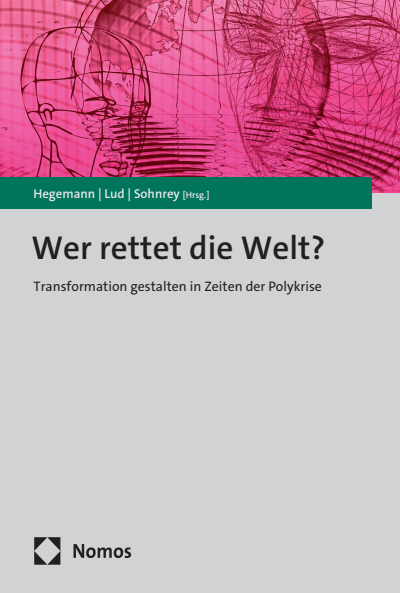
Wer rettet die Welt?
Transformation gestalten in Zeiten der Polykrise- Editors:
- | |
- Publisher:
- 2025
Keywords
Search publication
Bibliographic data
- Edition
- 1/2025
- Copyright Year
- 2025
- ISBN-Print
- 978-3-7560-2352-3
- ISBN-Online
- 978-3-7489-5030-1
- Publisher
- Nomos, Baden-Baden
- Language
- German
- Pages
- 213
- Product Type
- Edited Book
Table of contents
ChapterPages
- Titelei/Inhaltsverzeichnis No access Pages 1 - 10
- Authors: |
- 1. Einführung No access
- 2. Der Ausgang der Europawahl 2024 No access
- 3. Polykrise und Populismus: Was erklärt die Attraktivität des Rechts-Populismus? No access
- 4. Brandmauer oder Normalisierung – welche Positionierung nützt dem Rechtspopulismus? No access
- 5. So what? Die neue Normalität des Rechtspopulismus auf europäischer Ebene und mögliche Konsequenzen No access
- Authors: |
- 1. Einleitung No access
- 2. Öko-Innovationen und ihre Umsetzung No access
- 3. Publikationen zu Öko-Innovationen No access
- 4. Schlussfolgerungen No access
- Authors: |
- 1. Einleitung No access
- 2.1 Objektivität – ein unerreichbares Ideal No access
- 2.2 Kommunikation als Weg zur Annäherung an Objektivität No access
- 2.3 Auf dem Weg zur Wissenschaft mit Haltung? No access
- 3.1 Nicht-Positionierung No access
- 3.2 Politisierung No access
- 3.3 Demokratisierung No access
- 4.1 Sensibilität anstelle von Objektivitätssuggestion No access
- 4.2 Politisierungsvermeidung und Festhalten an Evidenz No access
- 4.3 Demokratisierung und Populismusvermeidung No access
- Authors:
- 1. Einordnung des Begriffs Geschäftsmodell No access
- 2. Elemente und Komponenten eines Geschäftsmodells No access
- 3. Nachhaltiges Geschäftsmodell No access
- 4. Soziales Geschäftsmodell No access
- 5. Fazit und Implikationen No access
- Authors: | | | |
- 1. Introduction No access
- 2.1 Recycling Trends and Strategies No access
- 2.2 Consumer Awareness and Education in Recycling No access
- 2.3 Digital Participation in Recycling No access
- 3. Methodology No access
- 4.1 General Concept No access
- 4.2 Community-based Recycling Plant No access
- 4.3 Transformers App Implementation No access
- 4.4 Empirical Evaluation No access
- 5. Discussion No access
- 6. Conclusion No access
- Authors: |
- 1. Einleitung No access
- 2.1 Wasserstoffproduktion aus Kohlenwasserstoffen No access
- 2.2 Wasserstoffproduktion durch Elektrolyse No access
- 3. Speicherung No access
- 4. Wasserstoff-Transport No access
- 5. Wasserstoffstrategie für ein klimaneutrales Europa No access
- 6. Wasserstoffstrategie Deutschland No access
- 6.2 Importstrategie der Bundesregierung No access
- 7.1 Wasserstoff in der Industrie No access
- 7.2 Wasserstoff in der Mobilität No access
- 7.3 Wasserstoff zur Energiespeicherung No access
- 8. Zusammenfassung und Ausblick No access
- Authors: |
- 1.1 Biodiversität und Flächenbedarfe im urbanen Raum No access
- 1.2 Nutzungsansprüche auf engem Raum No access
- 1.3 Lebensqualität im urbanen Raum für eine vielfältige Gesellschaft No access
- 1.4 Industrie- und Stadtnatur am Rand der Metropole Ruhr No access
- 1.5 Entstehensbedingungen für Stadtnatur im Zechenpark Kamp-Lintfort No access
- 2.1 Akteur:innen und bereits bestehende und geplante Lernorte No access
- 2.2 Konzepterstellung No access
- 3.1 Vielfalt von Lernenden, Lernorten und Aktivitätsniveaus No access
- 3.2 Einbeziehung von Bürger:innen No access
- 3.3 Veränderung gestalten No access
- 4. Fazit und Ausblick No access
- Authors: | | | |
- 1. Introduction No access
- 2.1 Groundwater Game No access
- 2.2 Personas No access
- 2.3 Gameplay No access
- 3. Results No access
- 4. Discussion No access
- Acknowledgements No access
- Ethics statement No access
- Authors: | | | | | |
- 1. Herausforderungen bei der Entwicklung digitaler assistiver Technologien No access
- 2. Relevante ethische Aspekte bei der Entwicklung von AS No access
- 3. Berücksichtigung ethischer Aspekte im Entwicklungsprozess – Status quo No access
- Abkürzungsverzeichnis No access
- Authors:
- 1.1 The day before the day after – aus der Geschichte lernen No access
- 1.2 The day before the day after – die Betrachtung des Unbekannten No access
- 2. Kontrapunkt Deformation – das nicht Neue an der Krise No access
- Vereinsamung No access
- 4. Eine Spekulation - Revolution des technologischen Totalitarismus No access
- 5. Summe – Von Zufällen, Fliegen und radikaler Hoffnung No access
- Authors:
- 1. Ehrenamt als Wirtschaftsfaktor No access
- 2. Professionalisierung im Ehrenamt als Teil des Problems der Wohlstandssuchtspirale No access
- 3. Ehrenamt im Wandel der Arbeitswelt – ein Fazit No access
- 4. Ein Ausblick - JETZT den Transformationsprozeß starten No access
- Autor:innenverzeichnis No access Pages 207 - 213