, to see if you have full access to this publication.
Monograph No access
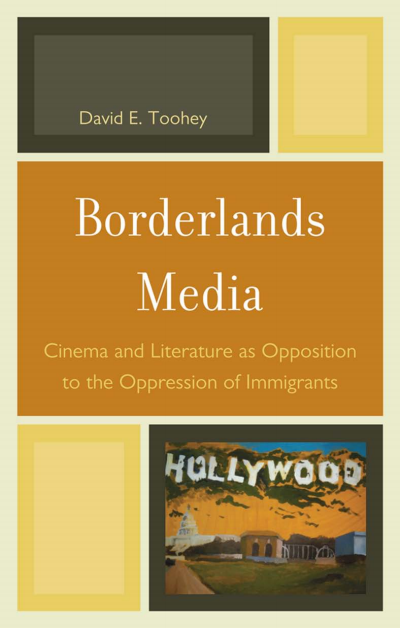
Borderlands Media
Cinema and Literature as Opposition to the Oppression of Immigrants
Authors:
Publisher:
2012
Summary
David E. Toohey’s Borderlands Media: Cinema and Literature as Opposition to the Oppression of Immigrants is an in-depth analysis which explores the immigrant experience using a mixture of cinema, literary, and other artistic media spanning from 1958 onward.
Toohey begins with Orson Welles’s 1958 Touch of Evil, which triggered a wave of protest resulting in Chicana/o filmmakers acting out against the racism against immigrant and diaspora communities. The study then adds policy documents and social science scholarship to the mix, both to clarify and oppose undesirable elements in these forms of thought. Through extensive analysis and explication, Toohey uncovers a history of power ranging from lingual and visual to more widely recognized class and racial divisions. These divisions are analyzed both with an emphasis on how they oppress, but also how cinematic political thought can challenge them, with special attention to the philosophy of Gilles Deleuze. David E. Toohey’s Borderlands Media is an essential text for scholars and students engaged in questions regarding the effect of media on the oppression of immigrants and diaspora communities.
Search publication
Bibliographic data
Edition
1/2012
Copyright Year
2012
ISBN-Print
978-0-7391-4951-5
ISBN-Online
978-0-7391-4953-9
Publisher
Lexington, Lanham
Language
English
Pages
333
Product Type
Monograph
Table of contents
ChapterPages
Table of Contents No access
Preface No access
Chapter 1: Theoretical and Literature Review No access Pages 1 - 56
Chapter 2: Methodology No access Pages 57 - 84
Chapter 3: When the Border Follows Immigrants No access Pages 85 - 108
Chapter 4: Neo-Baroque Law and Violent Border Spaces No access Pages 109 - 144
Chapter 5: Citizenship and “Legitimate” Speakers in I.R. No access Pages 145 - 172
Chapter 6: Jim Crow and Neo-Racism No access Pages 173 - 196
Chapter 7: Re-Linking Time and Space No access Pages 197 - 220
Chapter 8: La Facultdad and Meta-Racism No access Pages 221 - 250
Chapter 9: Conclusion No access Pages 251 - 270
Epilogue: Cinematic Border Interference No access Pages 271 - 294
Glossary No access Pages 295 - 302
Bibliography No access Pages 303 - 324
Index No access Pages 325 - 332
About the Author No access Pages 333 - 333
Similar publications
from the topics "Medienwissenschaft, Kommunikationsforschung"