Edited Book Full access
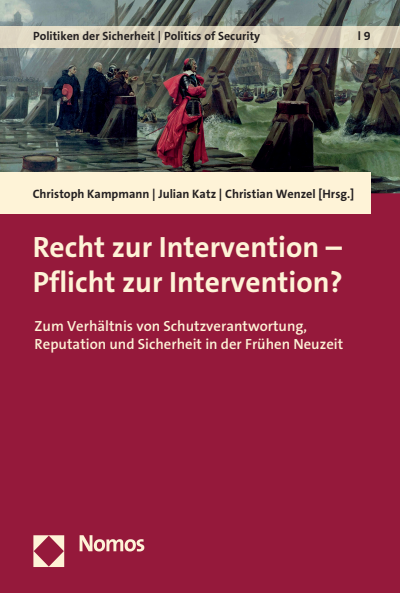
Recht zur Intervention – Pflicht zur Intervention?
Zum Verhältnis von Schutzverantwortung, Reputation und Sicherheit in der Frühen Neuzeit- Editors:
- | |
- Series:
- Politiken der Sicherheit | Politics of Security, Volume 9
- Publisher:
- 2021
Keywords
Search publication
Bibliographic data
- Edition
- 1/2021
- Copyright Year
- 2021
- ISBN-Print
- 978-3-8487-8246-8
- ISBN-Online
- 978-3-7489-2676-4
- Publisher
- Nomos, Baden-Baden
- Series
- Politiken der Sicherheit | Politics of Security
- Volume
- 9
- Language
- German
- Pages
- 554
- Product Type
- Edited Book
Table of contents
ChapterPages
- Titelei/InhaltsverzeichnisPages 1 - 8 Download chapter (PDF)
- Authors: | |Download chapter (PDF)
- Authors: | |
- 1.1 SchutzverantwortungAuthors: | |
- 1.2 ReputationAuthors: | |
- 1.3 SicherheitAuthors: | |
- 1.4 Perspektiven und Leitfragen des BandesAuthors: | |
- 2. Vorstellung der BeiträgeAuthors: | |
- 3. Übergreifende SchlussfolgerungenAuthors: | |
- BibliographieAuthors: | |
- Authors:Download chapter (PDF)
- 1. Einleitung: Intervention, Geiselstellung, SicherheitAuthors:
- 2. Der Anlass: Die Gefangenschaft König Maximilians in Brügge 1488Authors:
- 3. Der gefangene Monarch als Objekt auswärtiger InterventionenAuthors:
- 4. Philipp von Kleve-Ravenstein als GeiselAuthors:
- 5. Verrat der Geisel – Verrat an der Geisel?Authors:
- 6. Intervention – Geiselstellung – SicherheitAuthors:
- BibliographieAuthors:
- Authors:Download chapter (PDF)
- 1. IntroductionAuthors:
- 2. Honour, tyranny and oppressed ChristiansAuthors:
- 3. „Defension und Notwehr“Authors:
- 4. ConsequencesAuthors:
- 5. ConclusionAuthors:
- BibliographyAuthors:
- Authors:Download chapter (PDF)
- 1. EinleitungAuthors:
- Authors:
- 2.1 Ehre und Sicherheit als gesellschaftliche WerteAuthors:
- 2.2 Die Eidgenossenschaft als Ehrverband und System kollektiver SicherheitAuthors:
- Authors:
- 3.1 Die Ausgangslage des FinningerhandelsAuthors:
- 3.2 Freiheit und Reputation, städtische Repräsentation und Ehre der ObrigkeitAuthors:
- 3.3 Ehren als konfliktbestimmender Faktor in der EidgenossenschaftAuthors:
- 3.3 Chance zur Intervention oder Zwang zur Intervention? Handlungsstrategien der katholischen und evangelischen OrteAuthors:
- 4. Die nachträgliche Ausdeutung und publizistische Aufarbeitung des Finningerhandels im Jahr 1587Authors:
- 5. FazitAuthors:
- BibliographieAuthors:
- Authors:Download chapter (PDF)
- EinleitungAuthors:
- Phase I (1534–1536)Authors:
- Phase II (1538–1540)Authors:
- FazitAuthors:
- BibliographieAuthors:
- Authors:Download chapter (PDF)
- 1. EinleitungAuthors:
- 2. Päpstliche Autorität: Methodische VorüberlegungenAuthors:
- 3. Vorgeschichte: Pius IV. und die Tröstung der englischen KatholikenAuthors:
- 4. Die Bannbulle im Kontext katholischer Erwartungen und päpstlicher VersprechungenAuthors:
- 5. Ambivalente Exkommunikation: Fehlende Umsetzung als Gefahr für päpstliche AutoritätAuthors:
- 6. Fazit: Zwang zur Exkommunikation? Päpstliche Autorität und die Bannbulle von 1570Authors:
- BibliographieAuthors:
- Authors:Download chapter (PDF)
- 1. EinleitungAuthors:
- 2. Intervention, Reputation und Sicherheit – methodische Annäherungen an einen komplexen ZusammenhangAuthors:
- 3. Der niederländische Aufstand und Englands Politik: Die Entstehung eines ‚imperialen‘ Reputations- und Sicherheitsproblems aus spanischer PerspektiveAuthors:
- 4. Konflikteskalation und das Reputationsproblem: Von der englische Niederlande-Intervention 1585 zur empresa de Inglaterra 1588Authors:
- 5. Vertrauen und Verpflichtung – Schutzpflichten als Testfall der ReputationswahrungAuthors:
- 6. FazitAuthors:
- BibliographieAuthors:
- Authors:Download chapter (PDF)
- 1. EinleitungAuthors:
- 2. Repräsentation und Reputation als AnalysekategorienAuthors:
- 3. Herrschaft, Frauen und KriegAuthors:
- 4. Souveräne Herrscherin oder ‚Joint Rulers‘?Authors:
- 5. Gemeinsame Herrschaft im Zeichen von Frieden und SicherheitAuthors:
- 6. Englands Intervention 1557Authors:
- 7. Elisabeth und Robert Dudley – Friedenskönigin und ‚Scheinkönig‘Authors:
- 8. England und die NiederlandeAuthors:
- 9. GlorianaAuthors:
- 10. FazitAuthors:
- BibliographieAuthors:
- Authors:Download chapter (PDF)
- 1. EinleitungAuthors:
- 2. Konzeptionelle Überlegungen: Reputation und Garantien in der Frühen NeuzeitAuthors:
- 3. Die Konstruktion der Garantenrolle Karls I.: Die Friedensschlüsse zwischen Ludwig XIII. und den Hugenotten, 1621–1626Authors:
- 4. Die Funktionalisierung der Garantenrolle Karls I.: Die englische Intervention von 1627 und ihre BegründungAuthors:
- 5. Die öffentliche Debatte über das englische Deutungsangebot, 1627–1628Authors:
- 6. FazitAuthors:
- BibliographieAuthors:
- Authors:Download chapter (PDF)
- 1. EinleitungAuthors:
- 2. Wilhelm Egon von Fürstenbergs Rolle für die französische Reichspolitik und die Folgen seiner Gefangennahme 1674Authors:
- 3. „An Expedient […] to salve the Honour of France“. Die Modifizierung der französischen Schutzgarantie im Vorfeld des Friedenskongresses von NimwegenAuthors:
- 4. Flexible Schutzversprechen. Fürstenbergs Freilassung zwischen fürstlicher Selbstverpflichtung, Verhandlungsstrategie und friedenspolitischem PragmatismusAuthors:
- 5. Ultimaten und Ambiguitäten. Der Weg zu Fürstenbergs Freilassung 1679Authors:
- 6. ZusammenfassungAuthors:
- BibliographieAuthors:
- Authors:Download chapter (PDF)
- 1. EinleitungAuthors:
- Authors:
- 2.1 Die Entstehung der Fürstenberg-KandidaturAuthors:
- 2.2 Eine problemlose Sukzession? Die Koadjutorwahl FürstenbergsAuthors:
- Authors:
- 3.1 Das Ringen um die Bestätigung der KoadjutorwahlAuthors:
- 3.2 Der Tod von Kurfürst Max Heinrich: Stärkung der Position Fürstenbergs?Authors:
- Authors:
- 4.1 Von der kaiserlichen Exklusive zur DoppelwahlAuthors:
- 4.2 Exklusion als Provokation: Die Konsequenzen der Doppelwahl für FrankreichAuthors:
- 4.3 Vom Interventionszwang zum KriegAuthors:
- 5. FazitAuthors:
- BibliographieAuthors:
- LiteraturAuthors:
- Authors:Download chapter (PDF)
- 1. EinleitungAuthors:
- 2. Theoretische GrundüberlegungenAuthors:
- 3. Geschichtliche GrundbedingungenAuthors:
- 4. Der erste Akt: Der Sejm von 1766Authors:
- 5. Der zweite Akt: Die Konföderationen von 1767 und das Toleranzedikt von 1768Authors:
- 6. Der dritte Akt: Die Barer KonföderationAuthors:
- 7. FazitAuthors:
- BibliographieAuthors:
- Authors:Download chapter (PDF)
- 1. IntroductionAuthors:
- 2. Historical ContextAuthors:
- 3. Voltaire as a champion of religious liberty and apologist for the Russian interventionAuthors:
- 4. Voltaire’s misinterpretation of Russian politics as a fight for religious freedomAuthors:
- 5. Empress Catherine as embodiment of Enlightenment in the Sermon prêché à BaleAuthors:
- 6. From Creating a Reputation for the Empress to the Defamation of the Confederation of Bar and the Catholic NobilityAuthors:
- 7. ConclusionAuthors:
- BibliographyAuthors:
- Verzeichnis der Autorinnen und AutorenPages 549 - 554 Download chapter (PDF)