, to see if you have full access to this publication.
Monograph No access
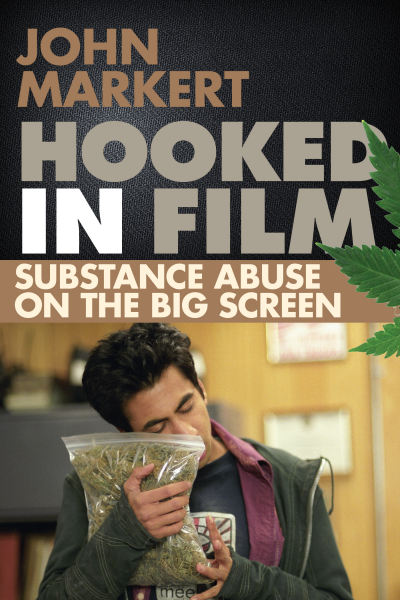
Hooked in Film
Substance Abuse on the Big Screen
Authors:
Publisher:
2013
Summary
Though drug use was widespread in the nineteenth century, the negative influence of narcotics was mostly unknown. Cinema of the early twentieth century was instrumental in making viewers aware of the harmful effects of drugs. Throughout the decades, images of drugs such as marijuana, LSD, and heroin in films impacted—both negatively and positively—the national perception of their use. In fact, the use, popularity, and opinion of certain drugs often follow their status on the big screen.
In Hooked in Film, John Markerttakes a close look at the correlation between social policies and the public view of drugs and their portrayals in film. In this volume, Markert examines the changing social attitudes toward illegal drugs and their cinematic depictions from as early as the 1894 film Chinese Opium Den to the present. The first section of this book focuses on the demonization of drugs between 1900 and 1959, followed by an assessment of marijuana on the big screen after 1960, when the drug was shown as part of everyday life with no serious consequences. Post-1960 depictions of heroin use, which have remained consistently negative, are also analyzed. Markert then takes a close look at the portrayals of powdered cocaine after the 1960s and the emergence of crack in the mid-1980s. Finally, Markert discusses hallucinogens, Ecstasy, and methamphetamines and their roles on the big screen.
Tracking hundreds of films spanning more than a century, Hooked in Film looks at camp classics like Reefer Madness, comedies such as Cheech and Chong’s Up in Smoke, Dazed and Confused, and Pineapple Express, and dramas, including Panic in Needle Park and Requiem for a Dream. Scholars and students of cinema, popular culture, media studies, and sociology will find this book a valuable examination of how cinematic portrayals of drugs have changed over time, and how those images have influenced public perception of drugs and even public policy.
Search publication
Bibliographic data
Edition
1/2013
Copyright Year
2013
ISBN-Print
978-0-8108-9130-2
ISBN-Online
978-0-8108-9131-9
Publisher
Rowman & Littlefield, Lanham
Language
English
Pages
370
Product Type
Monograph
Table of contents
ChapterPages
CONTENTS No access
INTRODUCTION No access
Chapter 1. ATTACKING THE DRUG PROBLEM, 1900–1959: Cinema and the Temperance Movement No access Pages 1 - 32
Chapter 2. MARIJUANA, 1960–2010: A Social and Cinematic Reappraisal No access Pages 33 - 86
Chapter 3. HEROIN IN FILM, 1960–2010: The Continued Spiral into Death and Destruction No access Pages 87 - 142
Chapter 4. COCAINE, 1960–2010: Crack Changes the Social and Cinematic Landscape No access Pages 143 - 218
Chapter 5. A DRUG MISCELLANY: Social and Cinematic Problem Drugs No access Pages 219 - 302
CONCLUSION No access Pages 303 - 318
APPENDIX A. Drug Films, 1900–1959 No access Pages 319 - 322
APPENDIX B. Marijuana and Hashish Films, 1960–2010 No access Pages 323 - 330
APPENDIX C. Morphine and Heroin Films, 1960–2010 No access Pages 331 - 338
APPENDIX D. Cocaine and Crack Cocaine Films, 1960–2010 No access Pages 339 - 344
APPENDIX E. A Drug Miscellany, 1960–2010 No access Pages 345 - 350
SELECTED BIBLIOGRAPHY No access Pages 351 - 356
GENERAL INDEX No access Pages 357 - 362
FILM INDEX No access Pages 363 - 368
ABOUT THE AUTHOR No access Pages 369 - 370
Similar publications
from the topics "Medienwissenschaft, Kommunikationsforschung"