, to see if you have full access to this publication.
Monograph No access
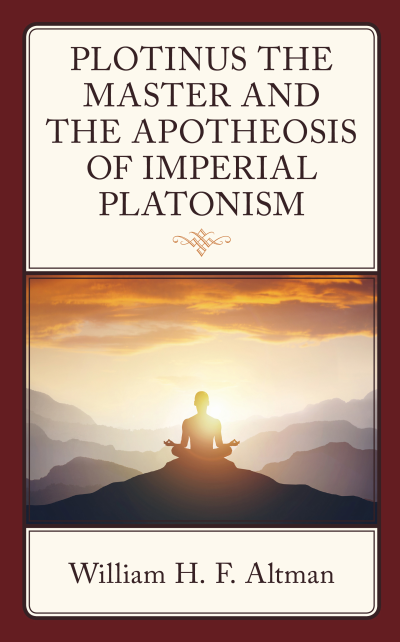
Plotinus the Master and the Apotheosis of Imperial Platonism
Authors:
Publisher:
2024
Summary
Unlike other recent studies, Plotinus the Master and the Apotheosis of Imperial Platonism is critical of Plotinus, and in particular of his version of Platonism, here described as “Imperial.” It is in contrast with Plato—a teacher whose dialogues challenge his students to think for themselves—that William H. F. Altman presents Plotinus as a master, who uses a seductive form of rhetoric throughout the Enneads to persuade his disciples to ignore his self-contradictions and decontextualized quotations from Plato while instead regarding his spiritual experiences, combined with a gift for the creative synthesis of previous thinkers, as the principal basis of their faithful and uncritical allegiance. While setting Plotinus in the context of the Roman Empire and his own critique of the Gnostics, this book grapples throughout with his current and virtually uncritical reception.
Keywords
Search publication
Bibliographic data
Edition
1/2024
Copyright Year
2024
ISBN-Print
978-1-6669-4439-6
ISBN-Online
978-1-6669-4440-2
Publisher
Lexington, Lanham
Language
English
Pages
444
Product Type
Monograph
Table of contents
ChapterPages
Contents No access
Notes No access
Notes No access
Section 1. Teachers and Masters No access
Section 2. The Exegete of the Platonic Revelation No access
Section 3. Platonic Exegesis §1: Theaetetus 176a8–b2 No access
Section 4. Plotinian Exegesis §1: 4.8 No access
Section 5. Defending the Master No access
Section 6. Between Apollonius and Julian §1: Returning to the Cave No access
Section 7. Plotinus and Plato’s Ion No access
Notes No access
Section 1. Three Portraits of the Master in Porphyry’s Life of Plotinus No access
Section 2. The Master’s Favorite Disciple No access
Section 3. Plotinian Exegesis §2: Longinus, Concerning the End (20.68–76) No access
Section 4. Between Apollonius and Julian §2: Pythagoras Reborn No access
Section 5. Longinus, [Longinus], and Anti-Imperial Platonism No access
Section 6. Platonic Exegesis §2 (R. 509b1–9) No access
Section 7. The Other Side of Porphyry’s Life of Plotinus No access
Notes No access
Section 1. The Apologetic Moment in the Interpretation of Porphyry’s Life of Plotinus No access
Section 2. “A Text Worthy of Plotinus” No access
Section 3. The Reason Why No access
Section 4. Between Apollonius and Julian §3: Praising the Pagan Wise Man No access
Section 5. Plotinian Exegesis §3: 5.5 No access
Section 6. Platonic Exegesis §3: (R. 506d7–507a5) No access
Section 7. Richard Harder and the Großschrift No access
Notes No access
Section 1. In Defense of Dualism No access
Section 2. Nag Hammadi No access
Section 3. Gnosticism as Anti-Imperial Platonism No access