, to see if you have full access to this publication.
Monograph No access
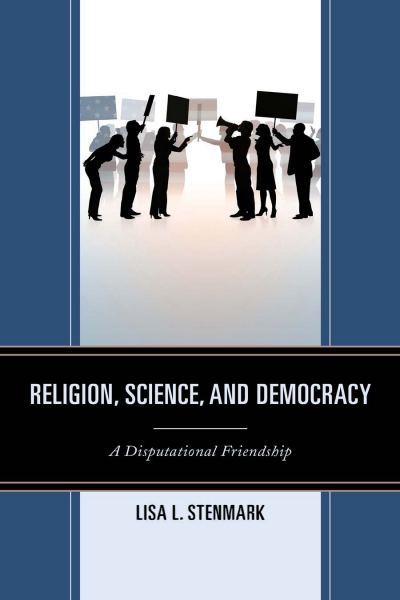
Religion, Science, and Democracy
A Disputational Friendship
Authors:
Publisher:
2013
Summary
Despite the increasing popularity of “religion and science” as an academic discourse, the intersection of science and religion remains a front line in an ongoing “culture war.” The reasons for this lie in an approach to discourse that closely resembles the model of discourse promoted by John Rawls, in which plural discourse —such as between religion and science— is based on a foundation of shared beliefs and established facts. This leads to a “doctrines and discoveries” approach to the relationship of religion and science, which focuses on their respective truth claims in an attempt to find areas of agreement. This framework inherently privileges scientific perspectives, which actually increases conflict between religion and science, and undermines public discourse by inserting absolutes into it. To the extent that the science and religion discourse adopts this approach, it inadvertently increases the conflict between religion and science and limits our ability to address matters of public concern.
This book suggests an alternative model for discourse, a disputational friendship, based on the work of Hannah Arendt. This approach recognizes the role that authorities —and thus religion and science— play in public life, but undermines any attempt to privilege a particular authority, because it promotes the position of the storyteller, who never settles on a single story but always seeks to incorporate many particular stories into her account. A disputational friendship promotes storytelling not by seeking agreement, but by exploring areas of disagreement in order to create the space for more conversations and to generate more stories and additional interpretations. Successful discourse between religion and science is not measured by its ability to determine “truth” or “fact,” but by its ability to continually expand the discourse and promote public life and public judgment.
Keywords
Search publication
Bibliographic data
Edition
1/2013
Copyright Year
2013
ISBN-Print
978-0-7391-4286-8
ISBN-Online
978-0-7391-4288-2
Publisher
Lexington, Lanham
Language
English
Pages
230
Product Type
Monograph
Table of contents
ChapterPages
Table of Contents No access
Introduction No access Pages 1 - 12
Chapter One: Religion, Science, and the “Culture Wars” No access Pages 13 - 40
Chapter Two: Science, Neutrality, and Public Life No access Pages 41 - 64
Chapter Three: Authority No access Pages 65 - 90
Chapter Four: The Art of Distinctions No access Pages 91 - 116
Chapter Five: Religion, Science, and Politics No access Pages 117 - 140
Chapter Six: Religion and Science as Social Activities No access Pages 141 - 170
Chapter Seven: Beyond Doctrines and Discoveries No access Pages 171 - 194
Chapter Eight: A Disputational Friendship No access Pages 195 - 214