, to see if you have full access to this publication.
Monograph No access
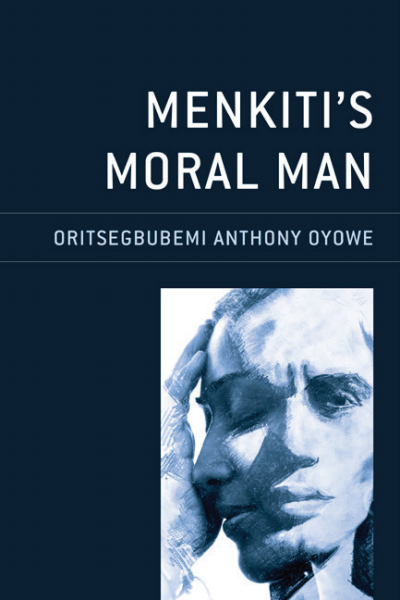
Menkiti's Moral Man
Authors:
Publisher:
2022
Summary
In Menkiti’s Moral Man, Oritsegbubemi Anthony Oyowe offers an original interpretation of Ifeanyi Menkiti’s conception of person, one that has significant implications for his metaphysics and moral philosophy. Menkiti holds that one is not born a person but becomes a person in a linguistic and cultural community, denies that the mere possession of intrinsic properties makes one a person, and maintains that personhood is defined by the community. This last process consists in the community socially recognizing as person one who has been incorporated into society and has successfully carried out a range of obligations linked to social roles and positions. On the one hand, Oyowe clarifies the role of intrinsic properties in Menkiti's account by arguing that for Menkiti, moral agency and personhood do not coincide. One is a moral agent but not a person in virtue of being rational, free, and endowed with a moral personality. On the other hand, he clarifies the sense in which the community makes one a person by drawing on principles of social ontology to explain how by adopting certain attitudes and practices a community constitutes its members as persons.This interpretation has the potential to illuminate a range of problems raised in response to Menkiti’s conception of person.
Search publication
Bibliographic data
Edition
1/2022
Copyright Year
2022
ISBN-Print
978-1-7936-1583-1
ISBN-Online
978-1-7936-1584-8
Publisher
Lexington, Lanham
Language
English
Pages
212
Product Type
Monograph
Table of contents
ChapterPages
Contents No access
Acknowledgment No access
The Making of a Person in Community No access Pages 1 - 22
Agency, Practical Reason, and Autonomy No access Pages 23 - 58
Moral Status and Communities of Respect No access Pages 59 - 92
Social Architectures of Personhood and the Politics of Exclusion No access Pages 93 - 126
Coincidence, Conventionalism, and the Idea of Soft Person No access Pages 127 - 158
Ontology, Realism, and the Persistence of Ancestral Persons No access Pages 159 - 190